Some of the best conversations with children happen side by side rather than face to face: in the car, while cooking and at the coloring table. Kids relax when their hands are busy, and relaxed kids talk.
That talk is valuable. Children learn words mostly through conversation with adults, and back-and-forth chats are especially powerful. Coloring gives you a ready-made topic and a reason to sit together.
Words that come up naturally
Color words
Beyond red and blue, there are crimson, turquoise, lavender, olive and peach. Introduce a fancy name now and then: "That’s not just blue, it’s teal." See teaching fancy color names.
Shape and position words
Circle, oval, triangle, above, below, beside, between, inside, outside. "Color the circle under his nose."
Describing words
Fluffy, shiny, spiky, bumpy, striped, spotted, enormous, tiny. Describing words, or adjectives, are a big part of rich vocabulary. More games in describing words coloring.
Feeling words
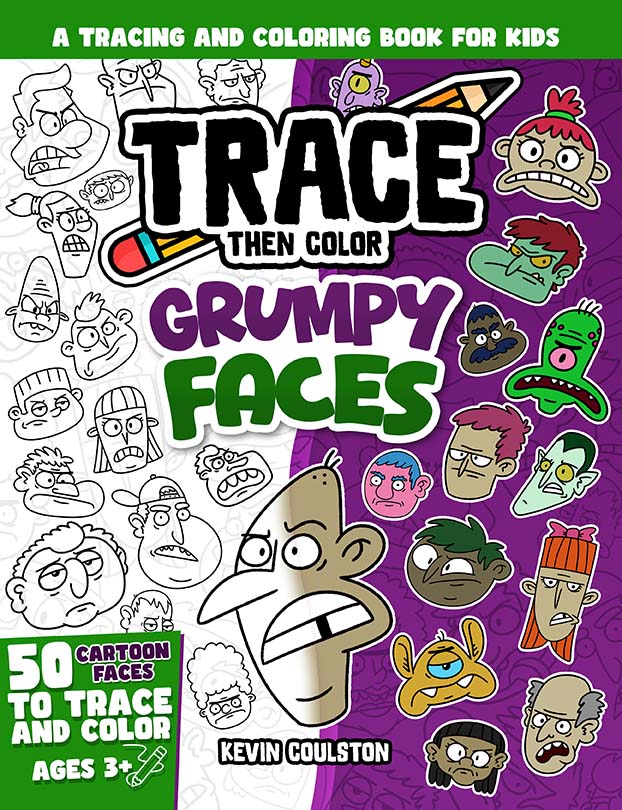
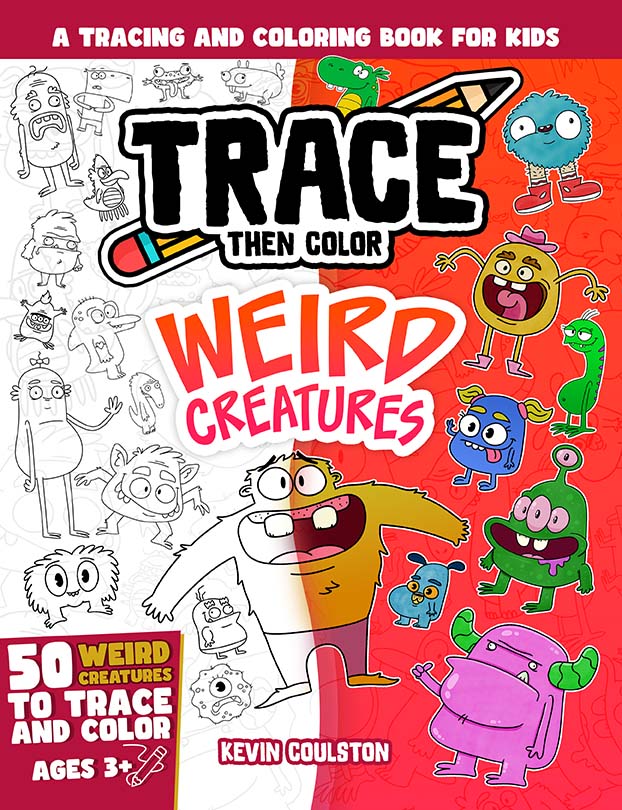
Happy, grumpy, surprised, worried, proud, frustrated. Characters with strong expressions make this easy. Trace Then Color: Grumpy Faces is a fun way to talk about all the different kinds of grumpy.
Story words
Once upon a time, then, suddenly, finally. Stories about the character practice sequencing language.
Conversation starters
- "Who is this character? What’s their name?"
- "Where do they live?"
- "What do you think they had for breakfast?"
- "How are they feeling? How can you tell?"
- "If they could talk, what would they say?"
- "What would happen if they came to our house?"
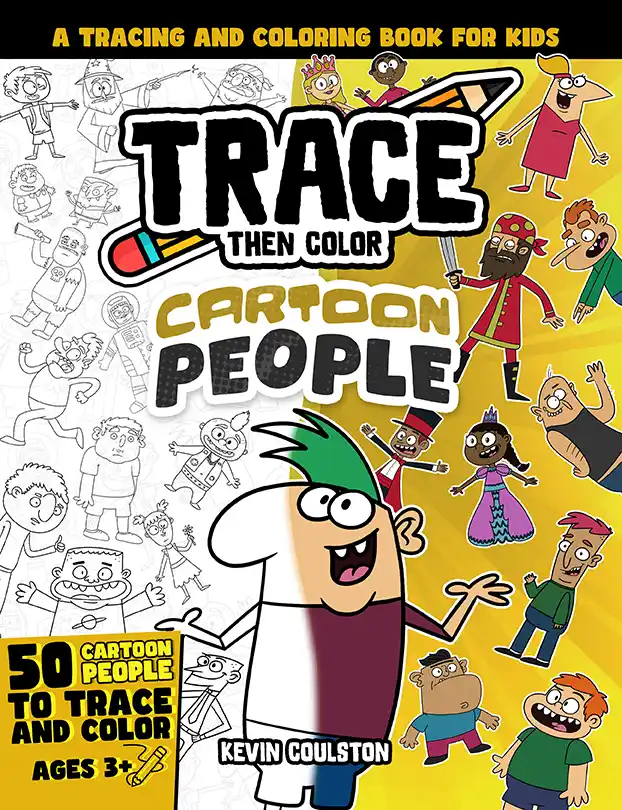
People characters are especially good for this. Trace Then Color: Cartoon People gives kids all sorts of characters to invent backstories for.
Tips for better coloring conversations
Follow their lead
If your child wants to talk about the robot’s laser eyes, talk about laser eyes. Interest drives learning.
Expand what they say
If your child says "Big dog," you can say "Yes, a big, fluffy, brown dog." This technique, called expanding, models longer sentences without correcting.
Ask open questions
Questions that start with "why," "how" or "what if" invite longer answers than yes-or-no questions.
Leave pauses
Kids need time to think and find words. Wait a little longer than feels natural.
Narrate your own coloring
"I’m making his hat a deep, dark purple, like a plum." Hearing rich language in context is how kids absorb it.
For kids learning English or with speech delays
Coloring conversations are great for children learning English as an additional language, and speech therapists often use coloring pages in sessions. See coloring for English learners and coloring in speech therapy.
Questions parents ask
My child doesn’t like to talk while coloring. Should I keep asking questions?
No. Some kids prefer quiet focus. Narrate a little yourself and save conversation for the end: "Tell me about your picture."
How many new words should I introduce?
One or two per session is plenty. Use them again later in other situations.
Does this help with reading?
Vocabulary is one of the foundations of reading comprehension, so a richer vocabulary helps kids understand what they read.
About Kevin Coulston
Kevin Coulston is a cartoonist and member of the National Cartoonists Society who has written and illustrated more than 100 drawing, tracing and coloring books for kids, including the Trace Then Color series. Meet Kevin or browse all his books on FirstArtBooks.com.