Once children know red, blue, yellow and green, a whole world of color words opens up. Turquoise. Magenta. Lavender. Mustard. Crimson. Learning these words helps kids describe the world more precisely, notice subtle differences and enjoy the language of art.
Why fancy color words matter
- Richer vocabulary. Precise words are a sign of strong language skills.
- Better observation. Naming a color helps kids notice it.
- Art confidence. Kids feel like real artists when they use real color names.
- Fun. Many color names are just fun to say.
Color words by age
Preschool
Light and dark versions of basic colors: light blue, dark green. Plus pink, brown, gray, black, white, gold and silver.
Kindergarten and first grade
Turquoise, lavender, peach, navy, lime, maroon, beige, tan.
Older kids
Crimson, scarlet, magenta, teal, olive, mustard, coral, indigo, violet, chartreuse, burgundy, periwinkle.
Games
Crayon label reading
Many crayons have fun names printed on their labels. Read them together and try to guess the color before looking.
Name your own color
Kids invent names for their own colors: "dinosaur snot green" or "sunset pizza orange." Silly names make kids look closely at the color.
Color match hunt
Pick a fancy color and find something that matches: a turquoise toy, a coral shell, a mustard jar.
Fancy color challenge
Color a page using only fancy colors. Label each one.
Shades of one
Color a character in five shades of one color, from lightest to darkest, and name them: sky blue, cornflower, royal blue, navy, midnight.
Great subjects for fancy colors
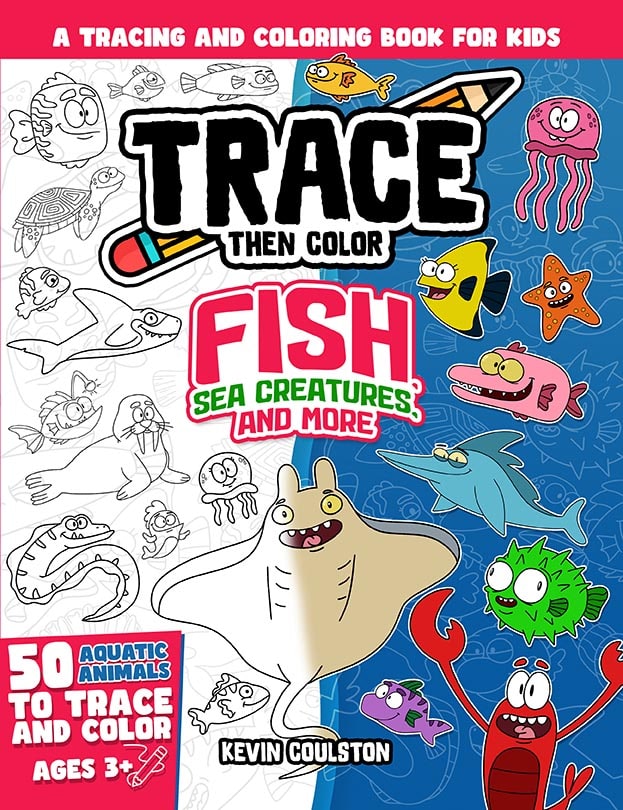
- Sea creatures in turquoise, teal, aquamarine and coral. Trace Then Color: Fish, Sea Creatures and More is perfect.
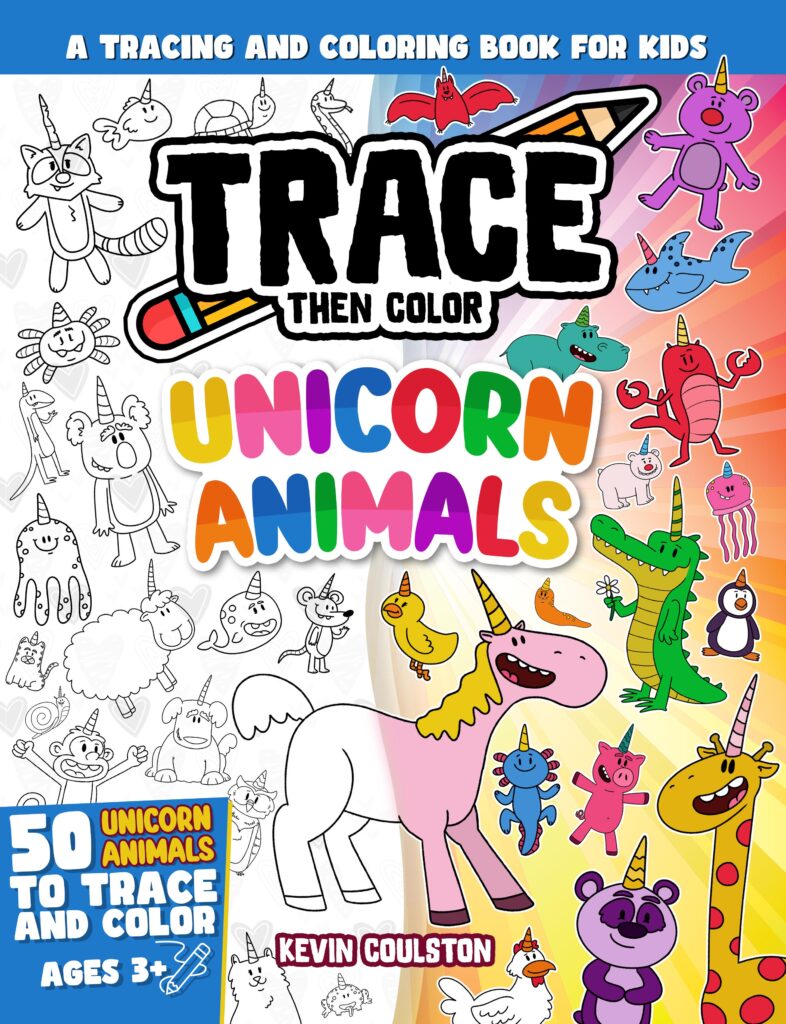
- Unicorns with manes of magenta, lavender, periwinkle and gold. Trace Then Color: Unicorn Animals has manes waiting for color.
- Food in mustard, tomato red, mint green and caramel.
Where color names come from
Many color names come from nature and objects: lavender (a flower), olive (a fruit), salmon (a fish), coral (a sea animal), turquoise (a stone). Talking about these origins adds a little history and science.
Questions parents ask
Is my child behind if they don’t know fancy color names?
No. Fancy color names are a bonus, not a milestone.
Should I buy a big crayon box?
A bigger box offers more names to read, but you can teach fancy colors with a small box by mixing and naming shades.
What’s the difference between purple and violet?
In everyday speech they overlap. Violet is often used for a bluer purple, and it is also the name for the shortest-wavelength color in a rainbow.

About Kevin Coulston
Kevin Coulston is a cartoonist and member of the National Cartoonists Society who has written and illustrated more than 100 drawing, tracing and coloring books for kids, including the Trace Then Color series. Meet Kevin or browse all his books on FirstArtBooks.com.