A color wheel is a circle that shows how colors relate to each other. Artists use it to plan color schemes, and teachers use it to teach color mixing. Making one is a great hands-on project, and the finished wheel becomes a handy tool for future coloring.
What you need
- A paper plate or a circle drawn on paper
- A ruler
- Crayons or colored pencils in red, yellow and blue (plus orange, green and purple if you want to skip mixing)
- A pencil
How to make it
- Divide the circle into six slices, like a pizza. Draw lines with a ruler.
- Color the primaries. Red at the top, then skip one slice, yellow, skip one, blue.
- Mix the secondaries. In the empty slices, layer the colors on either side: red and yellow make orange, yellow and blue make green, blue and red make purple.
- Label each slice. Older kids can write the names.
That is a six-color wheel. Older kids can make a twelve-slice wheel by adding mixes in between, like yellow-orange and blue-green.
What the wheel teaches
Primary and secondary colors
The wheel shows clearly which colors mix to make others. See color mixing for kids.
Warm and cool
One half of the wheel is warm, the other cool. See warm and cool colors.
Opposites
Colors across from each other, like red and green or blue and orange, are called complementary colors. Placed side by side, they make each other look brighter.
Neighbors
Colors next to each other, like blue, blue-green and green, are called analogous colors. They look calm and harmonious together.
Games with the color wheel
Spin and color
Put a paper clip in the center with a pencil tip through it and spin. Whatever color it lands on, use it next on your coloring page.
Opposite challenge
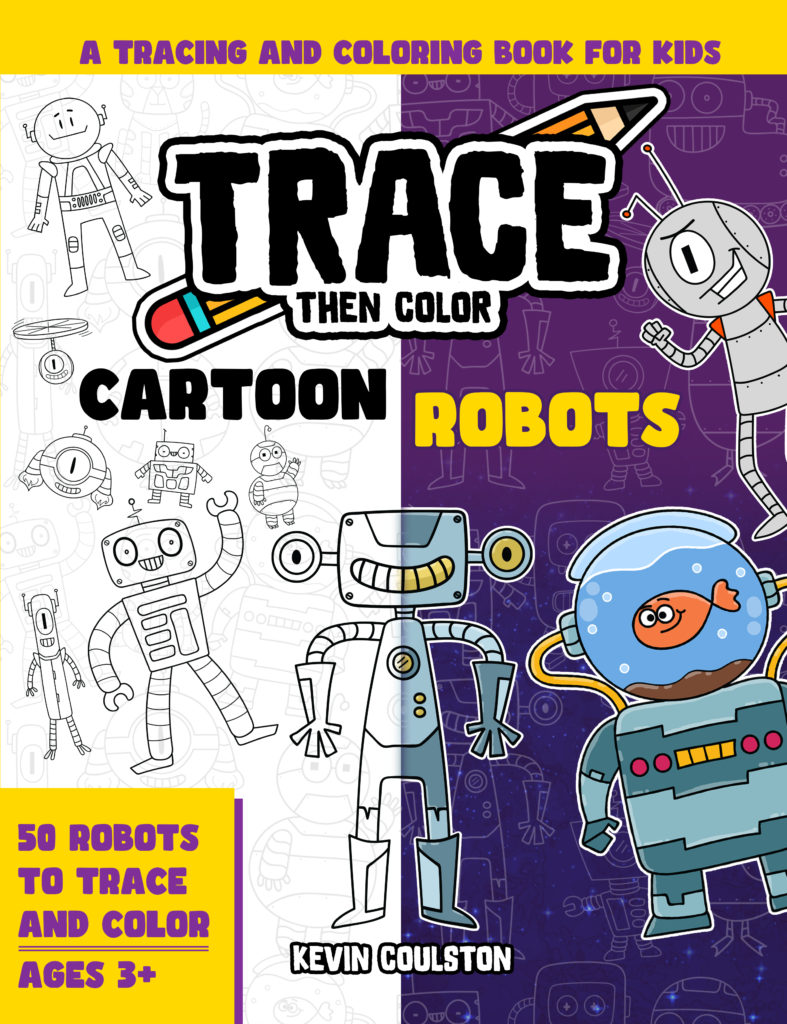
Color a character using only two opposite colors. Robots look striking in blue and orange: try a page from Trace Then Color: Cartoon Robots.
Neighbor challenge
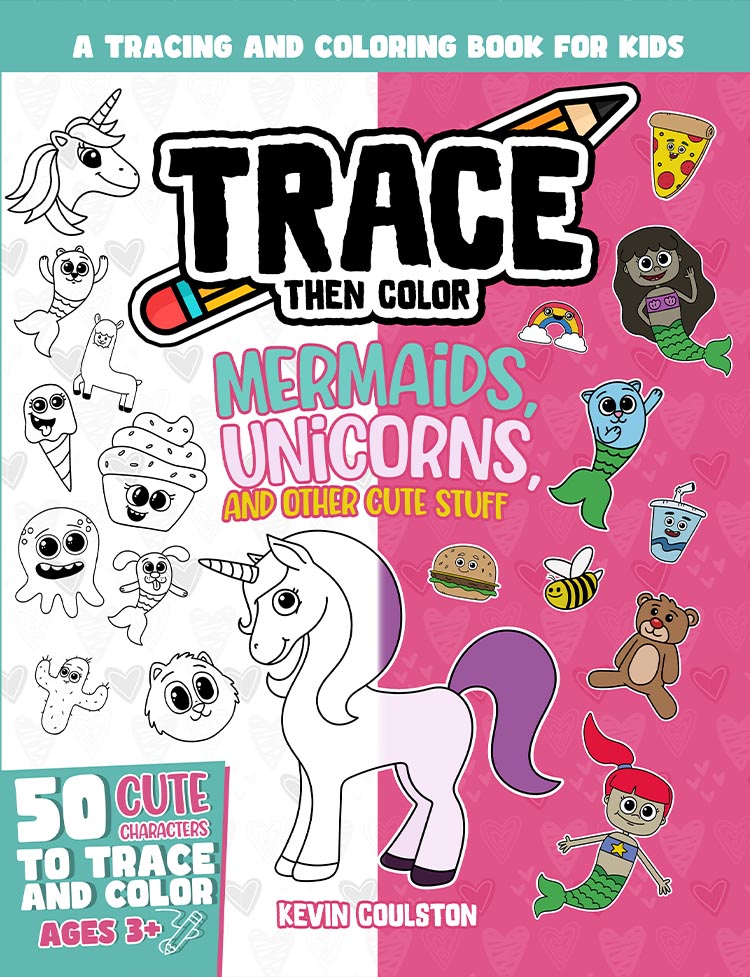
Color a character using only three neighboring colors. A mermaid in blue, teal and green looks dreamy: try Trace Then Color: Mermaids, Unicorns and Other Cute Stuff.
Color wheel hunt
Find something in the house for every slice.
Keep it handy
Laminate the wheel or tape it near the coloring station. Kids can use it to plan color schemes for pages. See picking colors that go together.
Questions parents ask
What age can kids make a color wheel?
Kids around 5 and up can make a six-color wheel with help. Older kids can try twelve colors.
Why does my mixed green look brown?
Too much pressure or too much red in the mix. Use light layers of only yellow and blue.
Is the red, yellow, blue wheel correct?
It is the traditional art wheel taught in most schools. Printers use cyan, magenta and yellow instead, which is a fun fact for older kids.

About Kevin Coulston
Kevin Coulston is a cartoonist and member of the National Cartoonists Society who has written and illustrated more than 100 drawing, tracing and coloring books for kids, including the Trace Then Color series. Meet Kevin or browse all his books on FirstArtBooks.com.