Kids often color with whatever crayon is closest. That’s fine, but a little color theory helps them choose on purpose and gives them a new way to experiment.
Primary and secondary colors
- Primary: red, yellow, blue
- Secondary: orange (red and yellow), green (yellow and blue), purple (blue and red)
Kids can make secondary colors by blending.
Warm and cool colors
| Warm | Cool |
|---|---|
| Red, orange, yellow | Blue, green, purple |
| Feel sunny, hot, energetic | Feel calm, cold, quiet |
Ask: "Is your monster warm and fiery, or cool and calm?"
Opposites pop
Colors across from each other on the color wheel make each other stand out:
- Red and green
- Blue and orange
- Yellow and purple
Try a purple monster with yellow spots.
Neighbors blend
Colors next to each other on the wheel look calm together: blue, green and teal, or yellow, orange and red.
Color challenges
- Three colors only. Pick three and use only those.
- Warm page / cool page. Color the same character twice and compare.
- Opposites day. Color everything in opposite pairs.
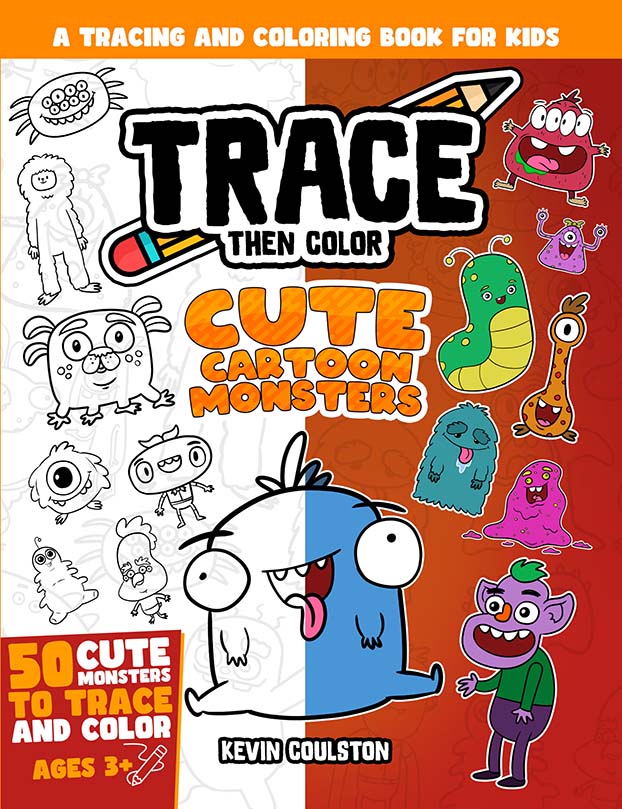
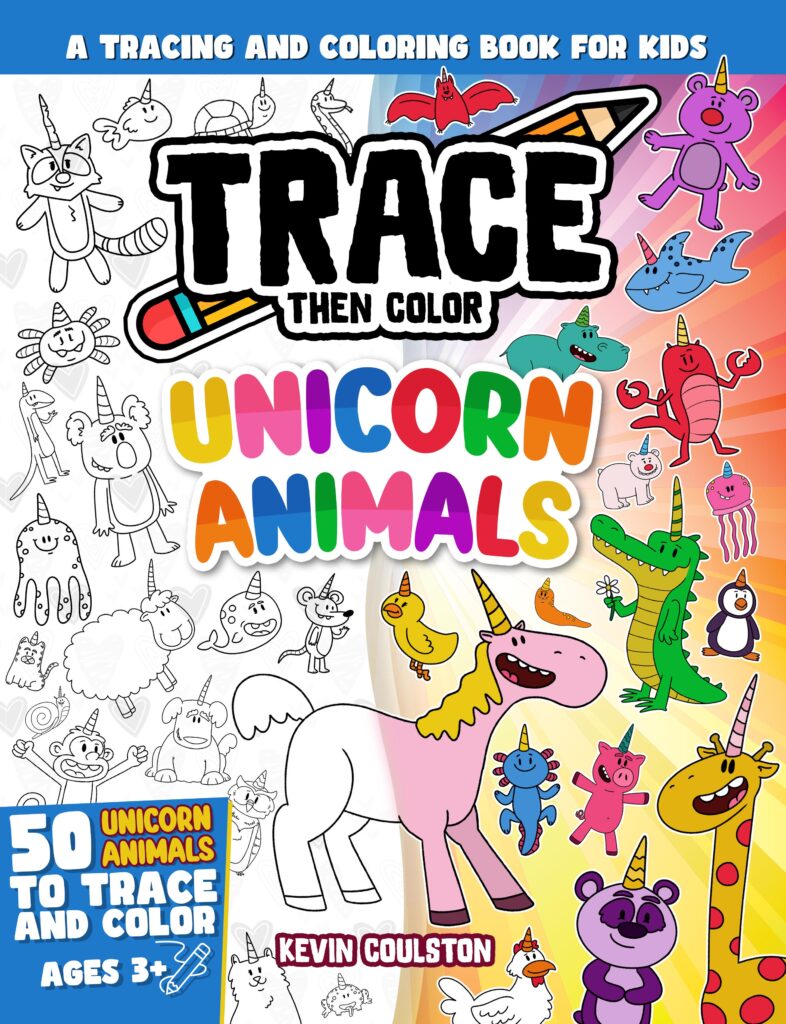
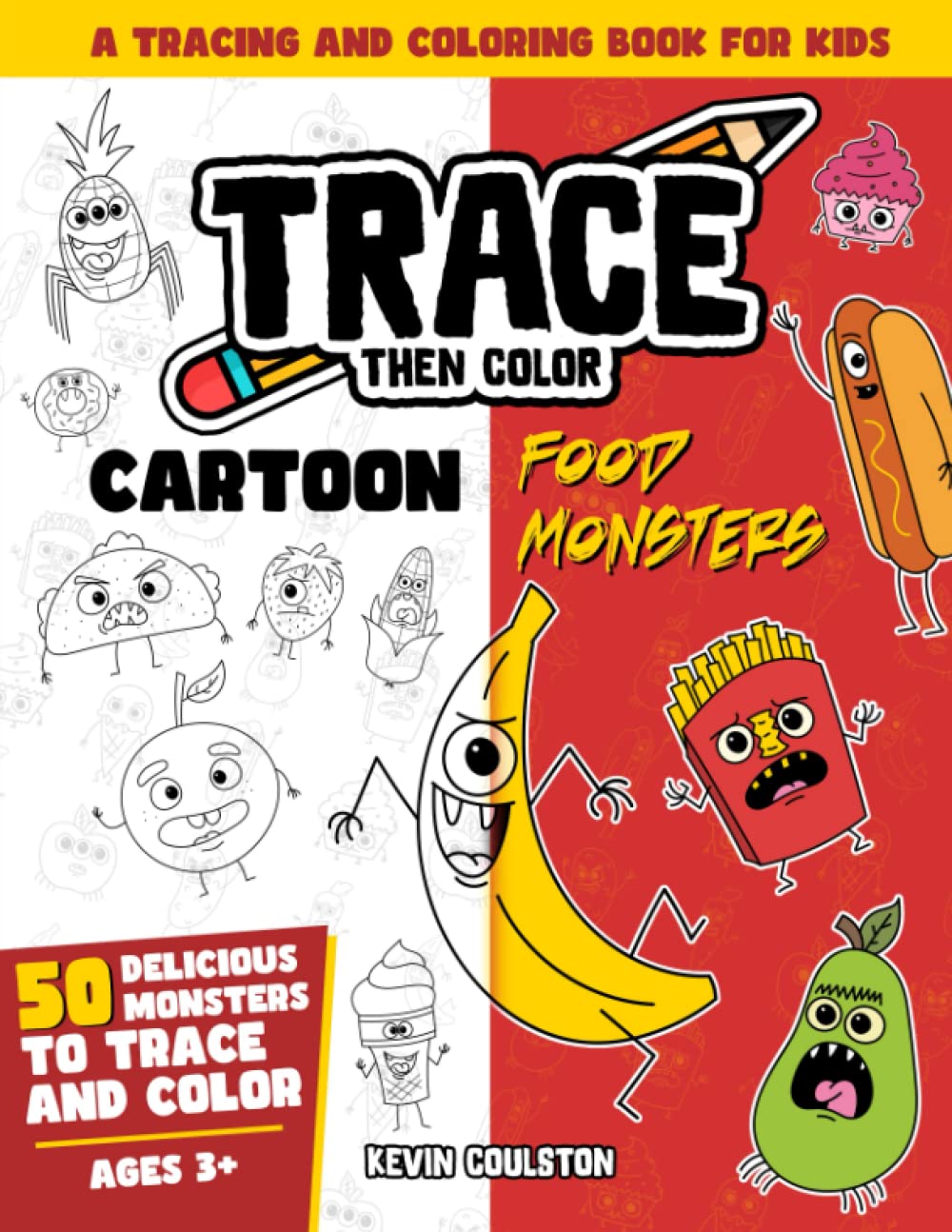
- Silly colors. A rainbow unicorn from Trace Then Color: Unicorn Animals, a blue banana from Trace Then Color: Cartoon Food Monsters, a striped monster from Trace Then Color: Cute Cartoon Monsters.
Make a simple color wheel together with crayons. Hang it near the coloring table.
Questions parents ask
Should I teach my child to use "real" colors?
Both are fine. Real colors build observation; silly colors build creativity.
At what age does color theory make sense?
Primary colors and color names from about 3. Warm, cool and opposites from about 6.
Why does my child’s coloring look muddy?
Too many colors layered, or opposites mixed together, can make brown. Try fewer colors.
About Kevin Coulston
Kevin Coulston is a cartoonist and member of the National Cartoonists Society who has written and illustrated more than 100 drawing, tracing and coloring books for kids, including the Trace Then Color series. Meet Kevin or browse all his books on FirstArtBooks.com.