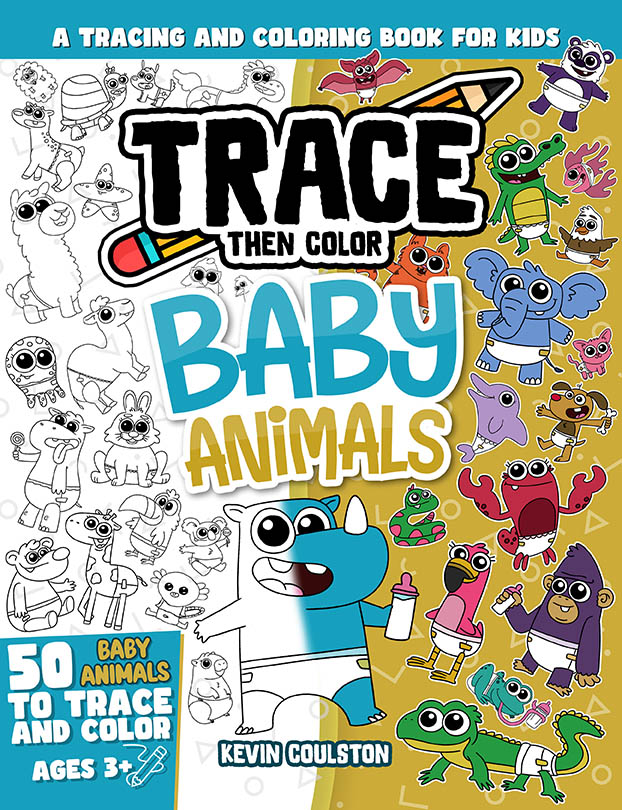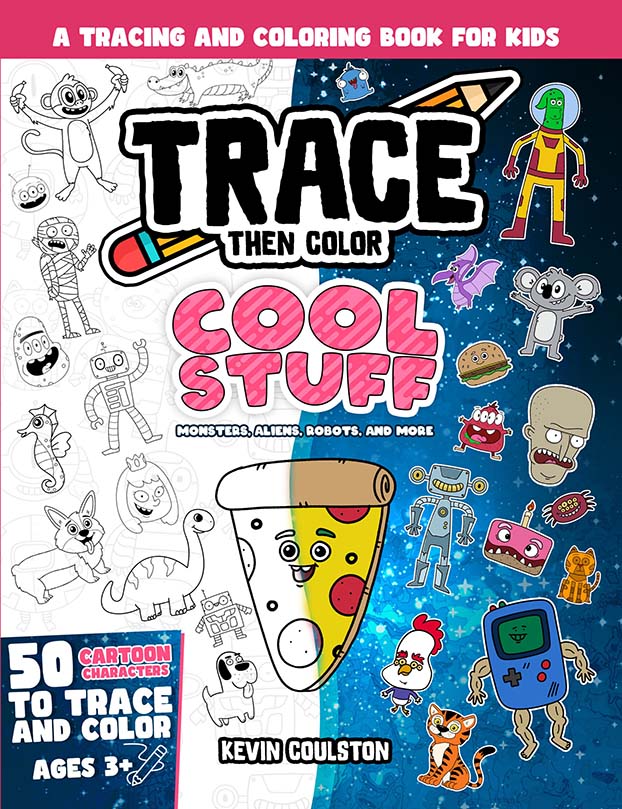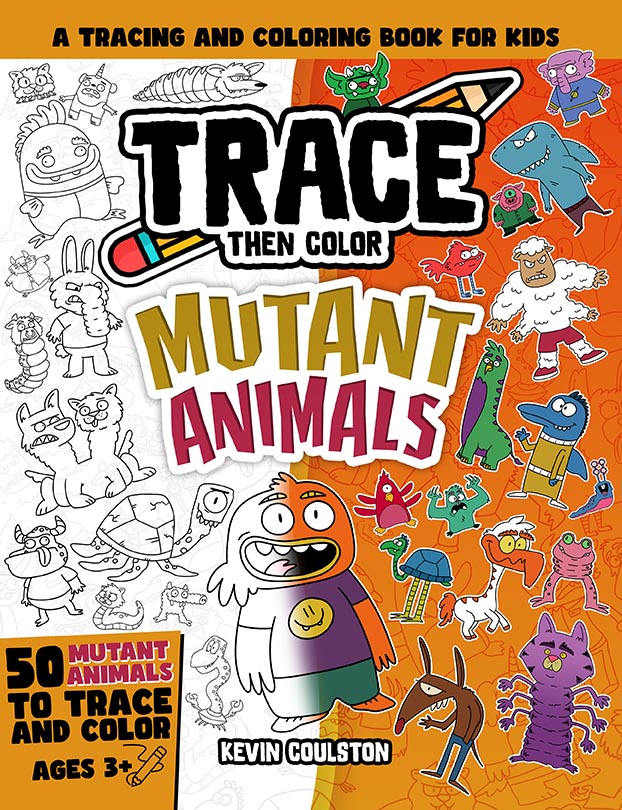
A character floating on white paper looks fine, but add a background and the page suddenly tells a story. Backgrounds also teach kids about setting, which helps with storytelling and writing.
Idea 1: Sky and ground
Draw a horizon line behind the character. Color blue above and green or brown below. Done.
Idea 2: A simple scene
Ask: "Where does this character live?"
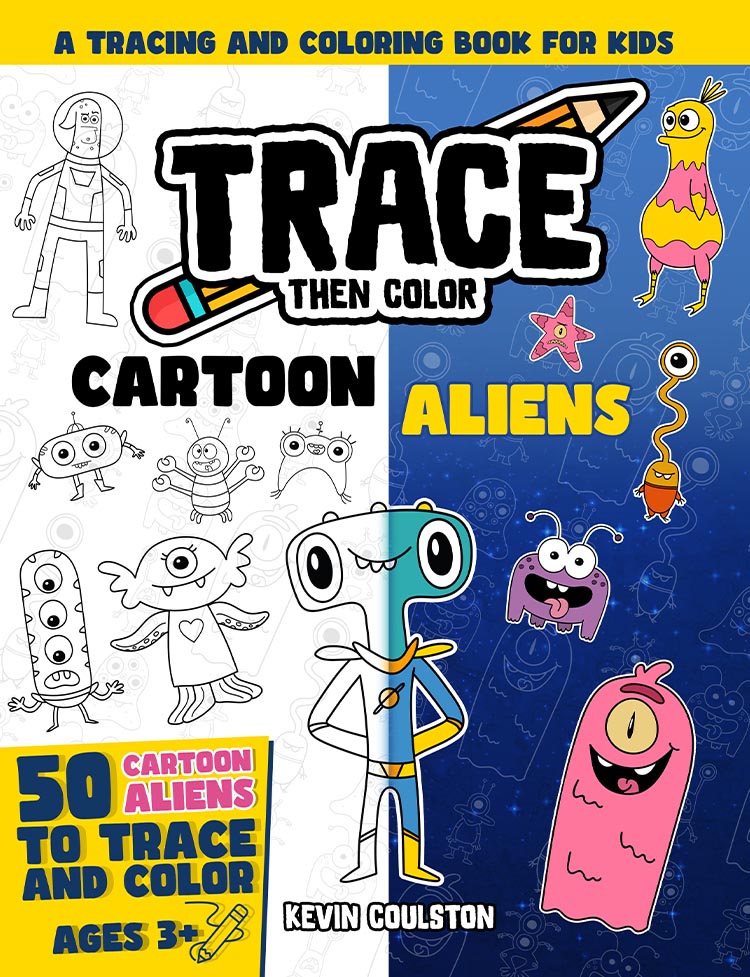
- An alien from Trace Then Color: Cartoon Aliens could be on the moon with stars and planets
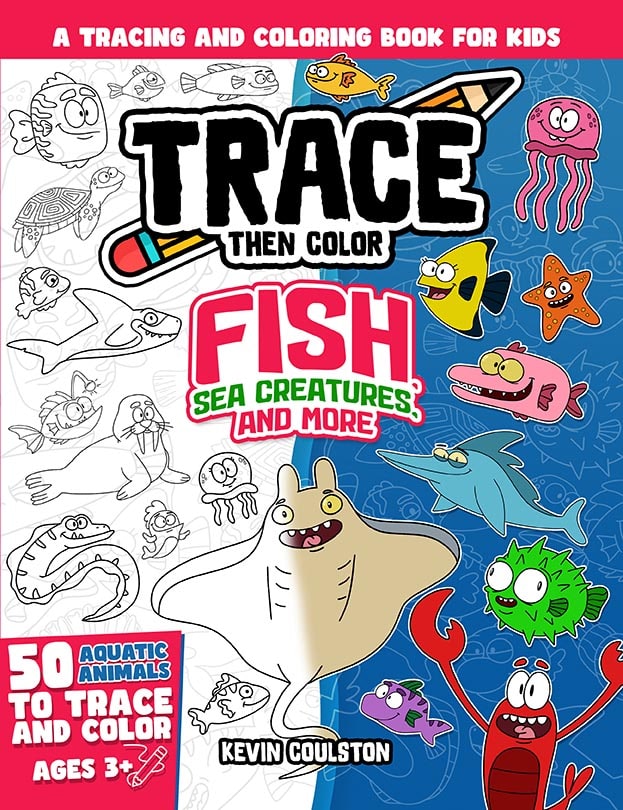
- A fish from Trace Then Color: Fish, Sea Creatures and More needs water, bubbles and seaweed
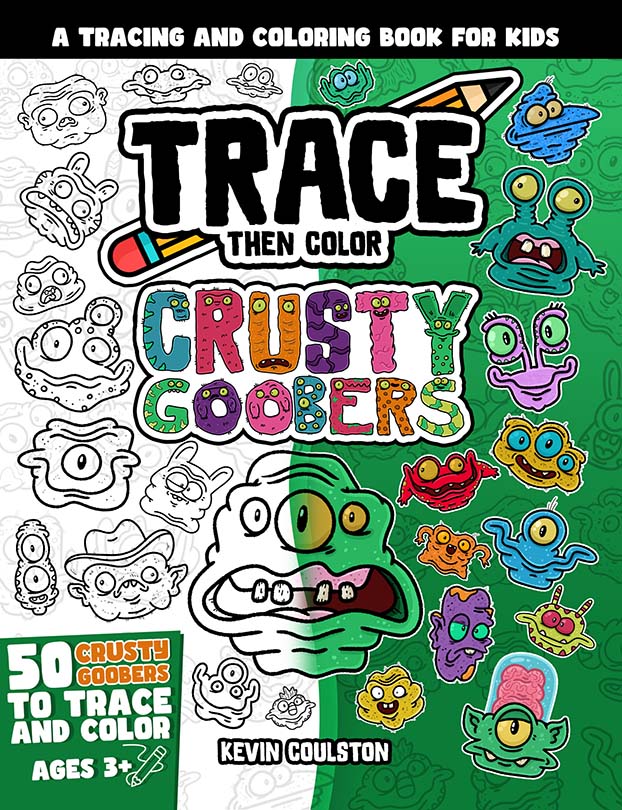
- A goober from Trace Then Color: Crusty Goobers might live in a swamp, a junkyard or a sock drawer
Idea 3: Patterns
A dotted, striped or rainbow background is fast and bold. See adding patterns to coloring.
Idea 4: Sideways crayon
Peel a crayon and rub it sideways across the background. It covers big areas fast with soft color.
Make the character stand out
- Use lighter colors in the background than on the character.
- Use contrasting colors. A red character on a green background pops.
- Outline the character in a dark color after coloring the background.
See choosing colors that go together.
Color the character first, then the background. If the background goes over the edge a little, it’s less noticeable than a character colored over a background.
Questions parents ask
My child doesn’t want to color the background. Is that okay?
Completely. Backgrounds are optional.
What’s the fastest way to fill a background?
Sideways crayons or broad markers, with light colors.
Can backgrounds help with writing?
Yes. Talking about where a character lives builds setting, a key part of stories.

About Kevin Coulston
Kevin Coulston is a cartoonist and member of the National Cartoonists Society who has written and illustrated more than 100 drawing, tracing and coloring books for kids, including the Trace Then Color series. Meet Kevin or browse all his books on FirstArtBooks.com.