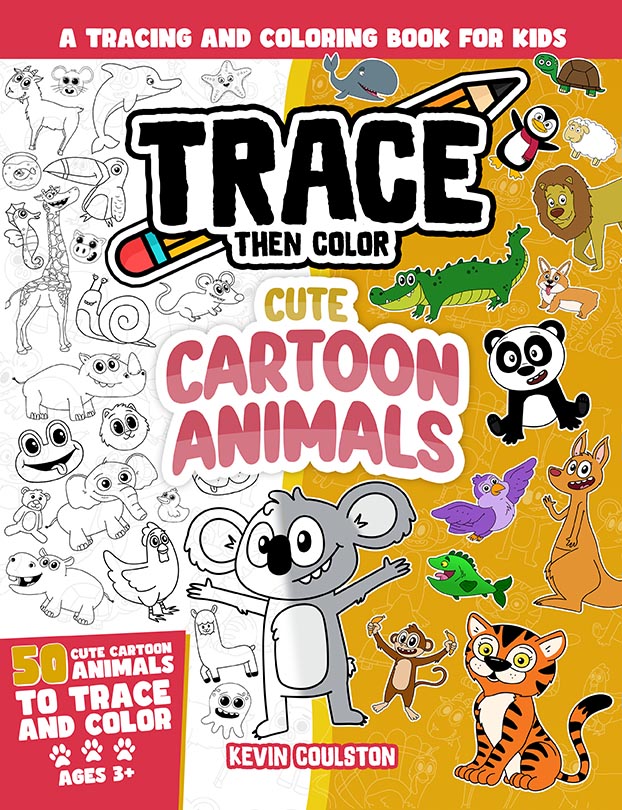
Most kids color by scribbling hard in all directions. That’s a great start, and with a few simple techniques their pages can look smoother, brighter and more finished. Teach one technique at a time and let kids practice on pages they enjoy.
1. Outline, then fill
Color around the inside edge of a shape first, then fill the middle. It makes staying in the lines much easier. See outline then fill.
2. Even strokes
Small, even back-and-forth strokes give smoother color than big scribbles.
3. One direction
Keep strokes going the same way within a shape for a neat look.
4. Light pressure first
Start light. You can always add more color, but it’s hard to take it away.
5. Layering
Color over a light layer with a second layer to make it richer.
6. Simple shading
Press harder on one side of a shape to make it look round. See easy shading for kids.
7. Blending
Overlap two colors where they meet so they mix. See blending colors for kids.
8. Patterns
Fill shapes with dots, stripes or zigzags. See adding patterns to coloring.
9. Highlights
Leave a small white spot to make things look shiny. See adding highlights.
10. Backgrounds
Add sky, grass or color behind the character. See coloring backgrounds.
Pick pages that help
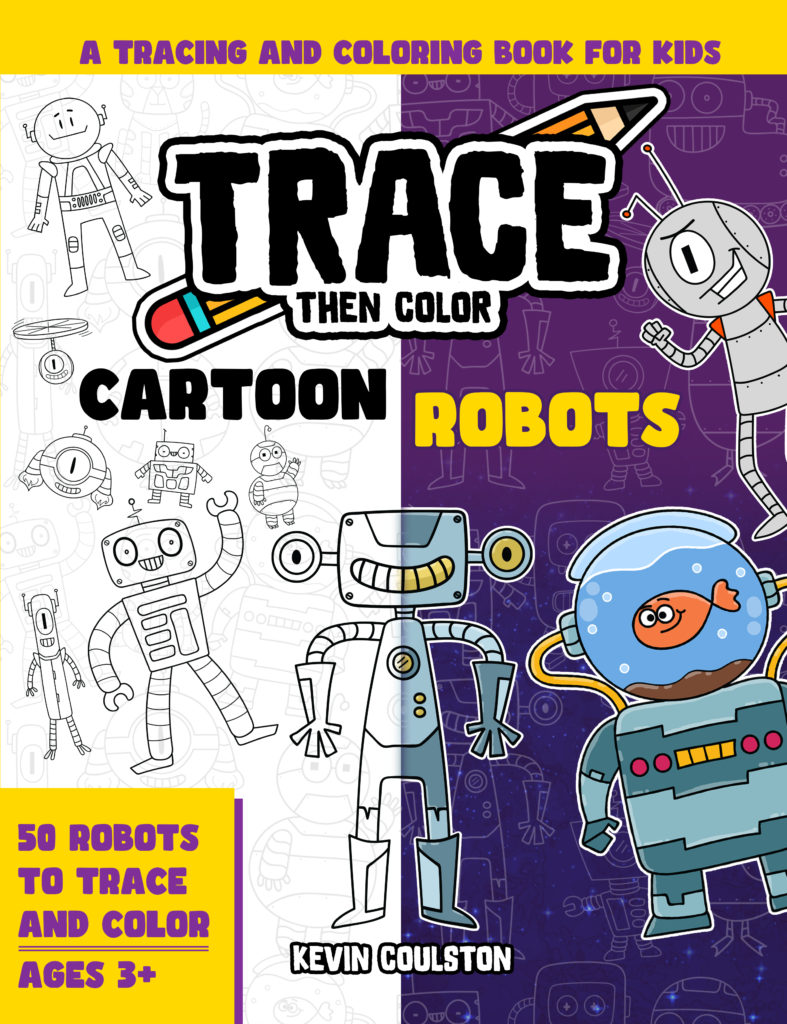
- Robots in Trace Then Color: Cartoon Robots are great for highlights on shiny metal
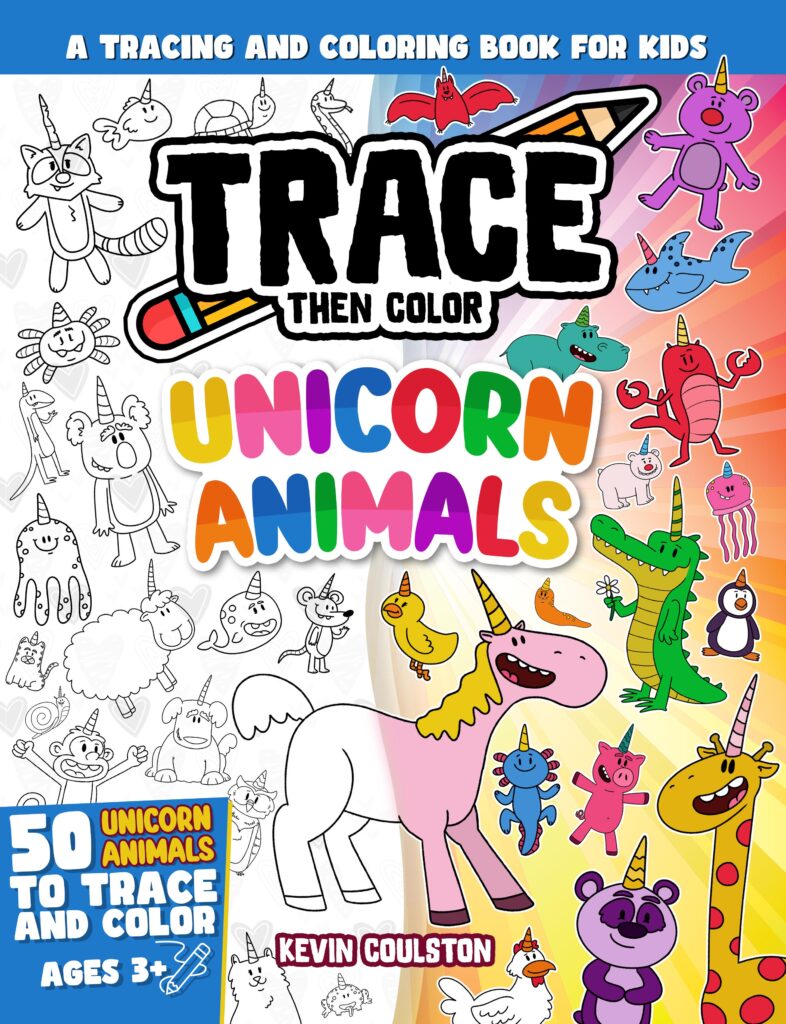
- Unicorns in Trace Then Color: Unicorn Animals are perfect for blending rainbow manes
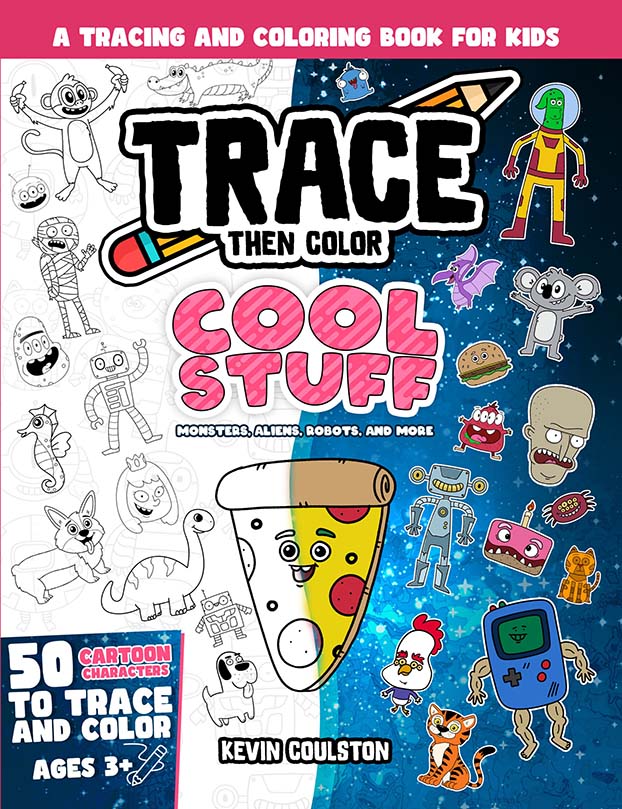
- Trace Then Color: Cool Stuff has a mix for practicing everything
Younger kids (3 to 5) should focus on techniques 1 to 3. Older kids can try shading, blending and highlights.
Questions parents ask
At what age can kids learn coloring techniques?
Simple ones, like outlining, from about age 4. Shading and blending usually click around 6 to 8.
Should I correct my child’s coloring?
Show, don’t correct. Color your own page beside them and let them copy if they want.
Do techniques take the fun out of coloring?
Not if they’re optional. Many kids love seeing their pages look "real."

About Kevin Coulston
Kevin Coulston is a cartoonist and member of the National Cartoonists Society who has written and illustrated more than 100 drawing, tracing and coloring books for kids, including the Trace Then Color series. Meet Kevin or browse all his books on FirstArtBooks.com.