If you teach your child only one coloring technique, make it this one. Outline then fill is simple, quick to learn and makes a big difference to how neat a page looks.
How it works
- Choose a color for a shape.
- Color a thin border just inside the black line, going slowly.
- Fill the middle with faster strokes.
The border acts like a safety zone. Even if the fast strokes wander a little, they hit the colored border before the line.
How to teach it
- Show it. Color one shape yourself while talking through it.
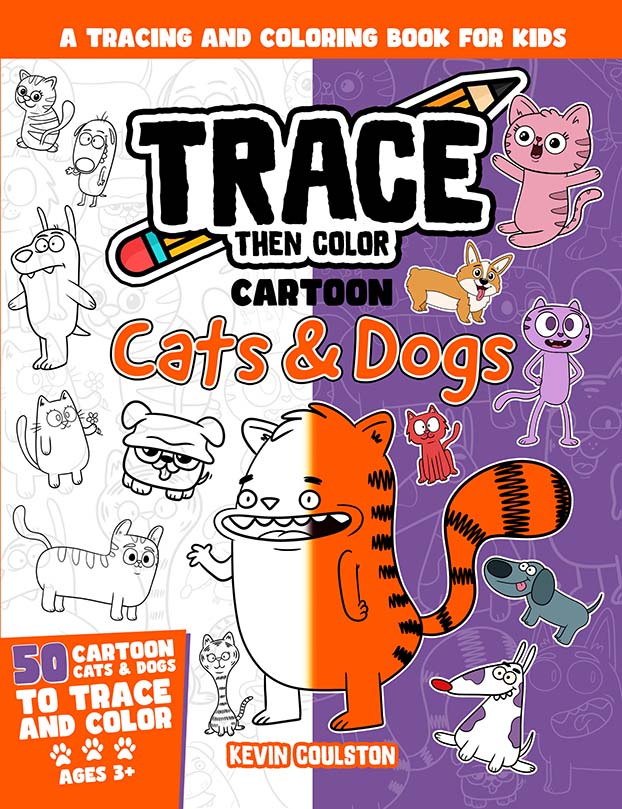
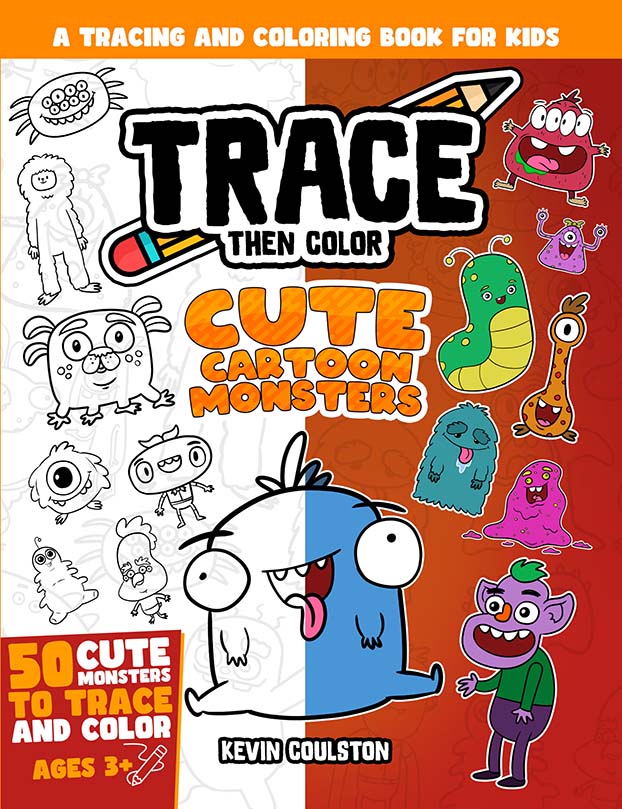
- Use a big shape first. A pet’s body or a monster’s tummy works well. Try a page from Trace Then Color: Cartoon Cats and Dogs or Trace Then Color: Cute Cartoon Monsters.
- Say it as a rhyme. "Edge it slow, fill it fast."
- Practice on one shape at a time.
Common mistakes
- Border too thick. Keep it thin so the fill still shows strokes evenly.
- Rushing the border. The slow part is the edge.
- Different color border. Use the same color unless it’s on purpose.
Bonus: Outline in a darker shade
Older kids can outline in a slightly darker shade of the same color, then fill with the lighter shade. It adds depth, similar to easy shading.
Outline then fill works with crayons, markers and colored pencils.
Questions parents ask
What age can kids learn this?
Around 4 or 5, once they can color inside big shapes.
Does it slow kids down?
A little at first. Soon it’s faster, because they don’t need to slow down for the whole shape.
Does it work with markers?
Yes. Markers dry quickly, so it’s especially helpful for clean edges.

About Kevin Coulston
Kevin Coulston is a cartoonist and member of the National Cartoonists Society who has written and illustrated more than 100 drawing, tracing and coloring books for kids, including the Trace Then Color series. Meet Kevin or browse all his books on FirstArtBooks.com.