Who says a monster has to be one color? Filling shapes with patterns turns a simple page into a creative project. It also builds math skills (patterns are early algebra) and fine motor control.
Easy patterns to start
- Dots. Big dots, small dots, rainbow dots.
- Stripes. Straight, wavy or diagonal.
- Zigzags. Great for monster fur or dinosaur backs.
- Checks. Like a checkerboard.
- Hearts and stars. Small shapes repeated.
- Spirals. Snail shells, candies and swirls.
Color patterns
Patterns can be in the colors, too:
- ABAB: red, blue, red, blue stripes
- ABC: red, yellow, green, red, yellow, green
- AABB: two red, two blue
This is a great way to practice patterns for preschool and kindergarten math.
Where to use patterns
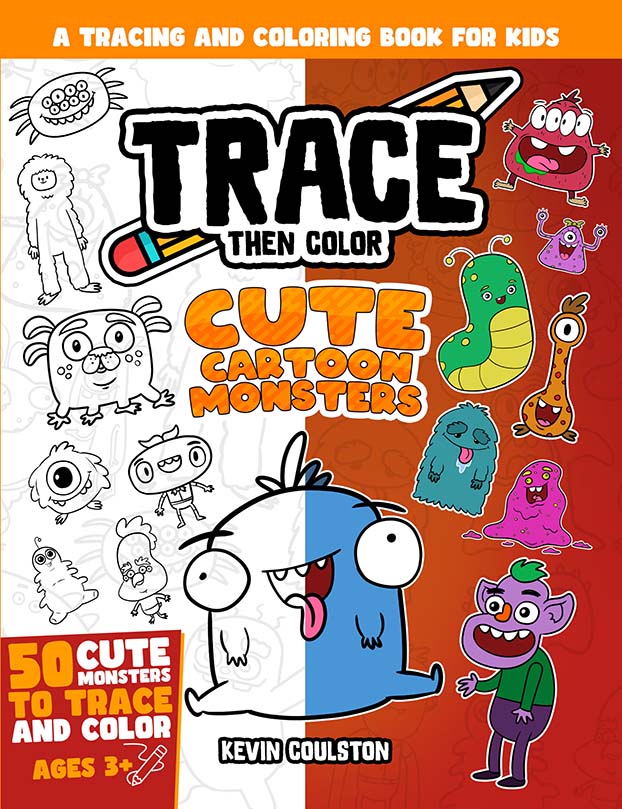
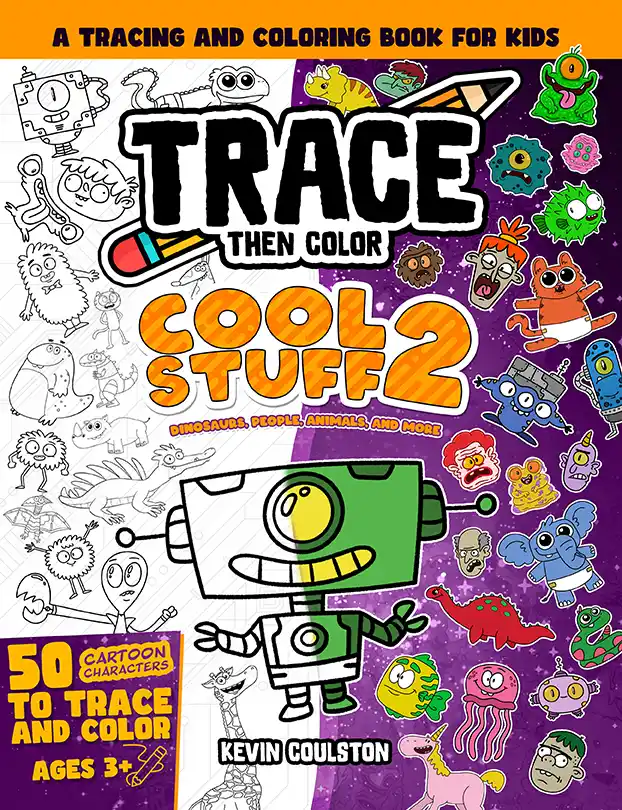
- Monster bodies. Trace Then Color: Cute Cartoon Monsters has big bodies perfect for spots and stripes.
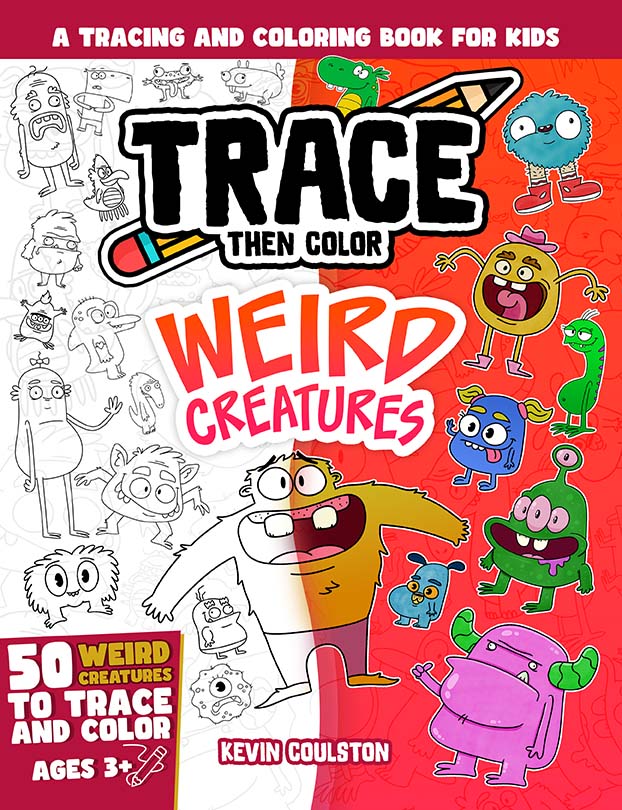
- Weird creatures. Trace Then Color: Weird Creatures invites wild, made-up patterns.
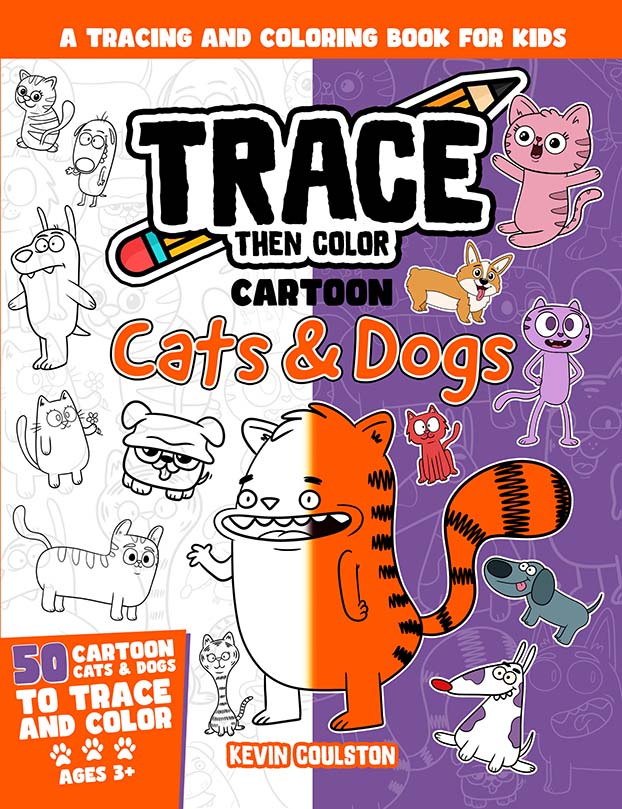
- Pets. Calico spots and tabby stripes on Trace Then Color: Cartoon Cats and Dogs.
- Clothes. Patterned shirts, scarves and socks.
- Backgrounds. A dotted or striped background makes the character pop. See coloring backgrounds.
How to draw patterns neatly
- Color the base color first, lightly.
- Draw the pattern on top with a darker color or marker.
- Or draw the pattern first with a pencil, then color around it.
Fine-tip markers and gel pens make crisp patterns. See gel pens and metallic markers.
Questions parents ask
What age can kids add patterns?
Simple dots and stripes from about age 4. More complex patterns from 6 and up.
Isn’t it messy?
Sometimes, and that’s part of the fun. Older kids can plan patterns with light pencil first.
How do patterns help learning?
Recognizing and continuing patterns is an early math skill taught in preschool and kindergarten.
About Kevin Coulston
Kevin Coulston is a cartoonist and member of the National Cartoonists Society who has written and illustrated more than 100 drawing, tracing and coloring books for kids, including the Trace Then Color series. Meet Kevin or browse all his books on FirstArtBooks.com.