Hand-eye coordination, which therapists often call visual-motor integration, is the ability to use what the eyes see to guide what the hands do. It is behind catching a ball, pouring juice without spilling, cutting along a line and writing letters the right size.
Coloring is a quiet, everyday way to build it. Every time a child sees an edge coming and adjusts the crayon, the eyes and hands are practicing together.
Why edges are where the learning happens
In the middle of a big space, a child can scribble freely. Near the outline, everything changes. The eyes track the line, the brain predicts where the crayon will be, and the hand slows down, turns or stops. That tiny moment of adjustment is hand-eye coordination at work.
So the goal is not perfect coloring. The goal is lots of edges and lots of gentle attempts at them.
What helps
Clear, bold outlines
Thick, dark lines are easier for young eyes to track. Faint or busy line art makes the job harder. When choosing a book, look for characters with clean, confident outlines and simple shapes.
Shapes with corners and curves
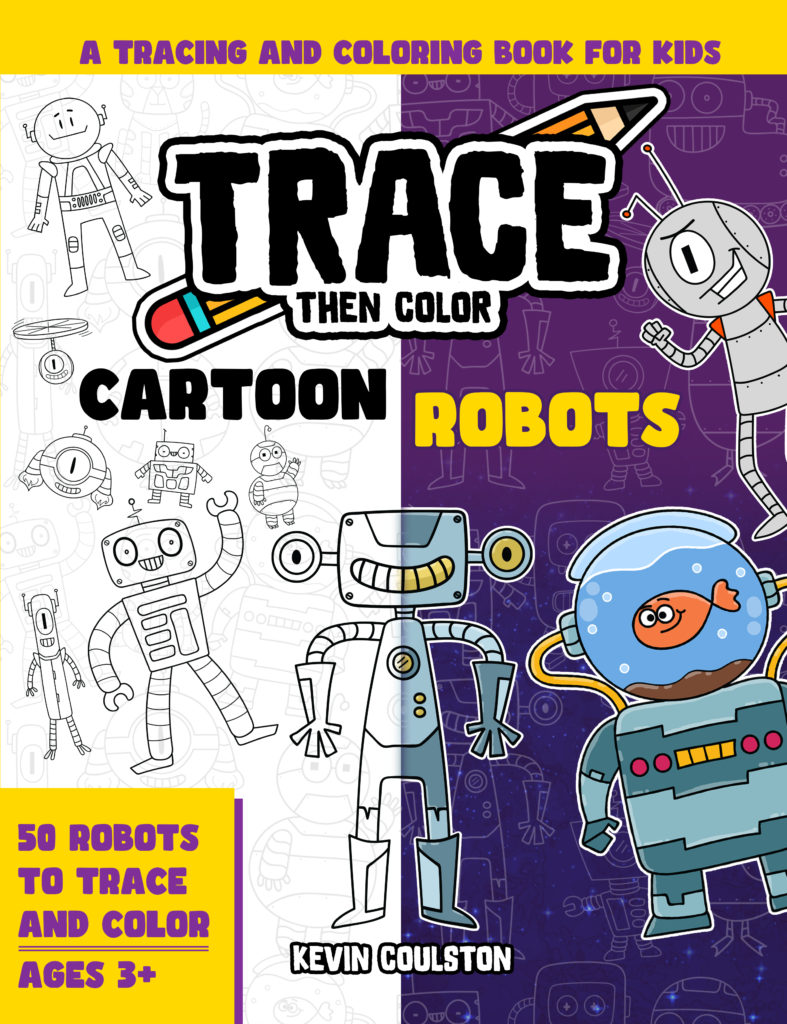
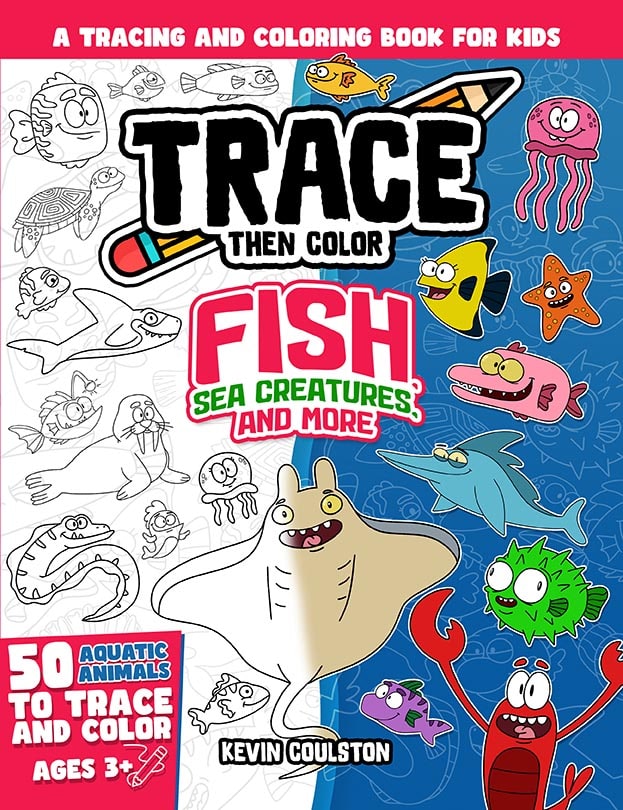
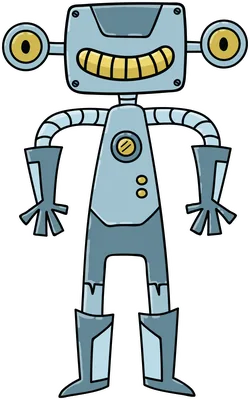
Corners teach stopping and turning. Curves teach steering. Robots are full of corners, which is one reason Trace Then Color: Cartoon Robots is a good choice for practicing this skill. Fish and sea creatures are full of curves, so Trace Then Color: Fish, Sea Creatures and More makes a nice partner.
The "outline first" habit
Show kids how to trace just inside the edge of a shape first, then fill the middle. It turns edge practice into a deliberate step. We explain it in outline first, then fill.
Tracing dotted lines
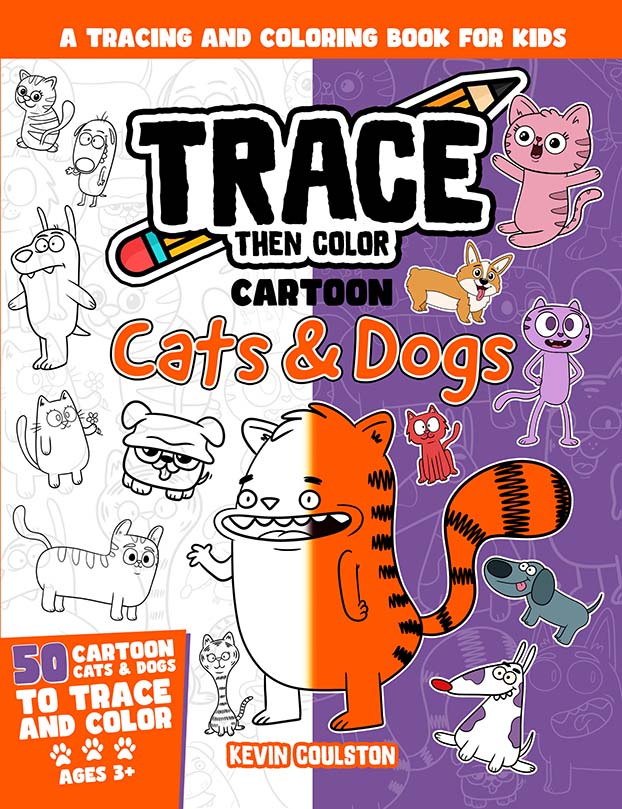
Following a dotted line is a classic visual-motor exercise. In a Trace Then Color book, kids trace the character first and then color it, so they get both kinds of practice on one page.
Games that build hand-eye coordination
- Stop on the line. Color toward an edge and freeze exactly on it. Count how many times you can stop right on the line.
- Dot to dot inside a shape. Put stickers or dots inside a big space and color a path that touches them all.
- Color the small parts first. Eyes, buttons and spots are small targets. Hitting them takes care.
- Mirror coloring. You color one half of a symmetrical picture, your child colors the other half to match. See symmetry coloring.
How it connects to school
Teachers often notice that kids who have done lots of coloring and tracing find it easier to write letters on lines, copy shapes from the board and cut with scissors. That is not because coloring teaches writing directly, but because it builds the visual-motor foundation that writing sits on. More in from crayon to handwriting.
Keep it fun
Hand-eye coordination improves with repetition, and kids only repeat things they enjoy. Let your child pick the page, praise effort rather than neatness, and never treat a stray line as a mistake. A crayon mark outside the robot is just a robot with a jet trail.
Questions parents ask
Is it a problem if my 4-year-old colors outside the lines?
No. Many 4-year-olds color mostly inside big shapes but drift out at the edges. Control near edges keeps improving through ages 5 to 7.
Are coloring apps as good for hand-eye coordination?
Tapping a screen to fill a shape does not ask the hand to steer, slow down or control pressure the way a crayon does. Apps can be fun, but they are not a substitute for real crayons.
What else builds hand-eye coordination?
Building blocks, threading beads, playing catch, cutting with child-safe scissors and pouring water during bath time all help. Coloring fits nicely alongside them.
About Kevin Coulston
Kevin Coulston is a cartoonist and member of the National Cartoonists Society who has written and illustrated more than 100 drawing, tracing and coloring books for kids, including the Trace Then Color series. Meet Kevin or browse all his books on FirstArtBooks.com.