Fold a butterfly in half and both wings match. That is symmetry. Kids see symmetry everywhere, in faces, leaves, snowflakes and buildings, and learning about it builds visual thinking and early geometry skills.
Coloring is a hands-on way to explore it.
What is symmetry?
A shape is symmetrical if you can draw a line through it and both halves are mirror images. That line is called the line of symmetry. Some shapes have one line of symmetry, some have many and some have none.
Finding symmetry in characters
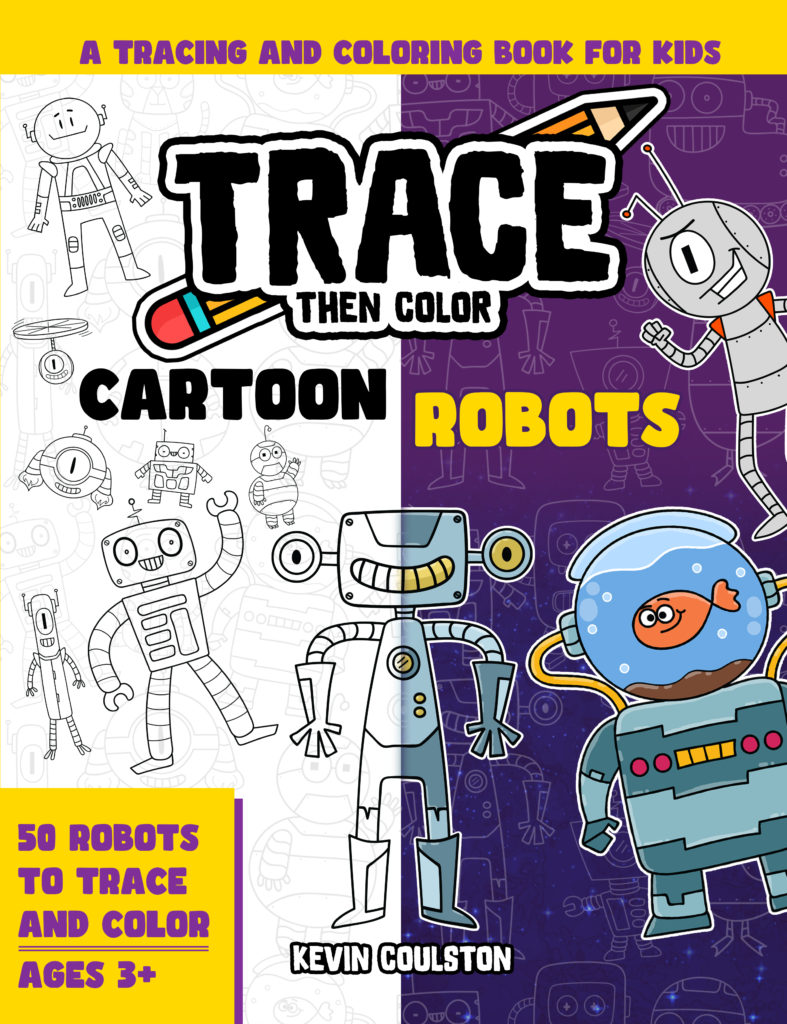
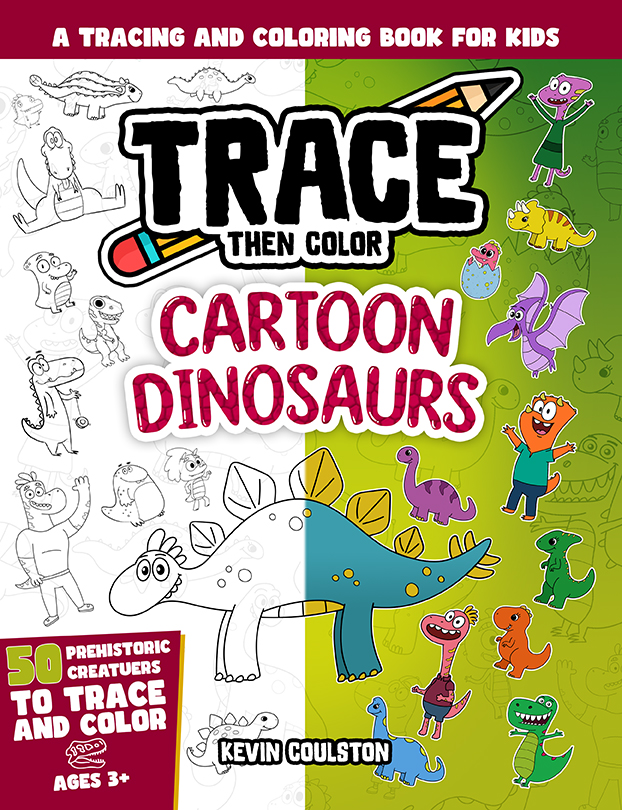
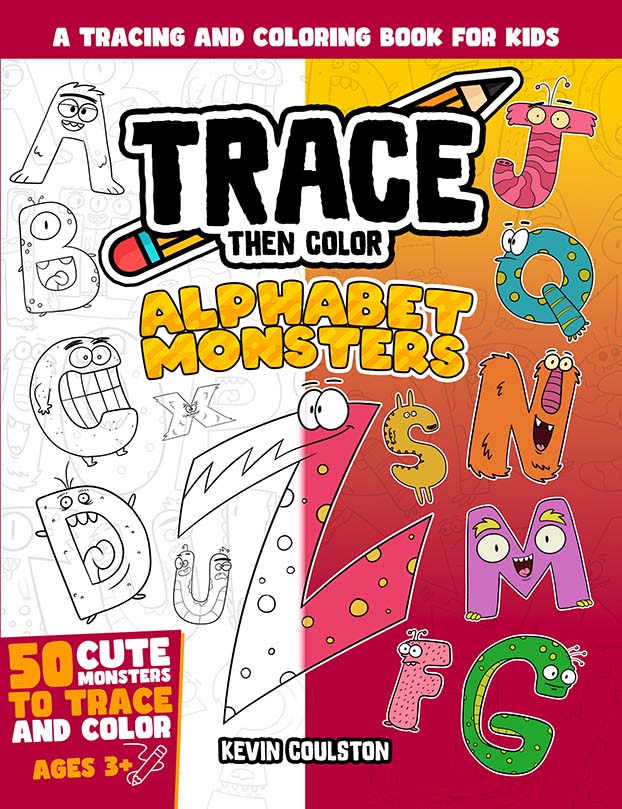
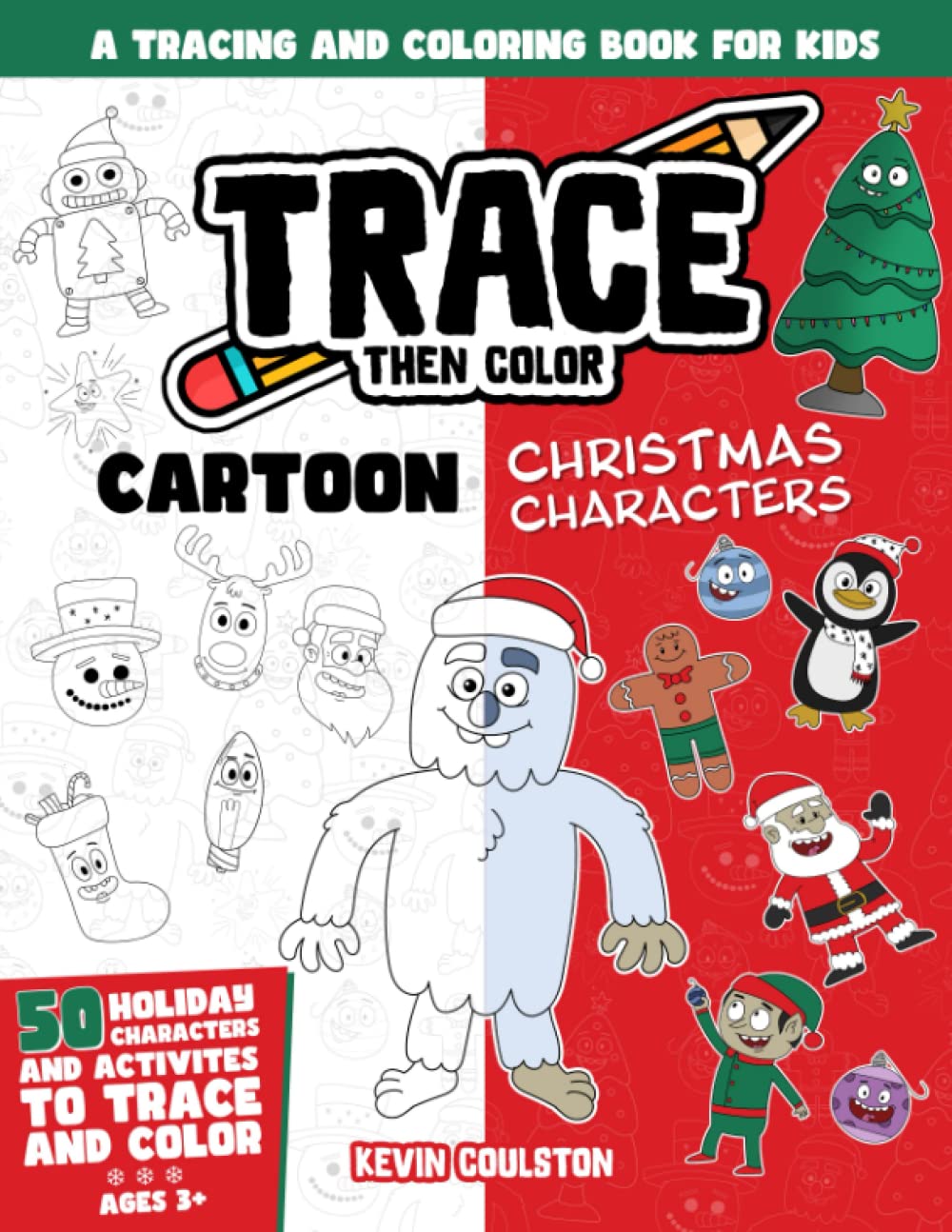
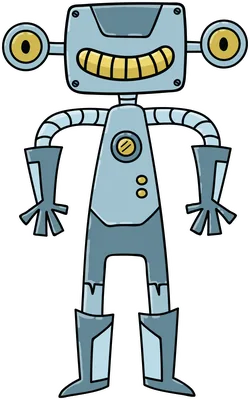
Many cartoon characters are close to symmetrical when they face forward. Robots are especially good, with matching arms, eyes and legs. Trace Then Color: Cartoon Robots is a great place to start.
Ask:
- "Where’s the middle of this robot?"
- "If we folded it, would the sides match?"
- "Which parts are on both sides?"
Mirror coloring games
Match the sides
Your child colors one side of a symmetrical character, then colors the other side to match exactly. It takes careful looking.
Parent and child mirror
You color the left half, your child colors the right half to match yours.
Fold and check
Use a small mirror placed on the line of symmetry. Does the reflection match the other side?
Ink blot style
Fold a page, open it, color heavily with crayon on one half, fold and rub hard. Some of the color transfers to make a mirror image.
Breaking symmetry on purpose
Real faces and bodies are never perfectly symmetrical, and asymmetry can be fun:
- One eye open, one eye winking
- Different colored socks
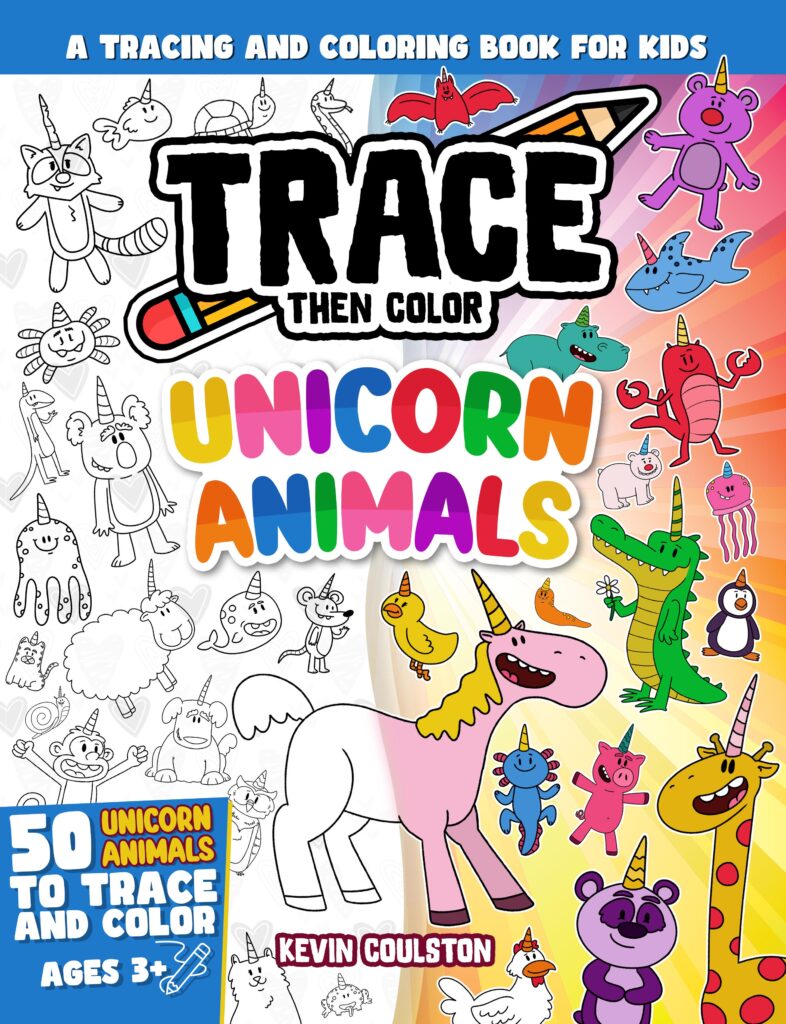
- A unicorn with a half-pink, half-blue mane. Try a character from Trace Then Color: Unicorn Animals.
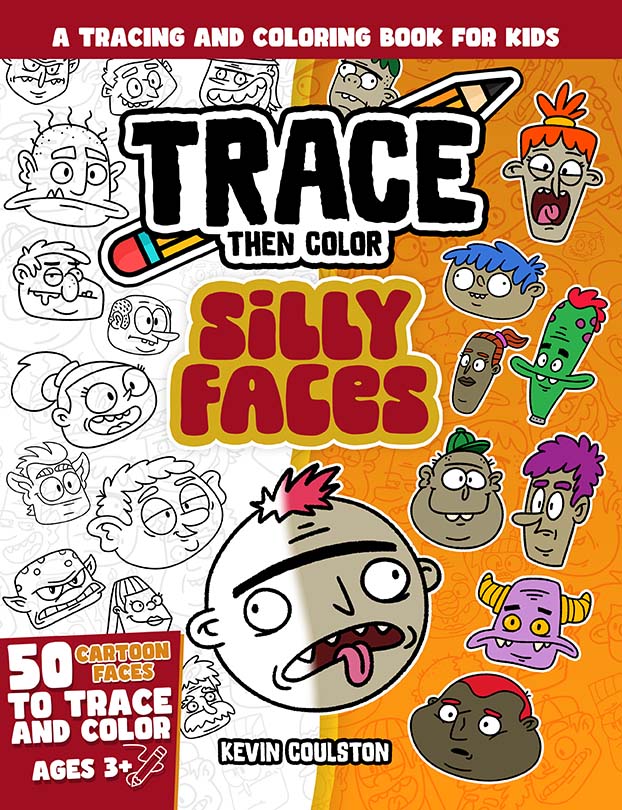
- Silly faces with crooked grins. Trace Then Color: Silly Faces is full of wonky expressions.
Talking about when things are and are not symmetrical sharpens observation.
Symmetry in nature
Look for symmetry outside: leaves, flowers, butterflies, snowflakes, starfish. Starfish have five lines of symmetry, which kids find amazing.
The math connection
Symmetry is part of early geometry. Understanding it helps with shapes, patterns and spatial reasoning. See coloring and spatial awareness.
Questions parents ask
What age can kids understand symmetry?
Many kindergarteners can understand basic symmetry; younger kids enjoy mirror games.
Are faces symmetrical?
Roughly, but not exactly. Most faces are slightly different on each side.
Is a circle symmetrical?
Yes. A circle has endless lines of symmetry through its center.

About Kevin Coulston
Kevin Coulston is a cartoonist and member of the National Cartoonists Society who has written and illustrated more than 100 drawing, tracing and coloring books for kids, including the Trace Then Color series. Meet Kevin or browse all his books on FirstArtBooks.com.