Color names seem simple to adults, but they are surprisingly tricky for small children. Colors are abstract. A red ball and a red apple share nothing except the color, so kids have to figure out that "red" refers to that one property and not the object. That takes time and lots of examples.
Coloring is one of the most natural ways to help. Every crayon is a color lesson waiting to happen.
When do kids learn colors?
Children vary a lot. Many toddlers can match colors before they can name them. Many start naming a few colors around age 2, and most know the basic colors somewhere between ages 3 and 4. Don’t worry if your child mixes up names for a while; it is very common.
Start with a few colors
Instead of a big box, put out two or three crayons. Red, blue and yellow are a classic start. Once those are solid, add green, orange and purple, then pink, brown, black and white.
Name colors constantly
Use color words in everyday sentences while coloring:
- "You picked the blue crayon."
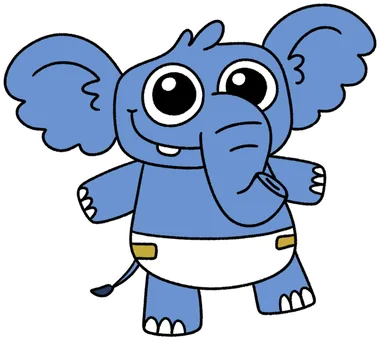
- "The elephant is getting so blue!"
- "Can you pass me the red one?"
Name the color, not just the object. Repeat often.
Color games for toddlers and preschoolers
Find and color
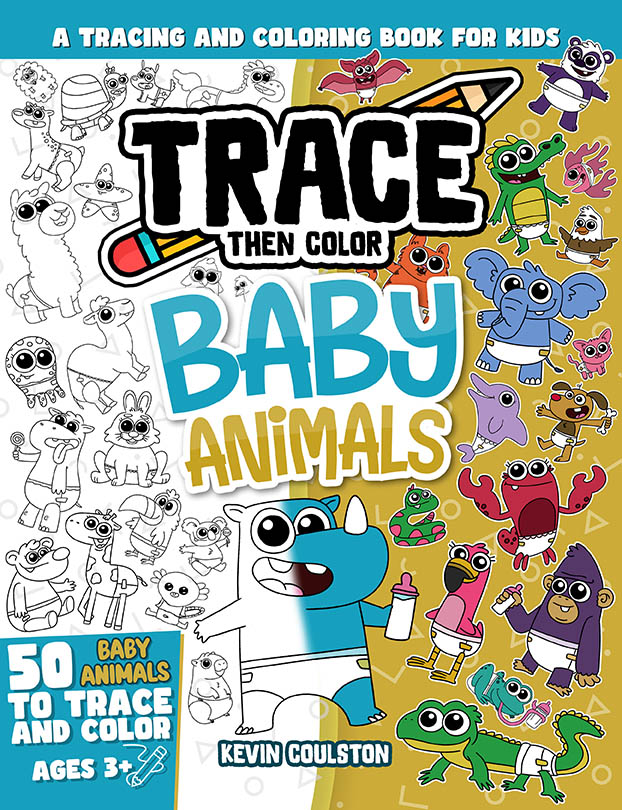
"Can you find the yellow crayon? Let’s color the duck yellow." Baby animals make great subjects: Trace Then Color: Baby Animals has friendly, simple shapes for little hands.
Color hunt
Pick a color, then find three things in the room that match it. Color a picture using only that color.
One color day
Make Tuesday "blue day." Color only in blue, eat a blue snack, wear blue socks.
Crayon sorting
Sort crayons into cups by color. Simple and satisfying.
Match the page
Point to a color in a picture book, then find the crayon that matches.
Use characters with obvious colors
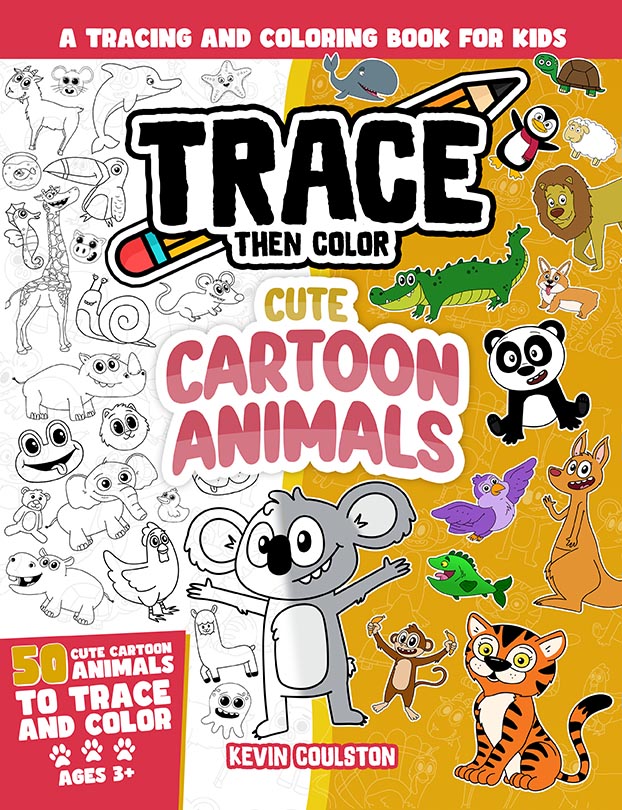
Some subjects come with expected colors, which helps learning: a yellow sun, a green frog, an orange pumpkin. Talk about them: "What color are frogs usually?" Other times, invite silly colors: "What if the frog was purple?" Both are useful. Simple, rounded animals like those in Trace Then Color: Cute Cartoon Animals are good for both games.
Don’t quiz too much
Constant "What color is this?" can feel like a test. Mix in lots of naming and modeling, and keep the questions light.
Beyond basic colors
Once basic colors are solid, introduce light and dark versions, color mixing and fancy color names. See color mixing for kids and beyond red and blue.
Questions parents ask
My 3-year-old mixes up blue and green. Should I worry?
Mixing up colors that are next to each other on the spectrum is very common. If confusion continues past age 4 or 5, or your family has a history of color blindness, mention it to your pediatrician.
Should I use flashcards for colors?
Flashcards are not necessary. Everyday play and coloring teach colors well and are more fun.
How can I tell if my child is color blind?
Signs include consistently confusing red and green or brown and green. Color vision deficiency is more common in boys. Ask your pediatrician or an eye doctor for a simple test.

About Kevin Coulston
Kevin Coulston is a cartoonist and member of the National Cartoonists Society who has written and illustrated more than 100 drawing, tracing and coloring books for kids, including the Trace Then Color series. Meet Kevin or browse all his books on FirstArtBooks.com.