"What happens if I put blue on top of yellow?" It is one of the great discoveries of childhood. Color mixing turns coloring into a science experiment, and you do not need paint to do it.
Primary and secondary colors
In the traditional art color wheel taught in schools:
- Primary colors: red, yellow and blue. They cannot be made by mixing other colors.
- Secondary colors: orange, green and purple. Each is made by mixing two primaries. - Red + yellow = orange - Yellow + blue = green - Blue + red = purple
(Printers and screens use different primary colors, but red, yellow and blue is what most kids learn in school art.)
Mixing with crayons
Crayons mix by layering. Color lightly with one color, then color lightly over it with another.
Tips:
- Light first. Start with the lighter color, usually yellow, then add the darker one on top.
- Press gently. Heavy wax on the first layer stops the second layer from sticking.
- Go back and forth. A third light layer of the first color can blend things further.
Mixing with colored pencils
Colored pencils layer beautifully. Light pressure, several layers, and you get smooth mixes. Older kids can also try blending, covered in blending colors for kids.
Mixing with markers
Washable markers can mix a little if you color one over another quickly while the first is still wet, but results vary. Markers are better for bright, solid color than for mixing.
Experiments to try
The mixing chart
Draw three circles in a row. Color the first yellow, the third blue, and the middle one yellow then blue. Do the same for red and yellow, and red and blue. Now you have a homemade mixing chart.
Mixing monster
Color a character using only the three primary crayons, mixing to make every other color. It is a fun challenge.
Ocean mixing
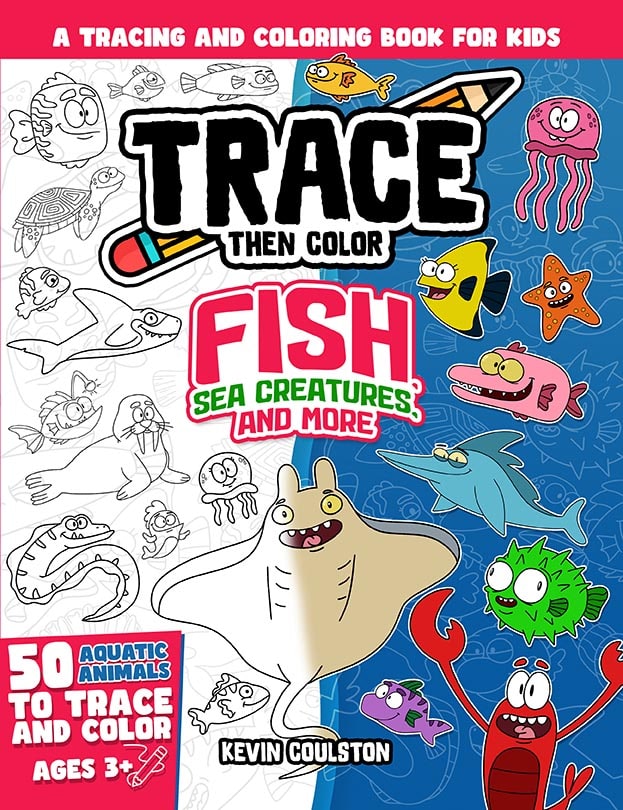
Sea creatures and water are perfect for mixing blues and greens. Try layering to make turquoise, teal and sea green. Trace Then Color: Fish, Sea Creatures and More is great for this.
Rainbow mane
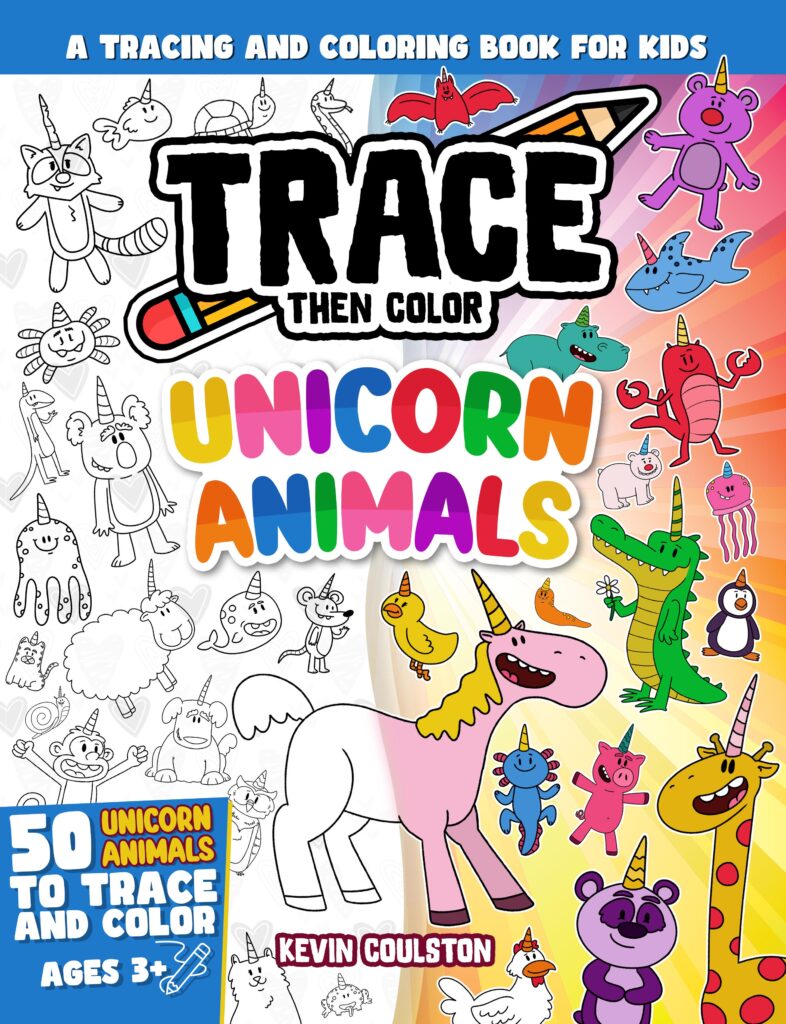
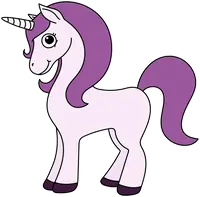
Color a unicorn’s mane with overlapping stripes so the colors blend at the edges. Trace Then Color: Unicorn Animals has plenty of manes to experiment on.
Light and dark
Adding white or black, or pressing lighter and harder, makes tints and shades. Light pink is a tint of red; maroon is a shade of red. See easy shading for kids.
Next steps
Once kids understand primary and secondary colors, they are ready to make a color wheel and learn about warm and cool colors. See make a color wheel and warm and cool colors.
Questions parents ask
At what age can kids learn color mixing?
Preschoolers enjoy the "magic" of mixing; kindergarteners and up can start to remember which combinations make which colors.
Why does my child’s mixed color look muddy?
Pressing too hard, or mixing too many colors, makes brown. Use light layers and only two colors.
Is paint better for color mixing?
Paint mixes more dramatically, but crayons and pencils are less messy and teach the same idea.
About Kevin Coulston
Kevin Coulston is a cartoonist and member of the National Cartoonists Society who has written and illustrated more than 100 drawing, tracing and coloring books for kids, including the Trace Then Color series. Meet Kevin or browse all his books on FirstArtBooks.com.