Around one in ten people is left-handed, so in a typical classroom there are two or three lefties. Most of the world is set up for right-handed people, and coloring is no exception. A few small adjustments can make coloring far more comfortable for a left-handed child.
Paper position
Right-handed children usually tilt the paper slightly to the left. Left-handed children usually do better with the paper tilted to the right, with the page placed a little to the left of their body. This lets them see what they are coloring and keeps the wrist straighter.
Try a few angles and let your child choose. Some lefties like a strong tilt; some like a small one.
Avoid the smudge
Lefties move their hand across work they have just done, which can smear marker and pencil.
- Crayons and colored pencils smudge very little and are great choices.
- Quick-dry markers are better than slow-drying ones.
- Start from the right. Coloring the right side of the page first means the hand moves away from finished areas.
- Put scrap paper under the hand to protect finished work.
Grip
Left-handed kids develop grip the same way right-handed kids do, from fist to fingertips (see crayon grip tips). Some lefties develop a "hooked" wrist, curling the hand above the line. Tilting the page to the right and holding the crayon slightly further from the tip can reduce hooking. If you are concerned, an occupational therapist can help.
Seating and light
- Sit on the left. At a shared table, put your lefty on the left end so their elbow does not bump a right-handed neighbor.
- Light from the right. A lamp on the right side prevents the hand from casting a shadow over the work.
Do not switch hands
In the past, left-handed children were often made to use their right hand. Today we know that is unnecessary and can be frustrating. Let your child use the hand that feels natural. Some young children switch hands for a while before settling, and that is normal.
Model it, if you can
If you are right-handed, sit facing your child rather than beside them when you demonstrate something. They can mirror your movements more easily. If a left-handed relative is around, they can be a great coloring buddy.
Good pages for lefties
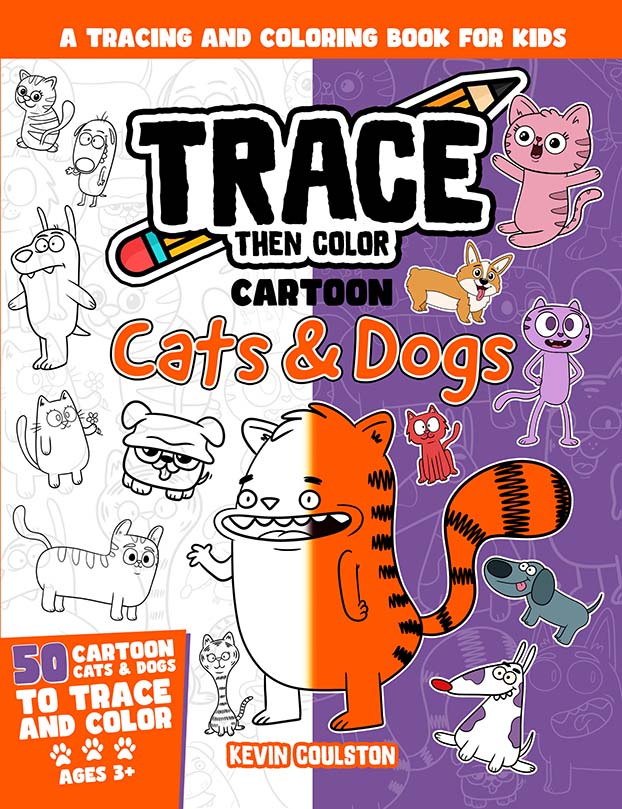
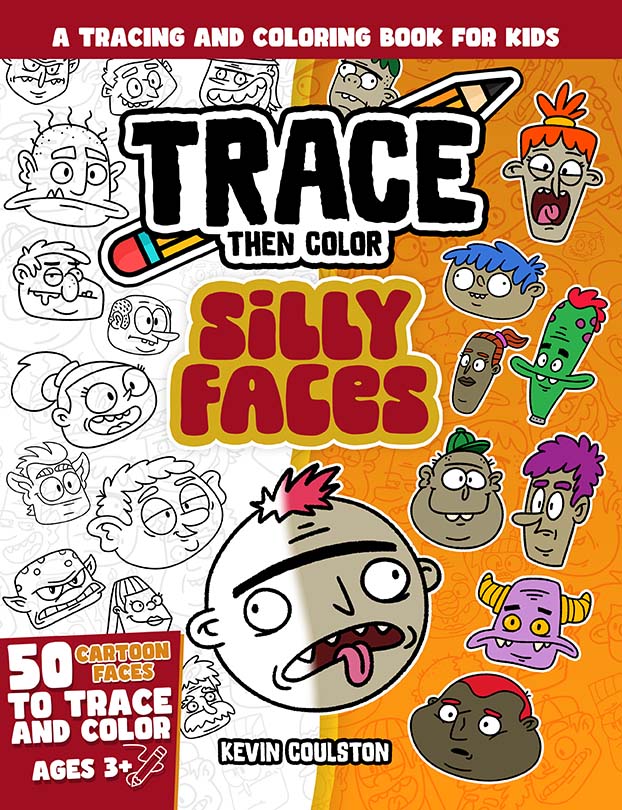
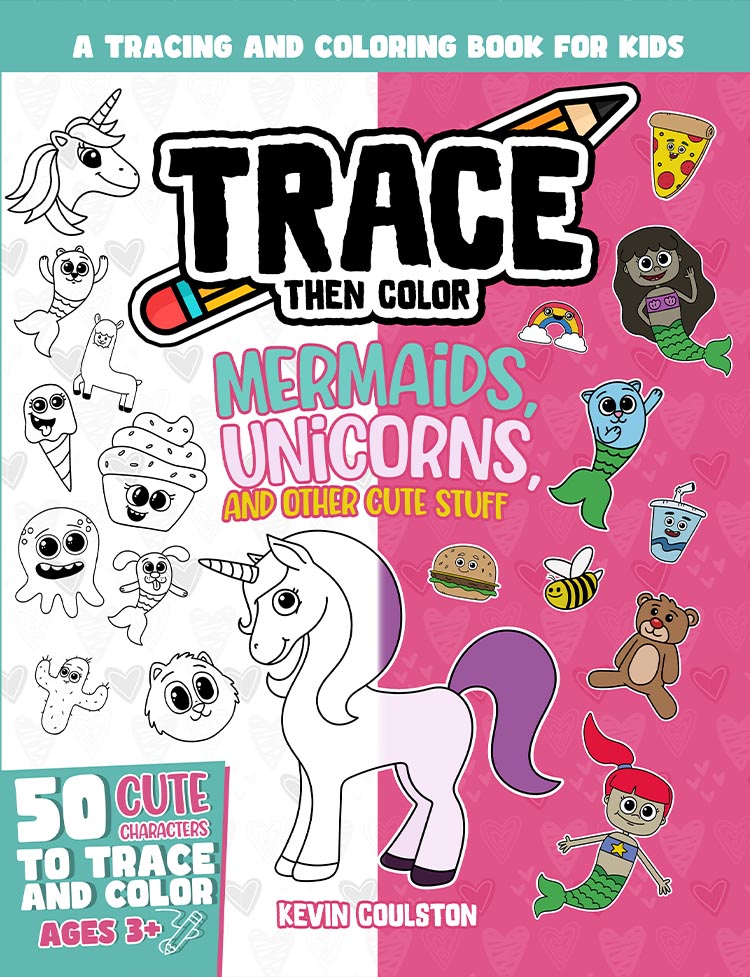
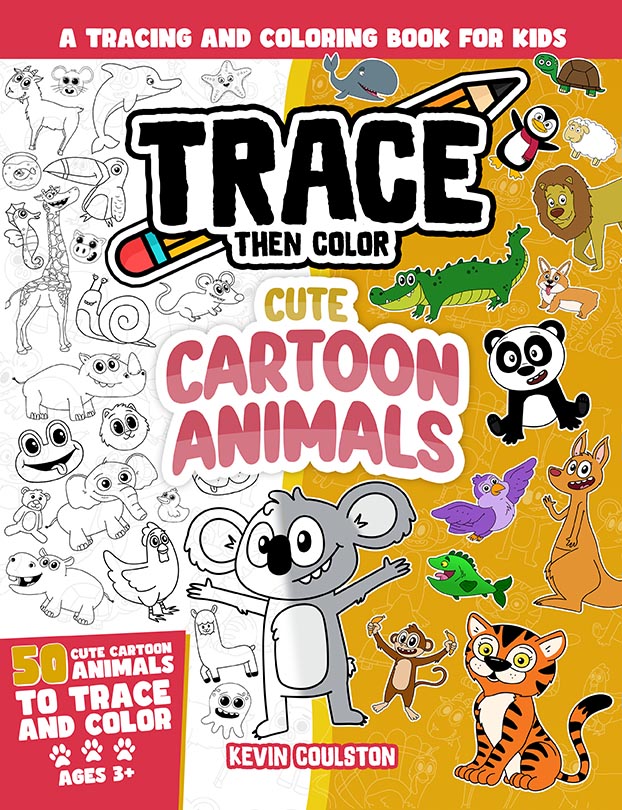
Any page works, but pages with a single central character are easier than busy scenes because there is less risk of smudging nearby details. Characters with big spaces and bold outlines, such as those in Trace Then Color: Cartoon Cats and Dogs and Trace Then Color: Silly Faces, are comfortable for young lefties.
Tracing for lefties
When tracing, lefties may find it easier to trace lines from right to left or bottom to top in places. That is fine. The goal is a smooth, comfortable movement, not a set direction. Our how to teach tracing post covers more.
Questions parents ask
When do kids show which hand they prefer?
Many children show a clear preference between ages 2 and 4, and it is usually settled by about age 6.
Are there special crayons for left-handed kids?
Not really. Regular crayons and colored pencils work for everyone. Left-handed scissors, however, are worth buying.
My child uses both hands. Are they ambidextrous?
Truly ambidextrous people are rare. Most young kids who switch hands simply have not settled on one yet. Let them explore.

About Kevin Coulston
Kevin Coulston is a cartoonist and member of the National Cartoonists Society who has written and illustrated more than 100 drawing, tracing and coloring books for kids, including the Trace Then Color series. Meet Kevin or browse all his books on FirstArtBooks.com.