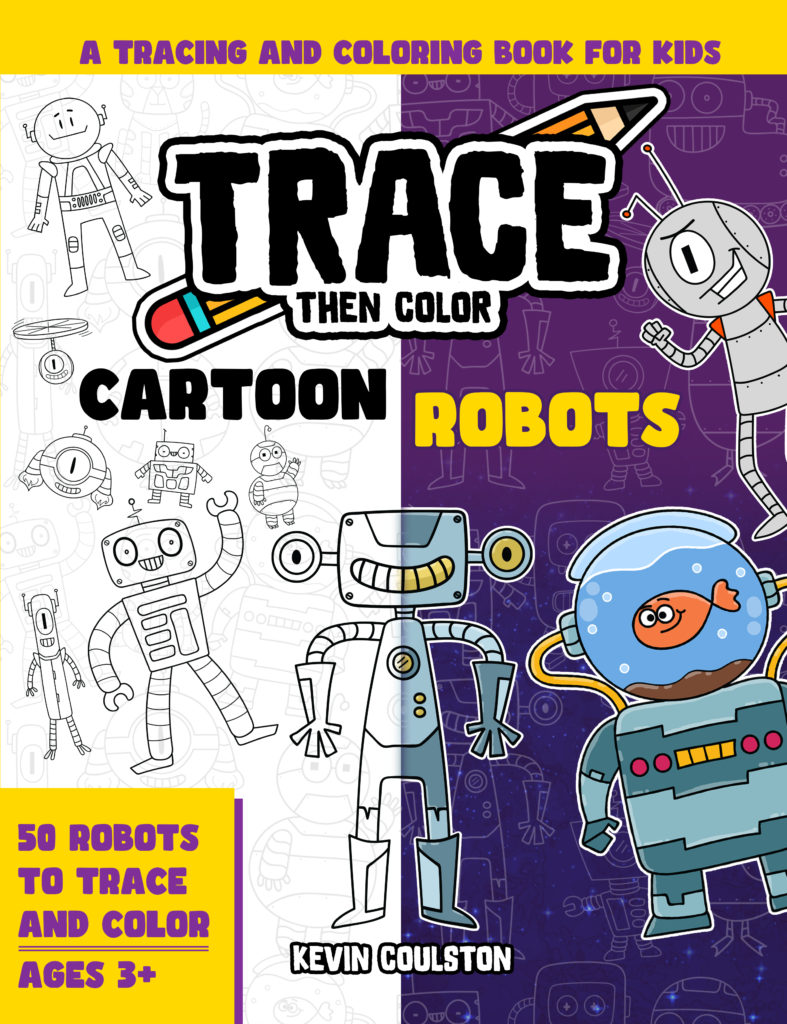
Tracing looks easy to adults, but for a 3-year-old it is a real challenge. They need to hold the crayon, look at the dots, plan where to go and steer their hand, all at once. With a little guidance, most children get the hang of it quickly.
Step 1: Finger tracing
Before using a crayon, trace with a finger. Follow the dotted lines slowly. This lets kids feel the path without worrying about making a mark. Say the directions out loud: "Down, around, up."
Step 2: Sit well
- Feet flat on the floor or a footrest
- Table at elbow height
- Paper slightly tilted (to the left for right-handers, to the right for left-handers)
- Helper hand holding the page
See the helper hand.
Step 3: Choose the right tool
A pencil, crayon or thin marker. A slightly short crayon encourages a good grip. See best tools for tracing.
Step 4: Start with short lines
Begin with short, straight lines, like a robot’s leg or a box edge. Then move to gentle curves, then circles, then whole shapes.
Step 5: Look ahead
Teach your child to look at the next dot, not the crayon tip. "Where are you going? Look at the next dot." Looking ahead is the secret to smooth tracing.
Step 6: Go slowly
Speed makes lines wobble off the dots. Try "snail speed" tracing. Make it a game: "Can you trace as slowly as a turtle?" See slow lines.
Step 7: Lift at corners
At a sharp corner, it is fine to stop, lift and start the next line. Kids do not need to trace a whole character in one go.
Step 8: Big shapes first, details last
Trace the main outline first, then the eyes, mouth and small details. Small details are harder, so save them for when the hand is warmed up.
Step 9: Celebrate
Wobbly lines are fine. Lines off the dots are fine. What matters is effort and progress. Praise specific things: "You went so slowly on that curve!" See wobbly lines are fine.
Good first pages
Simple, rounded characters with clear outlines are best for beginners:
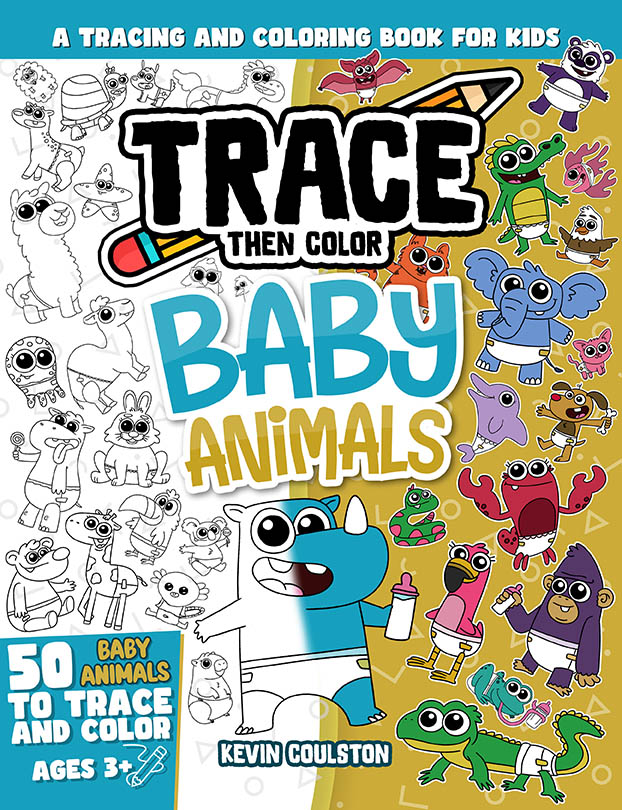
- Trace Then Color: Baby Animals has soft, simple shapes.
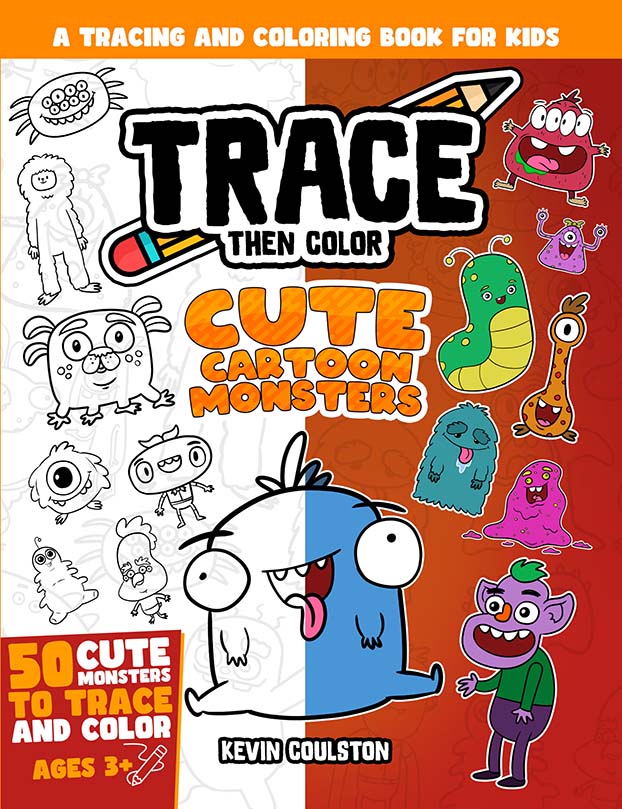
- Trace Then Color: Cute Cartoon Monsters has round, friendly monsters that are easy to follow.
Keep sessions short
Five to ten minutes is plenty for a 3 or 4-year-old. Stop while it is still fun.
Turn tracing into games
Tracing races, tracing with eyes closed for a giggle and "trace the path home" stories all add fun. See 8 tracing games.
Questions parents ask
My child scribbles over the dots instead of tracing. What should I do?
That is normal at first. Try finger tracing, then trace together with your hand gently over theirs, then let them try alone.
Which direction should kids trace?
For pictures, any comfortable direction is fine. For letters, teachers usually teach top-to-bottom and left-to-right.
How long until my child can trace well?
It varies. With regular short practice, many kids improve noticeably over a few weeks.

About Kevin Coulston
Kevin Coulston is a cartoonist and member of the National Cartoonists Society who has written and illustrated more than 100 drawing, tracing and coloring books for kids, including the Trace Then Color series. Meet Kevin or browse all his books on FirstArtBooks.com.