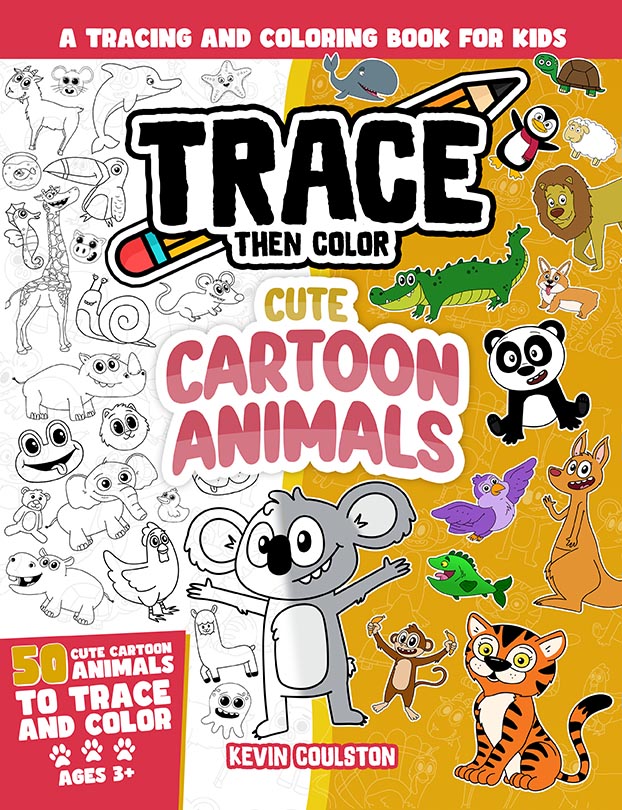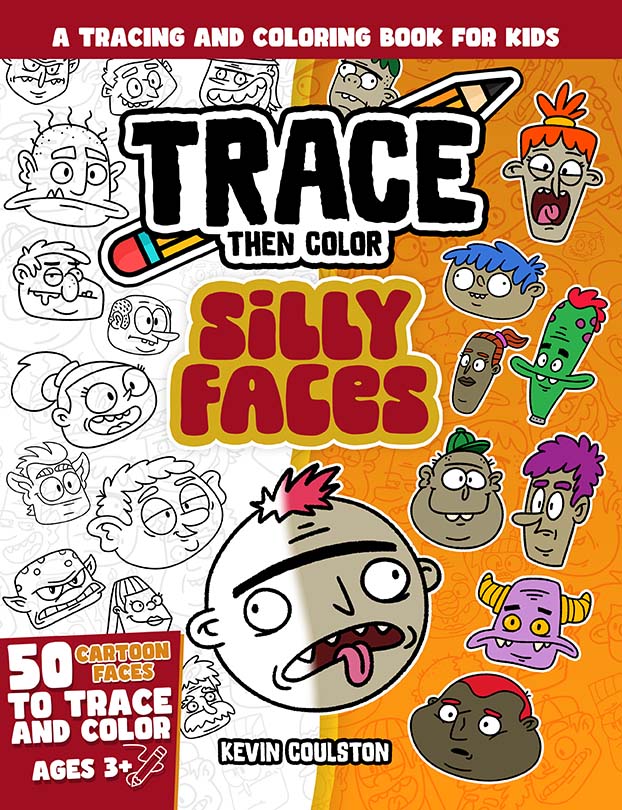
Your child traces carefully, and the line drifts off the dots. Or it wobbles like a snake. Or it skips a whole section. Should you worry? Not at all. Wobbly tracing is a normal part of learning, and it gets better with practice.
Why lines wobble
- Developing control. The small muscles of the hand are still getting stronger.
- Speed. Kids often go too fast.
- Looking at the crayon, not ahead. Watching the tip instead of the next dot makes lines drift.
- Grip. A fist grip gives less control than a fingertip grip.
- Tiredness. Hands get tired, and lines get wobblier.
All of these improve naturally over time.
How to help, without correcting
Praise effort
"You traced the whole ear!" "You went so slowly on that curve." Positive attention keeps kids trying.
Slow down with games
"Can you trace as slowly as a sleepy snail?" See slow lines.
Look ahead
Remind them to look at the next dot, not the crayon.
Shorter sessions
Stop before the hand gets tired.
Easier pages
If a page has lots of tiny details, switch to one with big, simple shapes.
Turn slips into features
A line off the dots can become:
- Hair or fur
- A motion line showing speed
- A shadow
- A crack, a scar or a wrinkle
- Part of the background
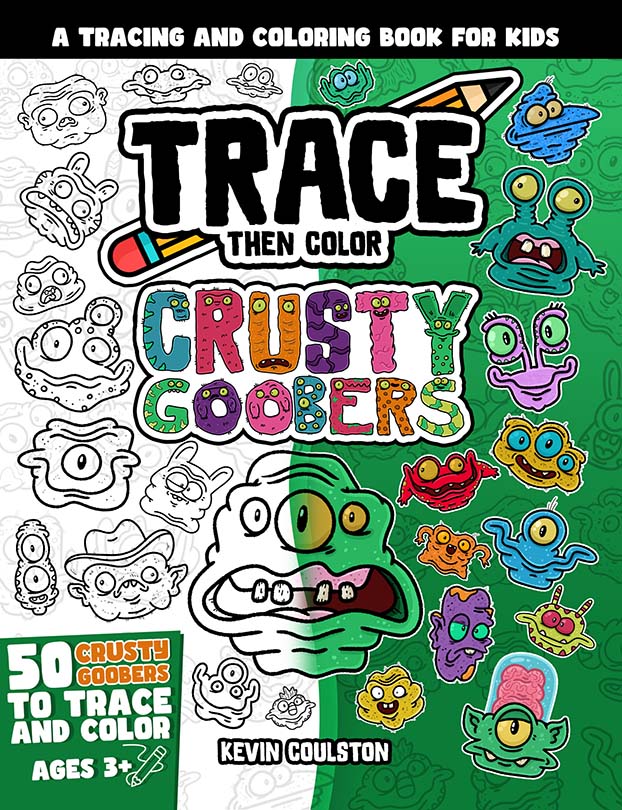
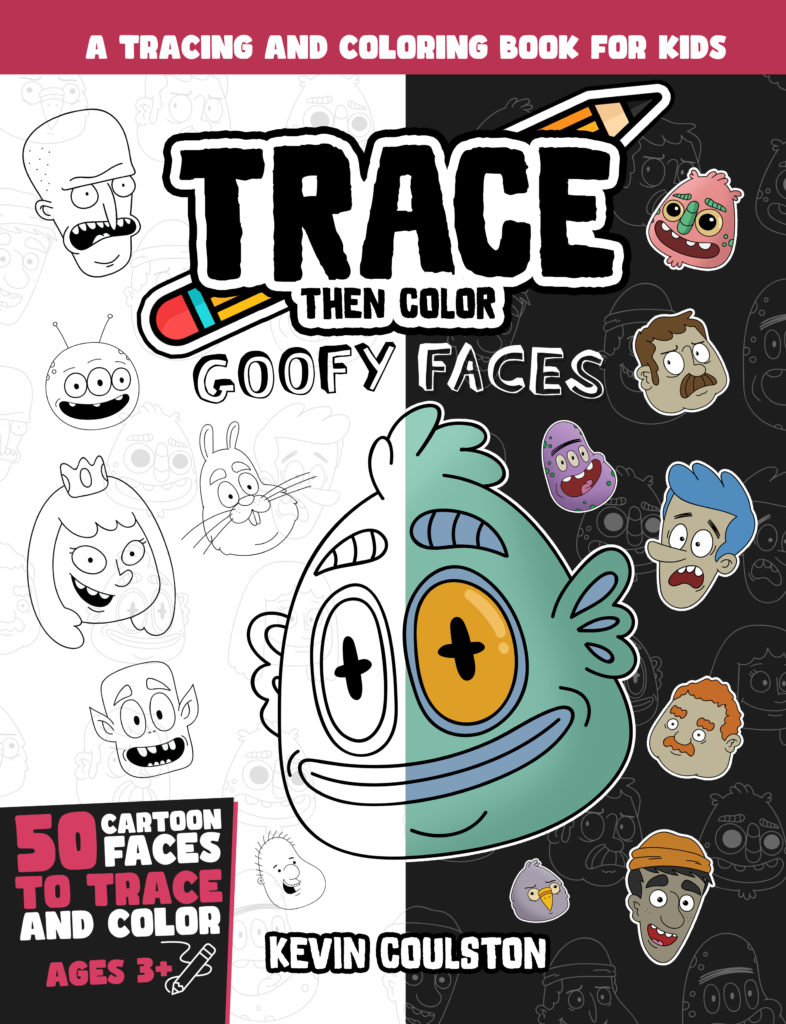
Some characters welcome wobbly lines. Gross, goofy creatures look even better with extra lumps and bumps: Trace Then Color: Crusty Goobers is the most forgiving book there is. Wacky faces are funny however the lines turn out: Trace Then Color: Goofy Faces.
Avoid erasing everything
Some kids want to erase every wobble. A little erasing is fine, but erasing everything can lead to frustration and torn paper. Encourage "keep going" rather than "start again."
What progress looks like
Over weeks and months, you will likely see:
- Lines staying closer to the dots
- Smoother curves
- Fewer skipped sections
- Longer tracing sessions
Keep a few early pages and compare them later. Kids love seeing how much they have improved.
When to ask for advice
If your child is in kindergarten or older and tracing remains very difficult despite regular practice, or they avoid all pencil tasks, mention it to their teacher or pediatrician. An occupational therapist can assess fine motor skills. See how coloring builds fine motor skills.
Questions parents ask
Should I hold my child’s hand to help them trace?
Occasionally guiding their hand can show the movement, but let them do most of the work themselves.
My child gets upset about wobbly lines. What can I do?
Model your own wobbly lines, praise effort and choose forgiving characters. See coloring and perfectionism.
Is it OK to color without finishing the tracing?
Yes. The book is meant to be fun. They can trace more next time.

About Kevin Coulston
Kevin Coulston is a cartoonist and member of the National Cartoonists Society who has written and illustrated more than 100 drawing, tracing and coloring books for kids, including the Trace Then Color series. Meet Kevin or browse all his books on FirstArtBooks.com.