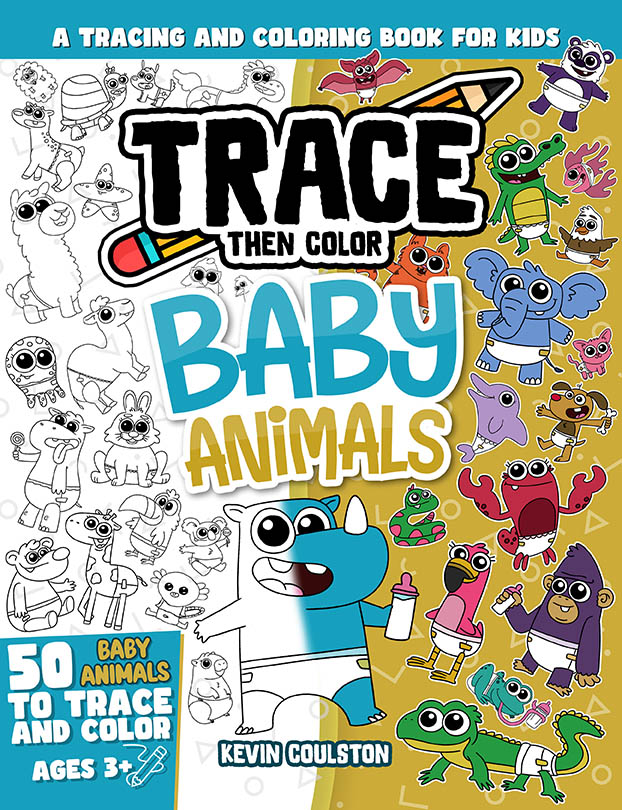
The tool your child traces with makes a surprising difference to how the page turns out and how much they enjoy it. Here is a quick guide to the options.
Soft pencil
Pros: Easy to erase, encourages a writing grip, precise line.
Cons: Light gray lines can be faint; some kids find it boring.
Best for: Kids 4 and up who want to correct mistakes, and kids preparing for handwriting.
Tip: A soft pencil (HB or 2B) glides more easily than a hard one. Triangular pencils help some kids with grip.
Thin washable marker
Pros: Bold, dark line that makes the character really pop; glides easily, so it is less tiring.
Cons: Cannot be erased; may bleed slightly on thin paper.
Best for: Kids who want a strong, finished-looking outline. Many kids love seeing the character appear in bold black.
Tip: Choose a fine tip, not a fat one, so the line stays on the dots.
Crayon
Pros: Easy for small hands, no smudging, satisfying texture.
Cons: Thick, waxy line can be hard to keep on the dots; colored crayon outlines may be less striking.
Best for: Ages 3 and up, especially kids still developing grip.
Tip: Use a sharp-ish crayon, or a short broken one for better grip.
Colored pencil
Pros: Precise, like a pencil, but colorful. You can trace in one color and color in another.
Cons: Needs sharpening; light pressure gives faint lines.
Best for: Kids 5 and up who want a colored outline.
Which to choose by age
- Age 3: Crayon or a chunky pencil.
- Ages 4 to 5: Pencil or thin washable marker.
- Ages 6 and up: Any; many like a fine black marker for a comic-book look.
Matching tool to the page
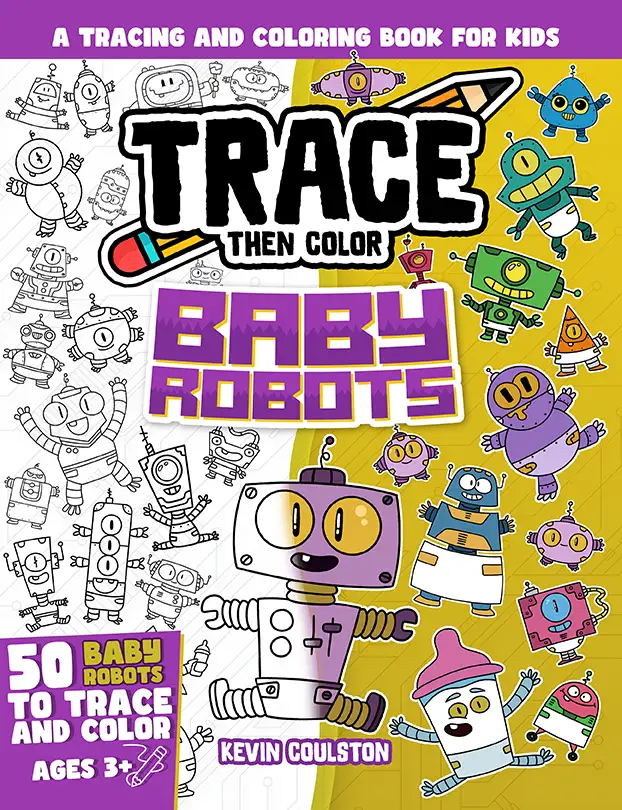
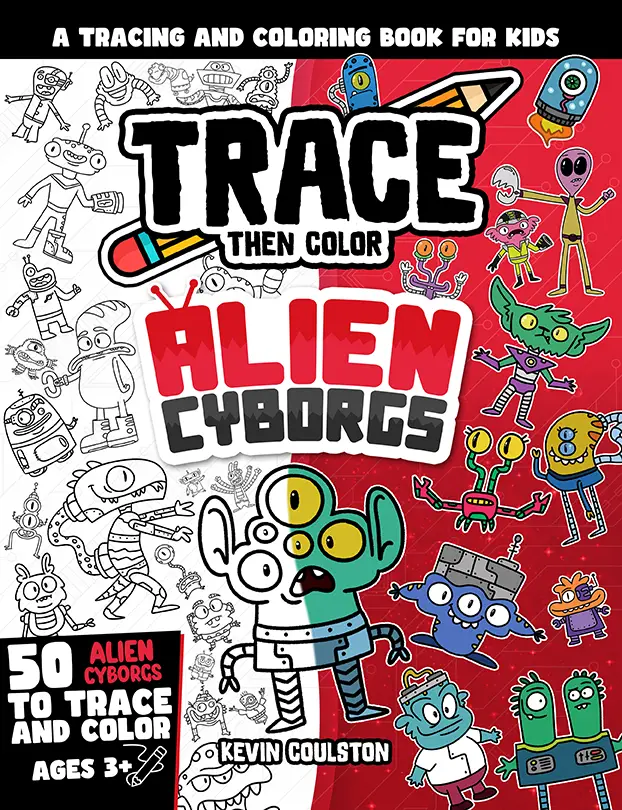
Simple, chunky characters like the ones in Trace Then Color: Baby Robots are easy to trace with a crayon or pencil. Detailed characters with lots of small parts, like those in Trace Then Color: Alien Cyborgs, look great traced with a fine marker or sharp pencil.
Then color with...
After tracing, switch to coloring tools: crayons, colored pencils or markers. If your child traced in marker, wait a minute for it to dry before coloring over it with marker, to avoid smearing. See crayons vs colored pencils vs markers.
A tracing kit
Keep a small tracing kit with the book:
- 2 soft pencils and an eraser
- 1 or 2 fine black washable markers
- A small sharpener
Questions parents ask
Should I use permanent markers for tracing?
Washable markers are safer for young kids and clothes. Permanent markers are best for older kids with supervision.
Can my child trace with a pen?
Older kids can. For younger kids, pencil or washable marker is easier and safer.
Does the tracing tool affect handwriting?
Tracing with a pencil practices the grip used for writing, so it is a nice choice for kids getting ready for school.

About Kevin Coulston
Kevin Coulston is a cartoonist and member of the National Cartoonists Society who has written and illustrated more than 100 drawing, tracing and coloring books for kids, including the Trace Then Color series. Meet Kevin or browse all his books on FirstArtBooks.com.