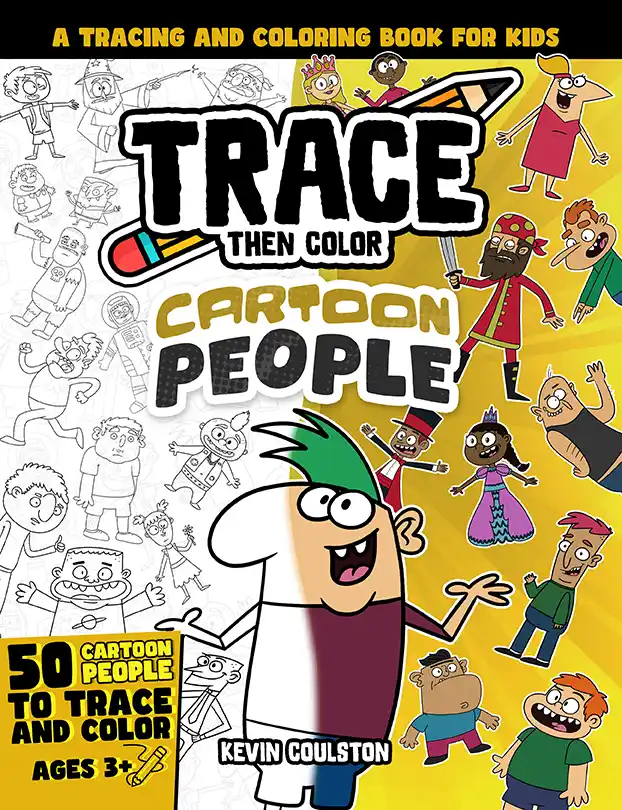
Have you ever wondered why some coloring pages are a joy and others are frustrating? A lot of it comes down to design. Characters made for children to trace and color follow a few principles. Here is a look at what goes into them, with examples from Kevin Coulston’s Trace Then Color books.
1. Build from simple shapes
Good cartoon characters start with circles, ovals, squares and triangles. Simple shapes are easy for kids to trace, and they make characters easy to recognize. A monster might be an oval body, two circle eyes and triangle horns. See finding shapes in cartoon characters.
2. One character, one page
A single character per page gives a clear goal and a clear finish. Busy scenes can overwhelm young kids.
3. Clear, confident lines
The outline needs to be easy to follow. Lines that are too thin, sketchy or broken confuse young tracers. In a tracing book, the dotted line has to show the path clearly.
4. Spaces big enough to color
Tiny spaces are frustrating for young kids. Good design gives big areas to fill and a few small details for interest.
5. A strong expression
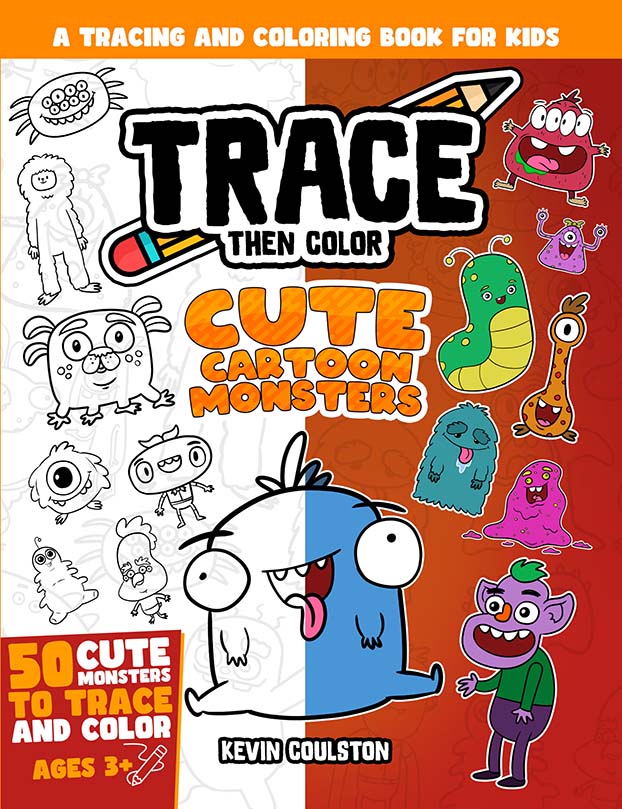
The face carries the personality. A big grin, wide eyes, a grumpy frown. Expression makes kids care about the character and want to finish it. Trace Then Color: Cute Cartoon Monsters shows how a simple face can make a monster lovable instead of scary.
6. Leave room for imagination
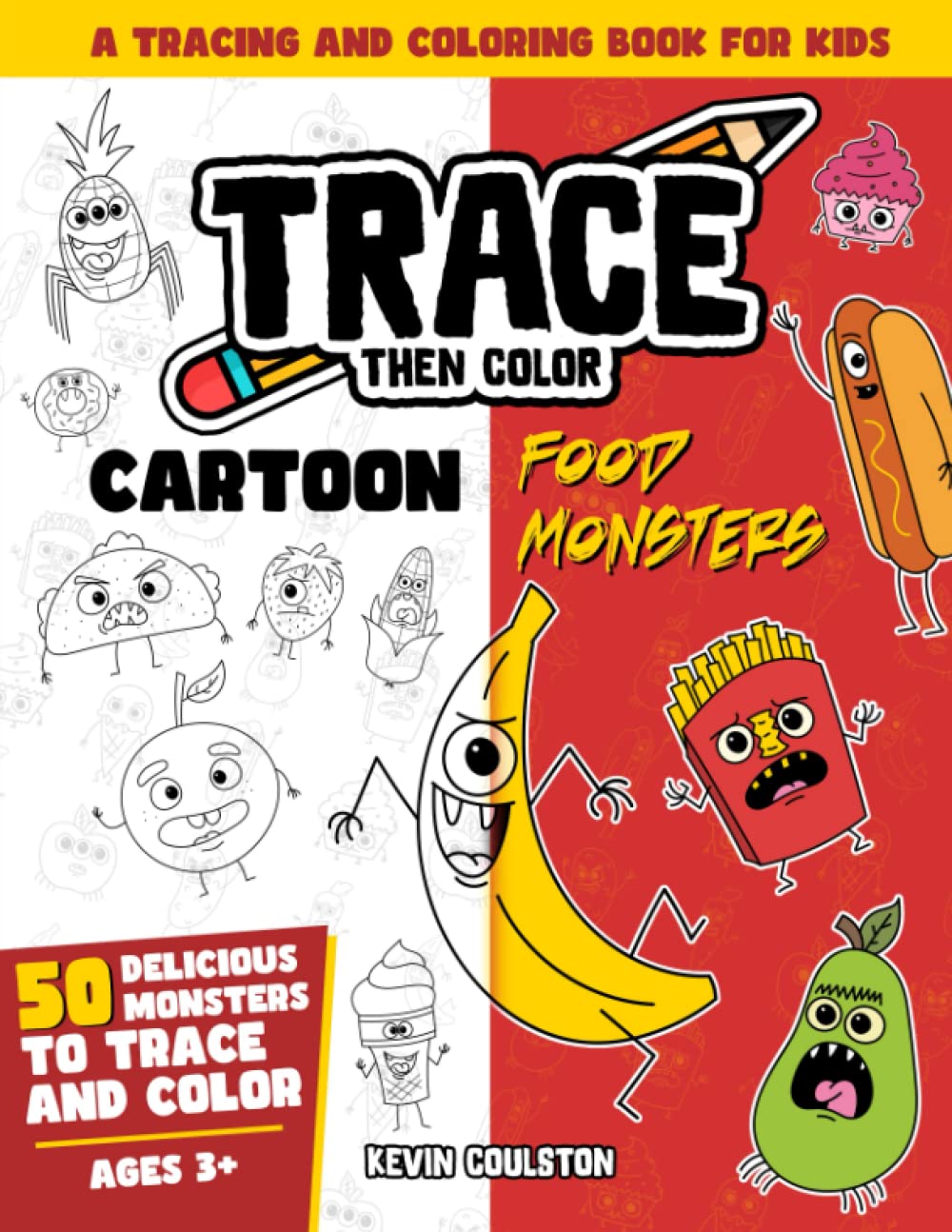
The best characters do not dictate colors. A food monster could be any color at all, which invites creativity. Trace Then Color: Cartoon Food Monsters is a good example: kids decide if the pizza is pepperoni red or rainbow.
7. Humor
Kids love funny. Goofy expressions, silly combinations and a touch of gross-out humor keep kids turning pages.
8. Details that matter
Every detail should add something: a tooth that shows personality, a patch that tells a story. Unnecessary details just add work.
Why this matters to parents
When choosing a coloring or tracing book, look for these features. Bold, simple, expressive characters lead to more finished pages and happier kids. See choosing a child’s first coloring book.
Design your own character
Kids can use the same rules:
- Pick a simple shape for the body.
- Add a big, expressive face.
- Add two or three details: horns, a tail, a hat.
- Give it a name and personality.
- Color it.
This is a great bridge from tracing to drawing. See from tracing to drawing.
About Kevin Coulston
Kevin Coulston is a cartoonist and member of the National Cartoonists Society who has made more than 100 drawing, tracing and coloring books for kids. Every character in the Trace Then Color series is his original design. Meet Kevin.
Questions parents ask
Why are cartoon characters easier to color than realistic pictures?
Cartoons simplify shapes and outlines, which makes them easier to follow and more forgiving of loose coloring.
Are original characters better than licensed ones?
Original characters let kids imagine freely without matching a TV version. See original characters vs licensed coloring books.
Can my child design characters for a coloring book?
Absolutely. Draw characters with simple outlines, photocopy them and make a homemade coloring book.

About Kevin Coulston
Kevin Coulston is a cartoonist and member of the National Cartoonists Society who has written and illustrated more than 100 drawing, tracing and coloring books for kids, including the Trace Then Color series. Meet Kevin or browse all his books on FirstArtBooks.com.