Tracing is often a child’s first step toward drawing. After tracing many characters, kids start to understand how pictures are built. Many then want to try drawing on their own. Here is how that progression often looks, and how to support it.
Stage 1: Trace and color
Your child traces dotted outlines and colors them. They are learning control and seeing how characters are put together.
Stage 2: Trace and add
Your child starts adding their own touches: a hat, a background, a speech bubble, extra spots. This is the first sign of independent drawing. See trace it, then add your own details.
Stage 3: Copy beside
Your child looks at a traced character and tries drawing it on a blank paper next to it. The first attempts may look very different, and that is fine. They are learning to translate what they see into lines.
Stage 4: Draw from memory
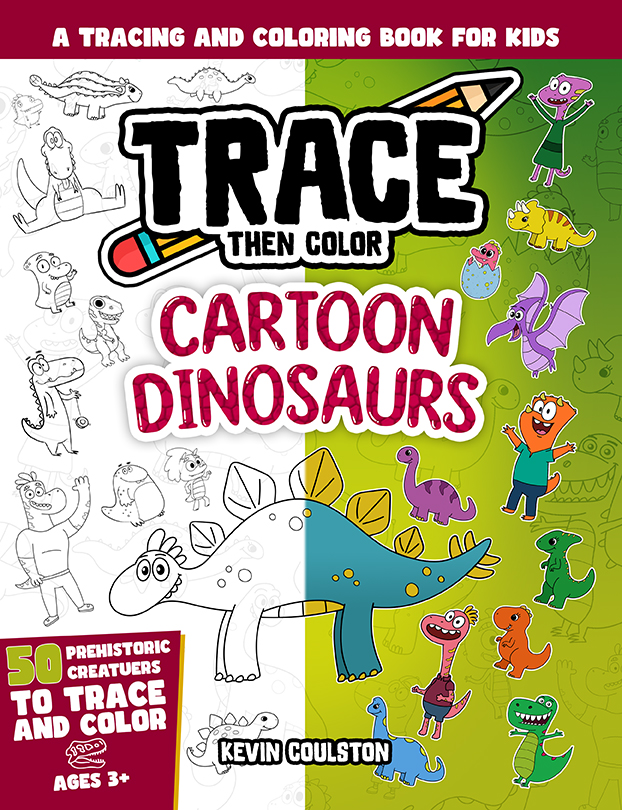
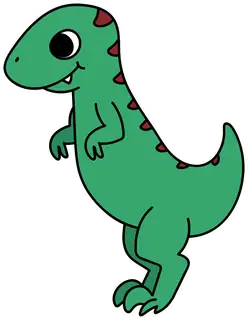
After drawing the same character a few times, many kids can draw it without looking. Dinosaurs and animals are favorites at this stage. A dinosaur fan who has traced every page of Trace Then Color: Cartoon Dinosaurs often starts drawing dinosaurs everywhere.
Stage 5: Invent
Finally, kids create their own characters. They use the shapes and tricks they learned while tracing, like circle heads and oval bodies, to invent new creatures.
How to support each step
- Keep blank paper next to the coloring book. Invite drawing without pushing it.
- Point out shapes. "Look, the dog’s head is a circle with two triangles for ears." See finding shapes in cartoon characters.
- Praise attempts. Early drawings will not look like the traced ones. That is normal.
- Draw together. Draw your own version beside your child’s. Show that adults’ drawings are imperfect too.
- Revisit favorites. Tracing the same character again after drawing it can help kids notice details.
When to try step-by-step drawing books
When your child starts drawing on their own and asks "How do I draw a...?", step-by-step drawing books are a great next step. They break characters into simple steps, building on the same shapes kids met while tracing. Kevin Coulston’s How to Draw books follow the same characters and themes as Trace Then Color, so kids can trace a dinosaur, then learn to draw one. Browse them on our sister site, BestDrawingBooks.com.
Not every child moves at the same pace
Some kids want to draw right away. Others are happy tracing and coloring for years. Both are fine. Coloring and tracing are valuable on their own, not just as steps to something else.
Good characters to start with
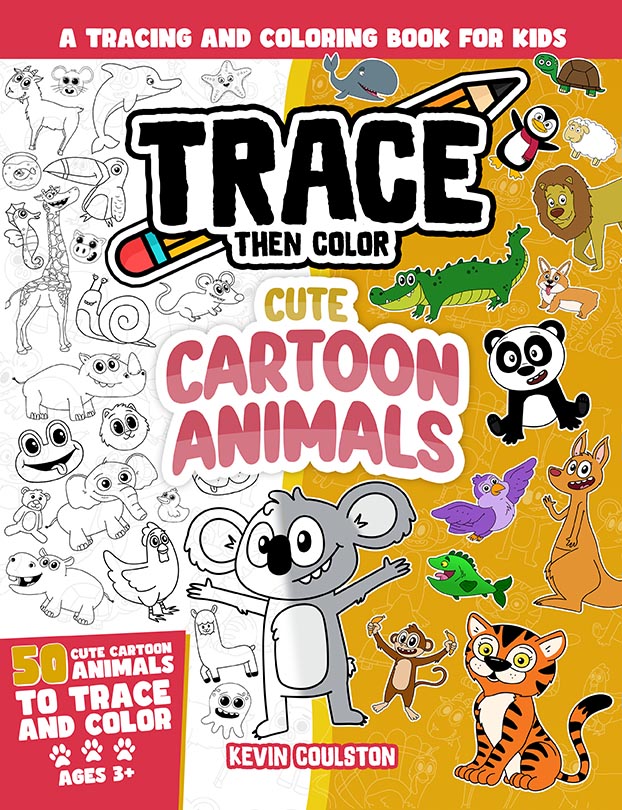
Round, simple shapes are easiest to draw freehand. Trace Then Color: Cute Cartoon Animals is full of characters built from circles and ovals, which makes them great first drawings.
Questions parents ask
At what age do kids start drawing recognizable pictures?
Many children start drawing recognizable people and objects around ages 4 to 5, with lots of variation.
Is tracing holding my child back from drawing?
Research does not suggest tracing harms drawing. For many kids, it builds the control and confidence that make drawing easier.
My child gets frustrated that their drawings don’t look like the traced ones. What can I do?
Remind them that tracing and drawing are different skills. Show your own imperfect drawings and keep it playful.

About Kevin Coulston
Kevin Coulston is a cartoonist and member of the National Cartoonists Society who has written and illustrated more than 100 drawing, tracing and coloring books for kids, including the Trace Then Color series. Meet Kevin or browse all his books on FirstArtBooks.com.