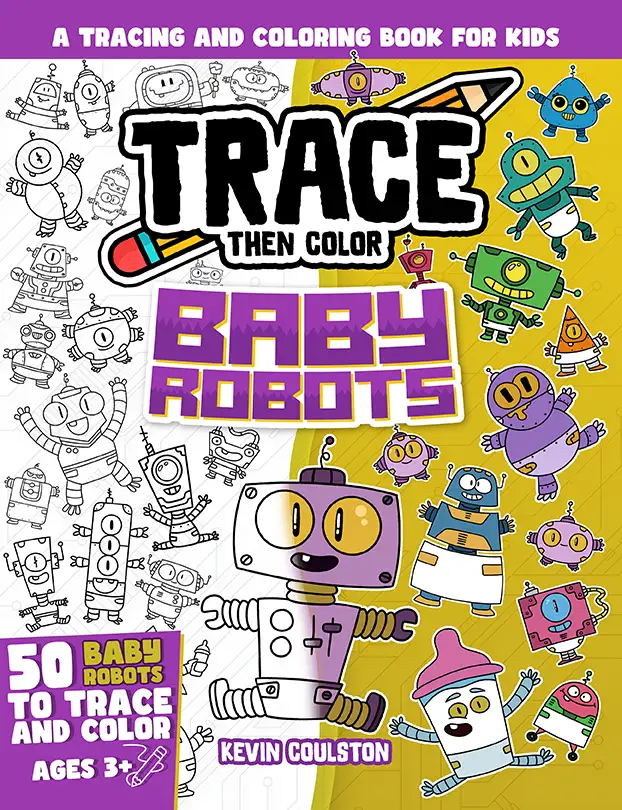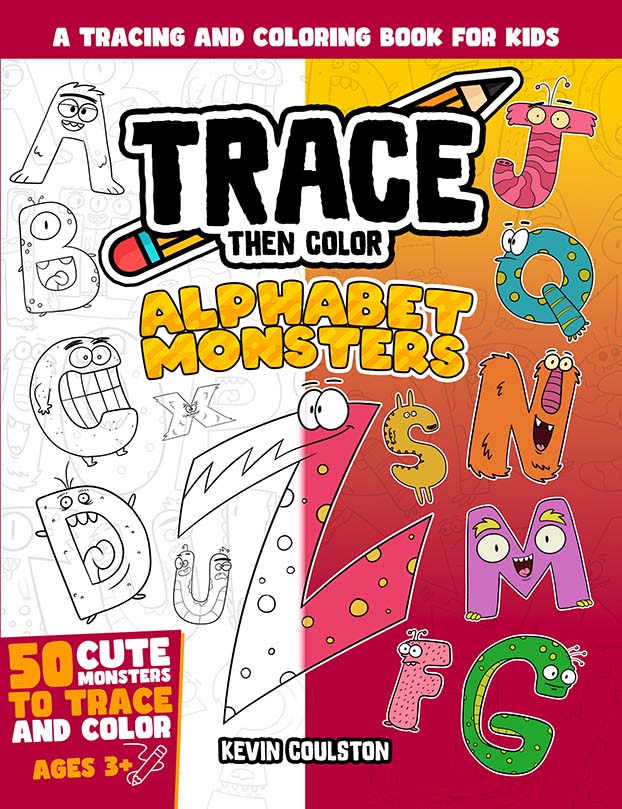
Most coloring books give children a finished outline. Trace Then Color books give them a dotted one. That extra step changes a lot about how kids experience the page. Here is why tracing first and coloring second works so well.
Two different skills
Tracing: following a path
Tracing asks kids to follow a set path with their crayon or pencil. They have to look ahead, steer and keep the line on the dots. It is the same kind of control they need to copy shapes and, later, write letters.
Coloring: filling a space
Coloring asks kids to fill an area and stop near its edge. It builds a different kind of control: managing pressure, stroke direction and boundaries.
Doing both on one page gives kids two kinds of practice in one activity.
Tracing makes coloring better
Something interesting happens once a child has traced an outline: they tend to color more carefully. They have invested in the shape, and they want to respect it. The edges they traced feel like their own.
Ownership and pride
When a child colors a printed picture, they are decorating someone else’s drawing. When they trace it first, the picture becomes partly theirs. Many kids proudly say "I drew this!" after tracing and coloring, and in a real sense they did. That pride builds confidence. See how finishing a page builds confidence.
A bridge to drawing
Tracing teaches kids how a drawing is built: which lines come first, how shapes connect, where the details go. Many kids who trace regularly start drawing similar characters on their own. See from tracing to drawing.
More focus, gently
Tracing slows kids down. Following dots takes attention, but it is a clear, achievable task. Kids who rush through coloring pages often slow down naturally when they trace.
How it looks in practice
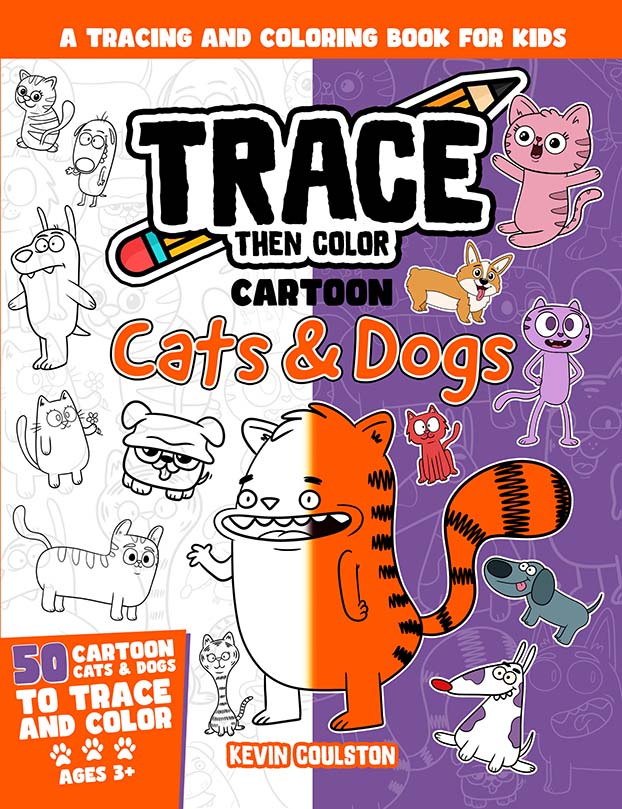
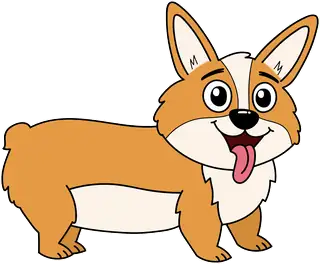
Take a dog from Trace Then Color: Cartoon Cats and Dogs:
- Your child traces the dotted outline of the head, ears, body, legs and tail.
- They trace the smaller details: eyes, nose, collar.
- They color the dog, perhaps brown with a red collar, perhaps purple with green spots.
- The finished dog looks like their own drawing.
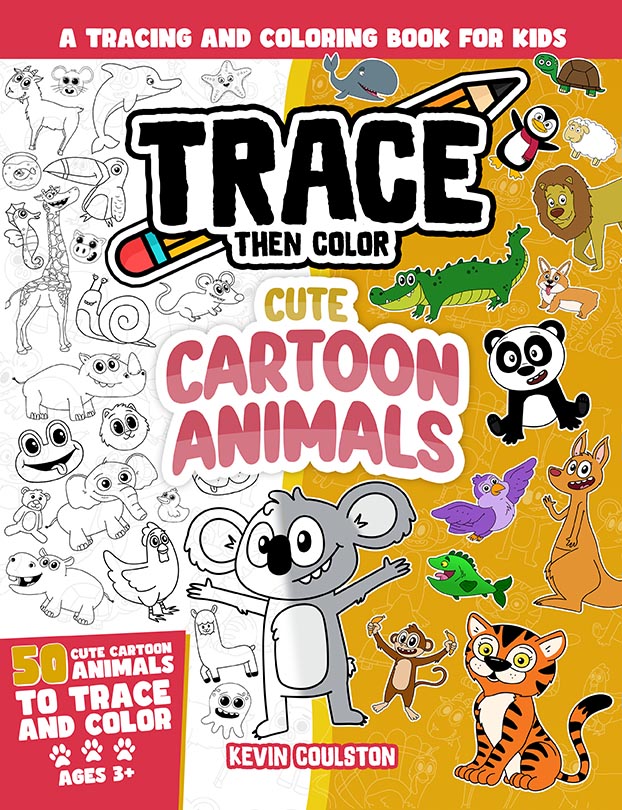
Round, simple characters like those in Trace Then Color: Cute Cartoon Animals are a great starting point for the youngest tracers.
What if my child just wants to color?
That is fine. Some kids color first and trace later, or skip tracing on some pages. The book works either way. Over time, most kids enjoy the "magic" of making the character appear by tracing.
Questions parents ask
At what age can kids trace?
Many children can trace simple lines and shapes around age 3, with control improving through ages 4 to 6.
Is tracing better than free drawing?
They do different things. Tracing builds control; free drawing builds invention. Kids benefit from both. See is tracing cheating?.
Should my child trace in pencil or crayon?
Pencil or thin marker usually gives a cleaner traced line; crayon is fine for the youngest kids.

About Kevin Coulston
Kevin Coulston is a cartoonist and member of the National Cartoonists Society who has written and illustrated more than 100 drawing, tracing and coloring books for kids, including the Trace Then Color series. Meet Kevin or browse all his books on FirstArtBooks.com.