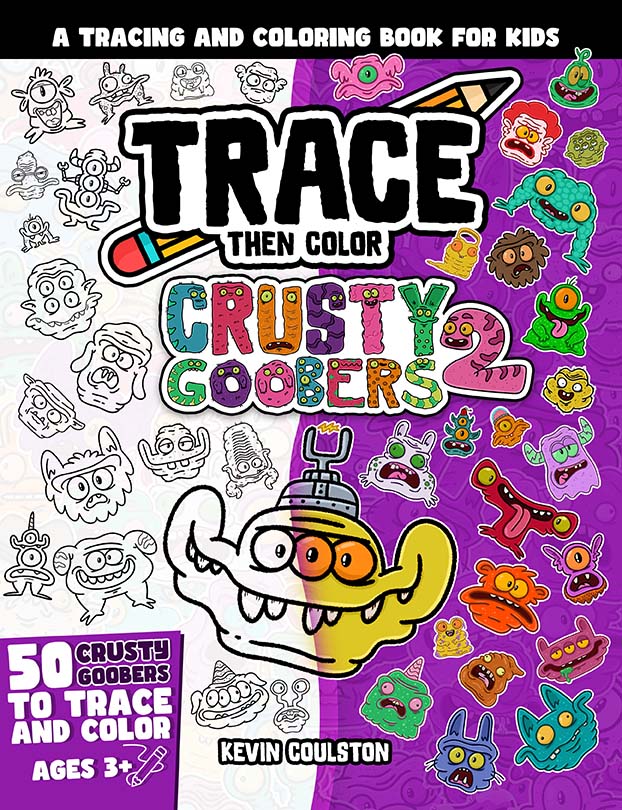
Faces are some of the first things babies notice, and funny faces make kids of every age laugh. Face pages are also a great way to talk about feelings.
Why faces are great to color
- Funny. Big noses, wild hair and crazy eyes.
- Emotions. Silly, goofy, grumpy and surprised expressions.
- Details. Eyes, teeth, freckles and wrinkles build fine motor control.
Three kinds of faces
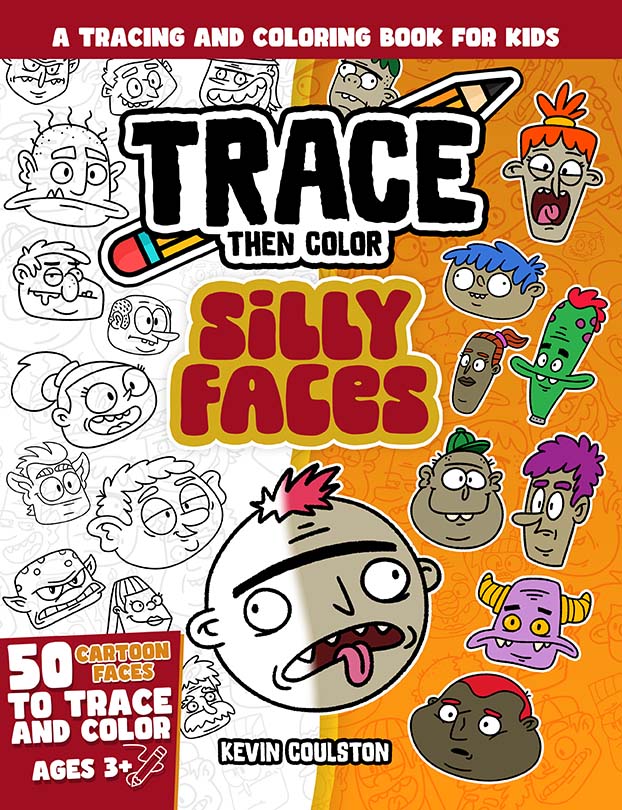
- Silly faces in Trace Then Color: Silly Faces. Ask: what makes you laugh?
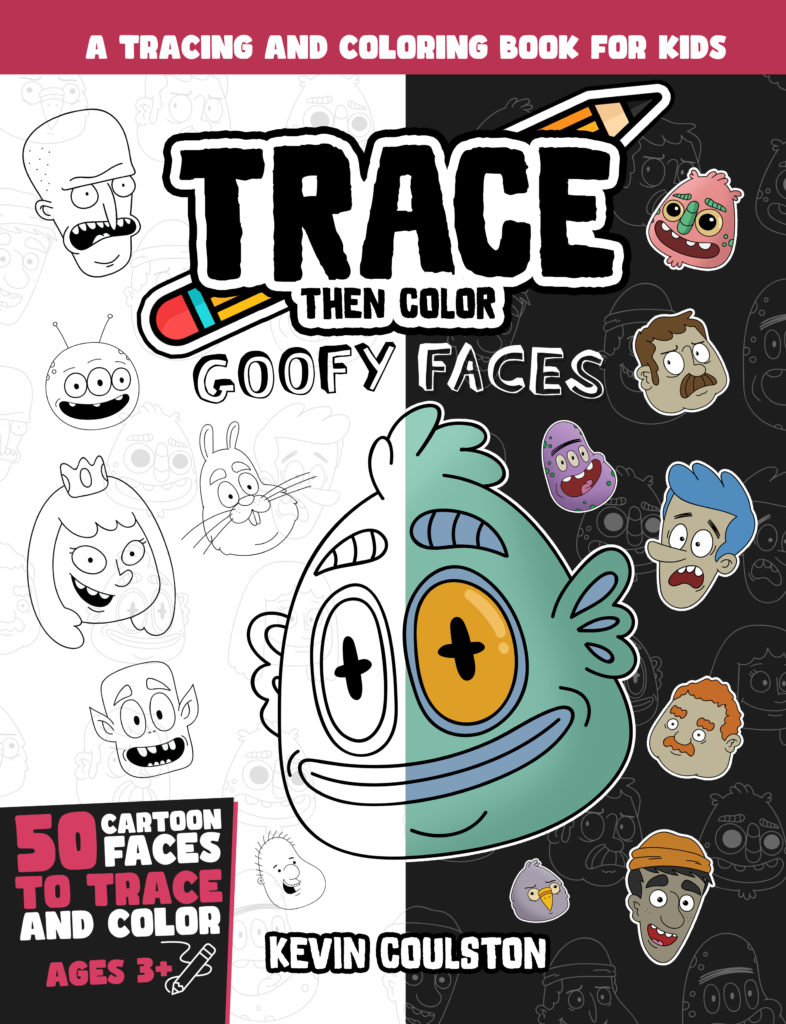
- Goofy faces in Trace Then Color: Goofy Faces. Ask: can you make this face?
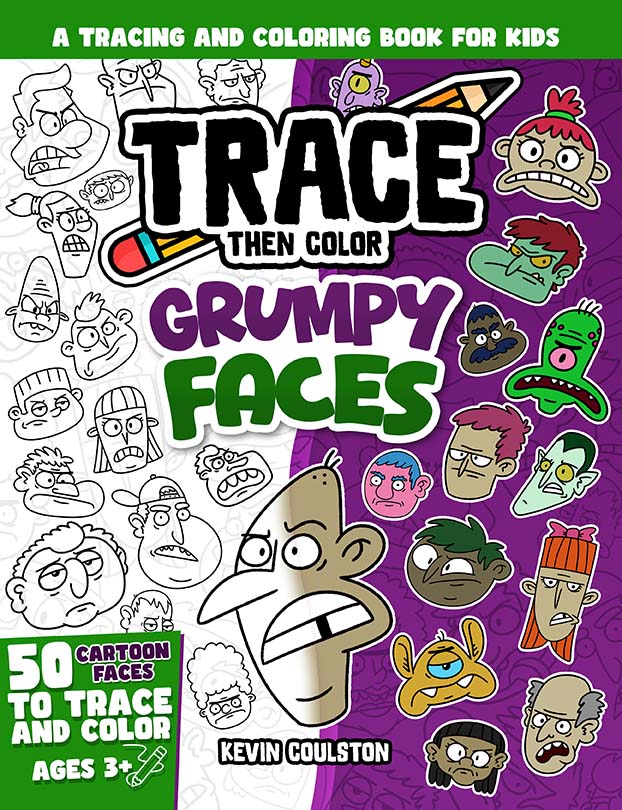
- Grumpy faces in Trace Then Color: Grumpy Faces. Ask: what makes you grumpy, and what helps?
Coloring ideas
- Skin tones. Mix colors for realistic or fantasy skin. See skin tones in coloring.
- Wild hair. Rainbow, polka dot or flame.
- Rosy cheeks. Light pink or red circles with light pressure.
- Sparkly eyes. Leave a white highlight in each eye.
Feelings activities
- Mirror match. Make the face in a mirror, then color it.
- Name the feeling. Write the emotion under the face.
- Feeling chart. Color several faces and hang them as a feelings chart.
See coloring and big feelings.
A warm-up for drawing
After coloring faces, kids often want to draw their own. Face shapes are simple: circles, ovals and lines. Funny face pages are a great bridge to drawing.
Grumpy faces are surprisingly popular. Kids love coloring a character who’s having a worse day than they are.
Questions parents ask
Can face coloring help with emotions?
Yes. Naming and talking about feelings is an important social-emotional skill.
What age suits funny faces?
Ages 3 and up. Older kids love the detail.
Are there faces for teens?
Many teens enjoy exaggerated cartoon faces, especially goofy and grumpy ones.
About Kevin Coulston
Kevin Coulston is a cartoonist and member of the National Cartoonists Society who has written and illustrated more than 100 drawing, tracing and coloring books for kids, including the Trace Then Color series. Meet Kevin or browse all his books on FirstArtBooks.com.