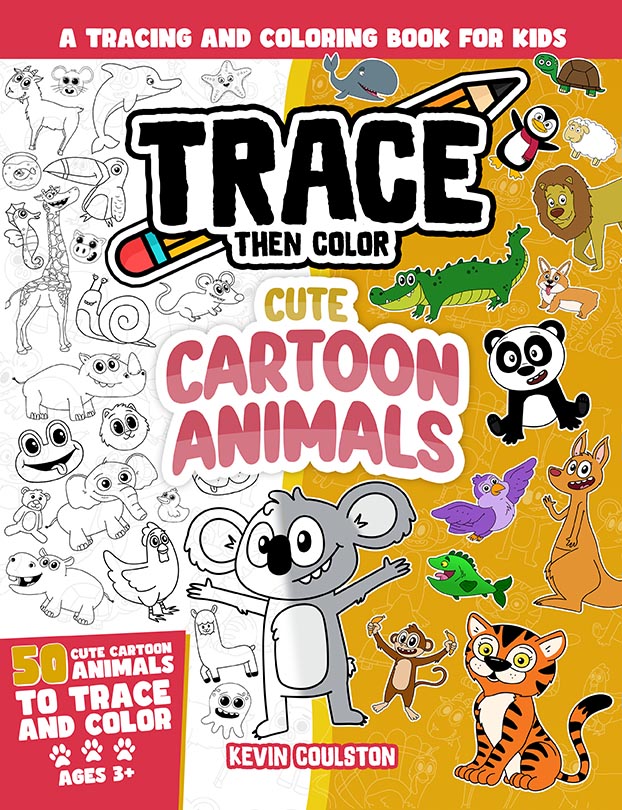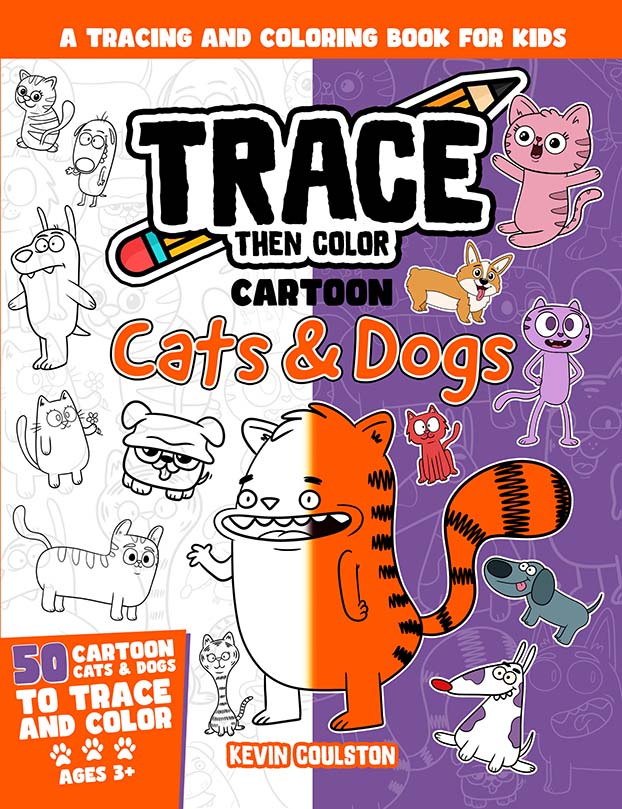
Big feelings are a normal part of childhood. Anger, worry, sadness and frustration come in waves, and kids do not yet have the tools adults use to handle them. Coloring is not a fix, but it can give those feelings somewhere to go.
For anger
Angry energy needs a physical outlet. Coloring can provide one.
- Scribble it out. Give a big sheet of scrap paper and let them press hard and scribble fast. It is OK to be loud with a crayon.
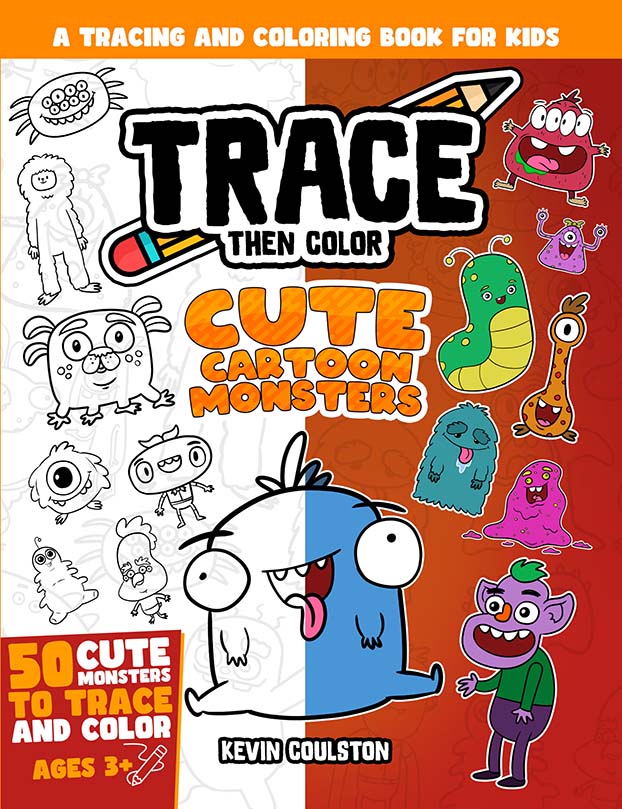
- Color the angry monster. Monsters are great for angry feelings because they are supposed to look fierce. Let kids color a monster in "angry colors." Trace Then Color: Cute Cartoon Monsters keeps it friendly enough not to frighten younger kids.
- Then slow down. After the scribble, switch to a calmer page and color slowly. The change from fast to slow helps the body come down.
For worry
Worried kids often have racing thoughts. Coloring can give the mind something steady to hold.
- Repetitive patterns. Stripes, dots and checks are soothing. Fill a character’s clothes with a pattern.
- Slow strokes. Color "as slowly as a turtle."
- Talk while coloring. Some kids find it easier to share worries when their hands are busy and they do not have to make eye contact.
See also coloring for anxious kids.
For frustration
Frustration often comes when something is too hard, including coloring. If a detailed page is causing frustration, switch to a simpler one. Success with a quick, easy page can reset the mood.
- Choose a page they can finish in five minutes.
- Break it into tiny steps.
- Let them take a break and come back.
For sadness
Sad kids sometimes want quiet company. Coloring side by side, without much talking, can be comforting. Some children like to color a picture for someone they miss or to make a card. See coloring and grief.
Naming the feeling
Research on emotional development suggests that putting feelings into words helps children manage them. While coloring, you can gently name what you notice:
- "You’re pressing really hard. I think you’re still feeling angry."
- "That’s a lot of dark colors today. Are you feeling sad?"
- "You look frustrated. Want to try a different page?"
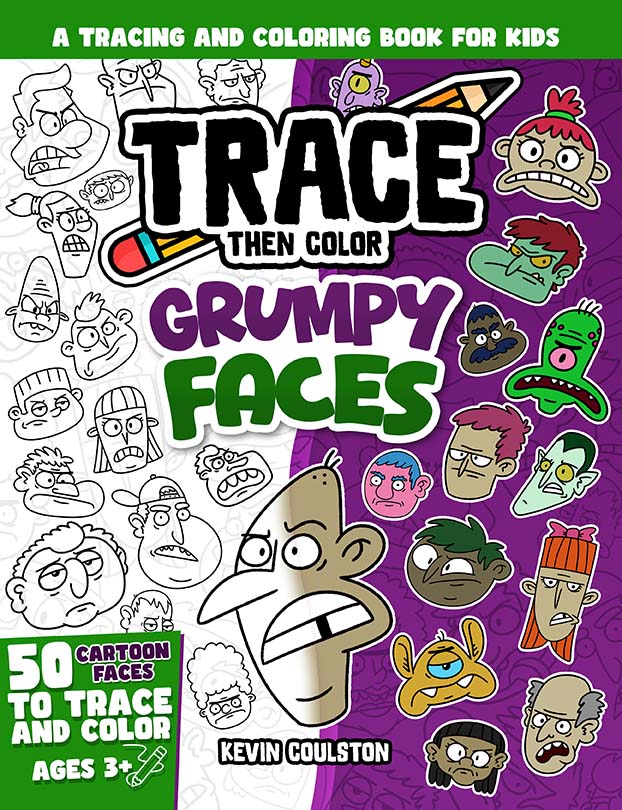
Characters with strong expressions make this easier. Trace Then Color: Grumpy Faces lets kids color their grumpiness, which often turns into giggles.
What not to do
- Do not insist they color "nicely." This is not the time for neatness.
- Do not analyze their color choices. Black does not necessarily mean anything worrying.
- Do not use coloring as a punishment.
When to get help
If big feelings are very frequent, intense or dangerous, talk to your pediatrician or a child mental health professional.
Questions parents ask
My child scribbles all over coloring pages when angry. Should I stop them?
Offer scrap paper for scribbling and save the coloring book for calmer moments. Scribbling is a healthy outlet.
Do dark colors mean my child is upset?
Not necessarily. Kids choose dark colors for many reasons, including simply liking them.
Should I talk or stay quiet?
Watch your child. Some want to talk; some want silence. Stay close either way.
About Kevin Coulston
Kevin Coulston is a cartoonist and member of the National Cartoonists Society who has written and illustrated more than 100 drawing, tracing and coloring books for kids, including the Trace Then Color series. Meet Kevin or browse all his books on FirstArtBooks.com.