Teaching children about feelings is one of the core goals of social-emotional learning. Kids who can name their emotions find it easier to manage them, and kids who can read faces find it easier to make friends.
Funny faces make a great starting point because they are exaggerated, silly and easy to read. A coloring page full of goofy, grumpy or surprised faces turns a feelings lesson into a game.
Why faces work
- Exaggerated expressions are easy to read, even for young kids.
- Coloring keeps hands busy, so talking about feelings feels less intense.
- Silly faces make heavy topics lighter.
- Kids can try making the face themselves, which builds body awareness.
Games to play
Name that face
Before coloring, look at the face together. What feeling is it? How can you tell? Look at the eyebrows, mouth and eyes.
Make the face
Can your child make the same face in a mirror? Can you? Take turns.
Feelings colors
Decide together which colors match which feelings. There is no right answer; one child’s angry color is red, another’s is purple. Then color each face in its feeling color.
Why do they feel that way?
Invent a story: "This guy is grumpy because his ice cream fell on the floor." Stories about why build empathy and understanding of cause and effect.
Change the feeling
After coloring a grumpy face, ask, "What could make him feel better?" Draw a gift, a friend or a sunny day next to him.
Books full of faces
Kevin Coulston has three whole Trace Then Color books of faces, each with a different mood:
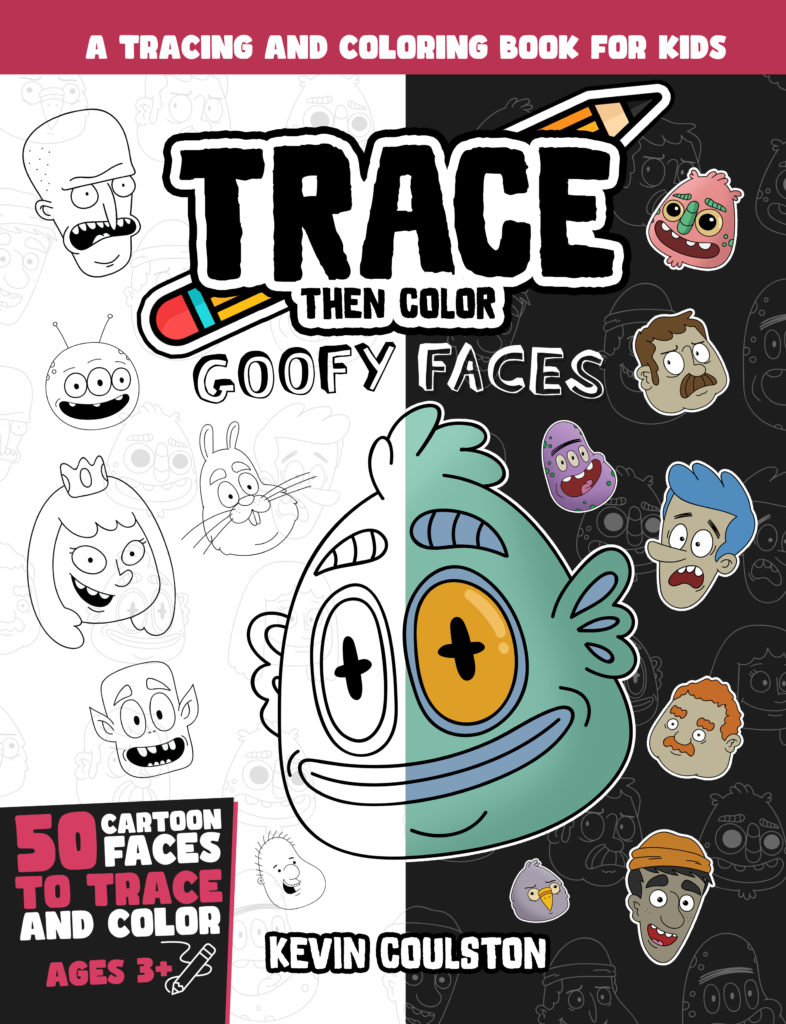
- Trace Then Color: Goofy Faces: wacky, funny expressions for big laughs.
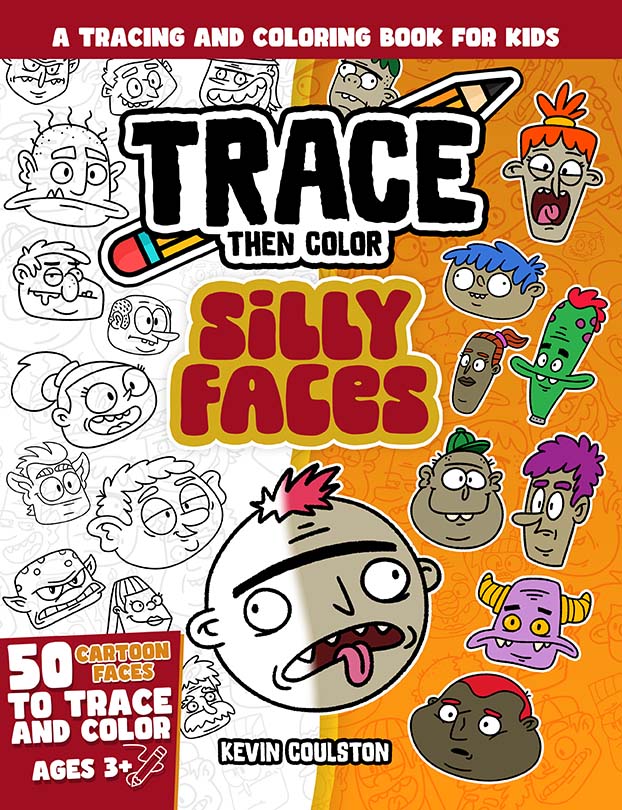
- Trace Then Color: Silly Faces: playful, cheeky faces.
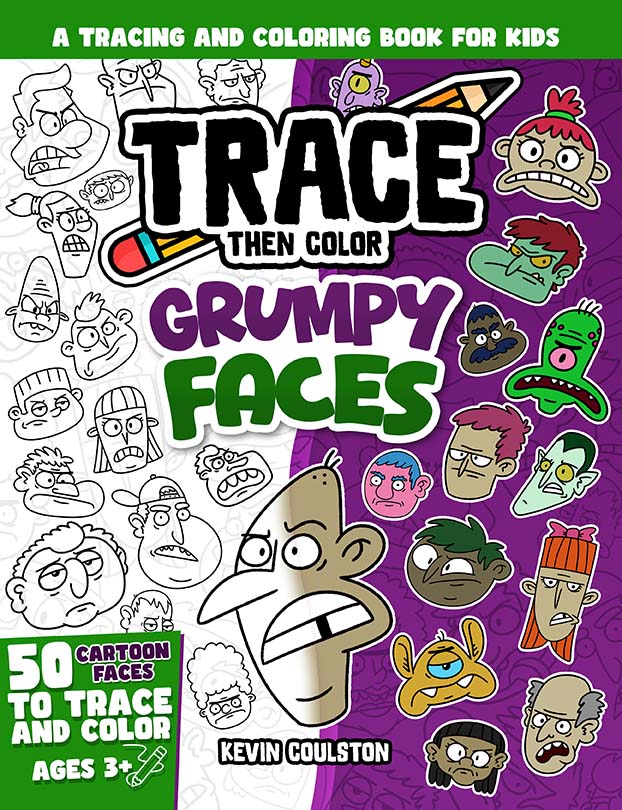
- Trace Then Color: Grumpy Faces: every kind of grumpy, which is surprisingly useful for talking about frustration.
Kids trace each face first, which makes them look closely at the shape of a frown or a grin, and then color it.
A feelings color chart
Make a simple chart together:
- Draw or trace five faces: happy, sad, angry, worried, surprised.
- Color each in the color your child chooses for that feeling.
- Hang it in the calm corner or on the fridge.
- Use it to check in: "Which face are you today?"
Linking to real life
The goal is for kids to use these words in real moments. When your child is upset later, you can refer back: "Remember the grumpy face we colored? Is that how you feel?" Familiar characters can make it easier for kids to talk about their own feelings. See also coloring through big feelings.
In the classroom
Teachers can use face pages in morning meetings, SEL lessons and counseling sessions. Each child colors a face that shows how they feel and shares if they want to.
Questions parents ask
What age can kids start learning feeling words?
Toddlers can learn simple words like happy, sad and mad. By preschool, many can learn more nuanced words like frustrated, worried and proud.
My child always colors happy faces. Is that OK?
Of course. Gently introduce other feelings through stories and games, without pressure.
Are emoji coloring pages just as good?
Emojis work too, but cartoon faces with more detail offer more to discuss: eyebrows, wrinkles, teeth.
About Kevin Coulston
Kevin Coulston is a cartoonist and member of the National Cartoonists Society who has written and illustrated more than 100 drawing, tracing and coloring books for kids, including the Trace Then Color series. Meet Kevin or browse all his books on FirstArtBooks.com.