Anxious children often have busy bodies and busy minds. Their hearts race, their thoughts spin and it is hard to settle. Telling them to "calm down" rarely works. Giving them something calm to do often does.
Coloring is one of the simplest calming activities there is. It is quiet, it is predictable, and it gives the hands and eyes a steady, gentle job.
What the research says
Several studies have looked at coloring and anxiety:
- Curry and Kasser (2005) found that college students who colored a structured pattern, like a mandala or plaid design, showed a bigger drop in anxiety than those who colored on blank paper.
- Carsley, Heath and Fajnerova (2015) found that a mindful coloring activity before a test reduced test anxiety in elementary school children.
- Eaton and Tieber (2017) found that coloring reduced anxiety and improved mood in adults.
These studies measure short-term effects. They show that coloring can help in the moment; they do not show that coloring treats an anxiety disorder.
Why coloring calms
- Repetition. Back-and-forth strokes have a soothing rhythm.
- Focus. Concentrating on a simple task leaves less room for worried thoughts.
- Control. The child decides everything on the page, which can feel steadying when other things feel out of control.
- Body calm. Sitting and making small movements can help the body slow down.
Choosing calming pages
Simple and friendly
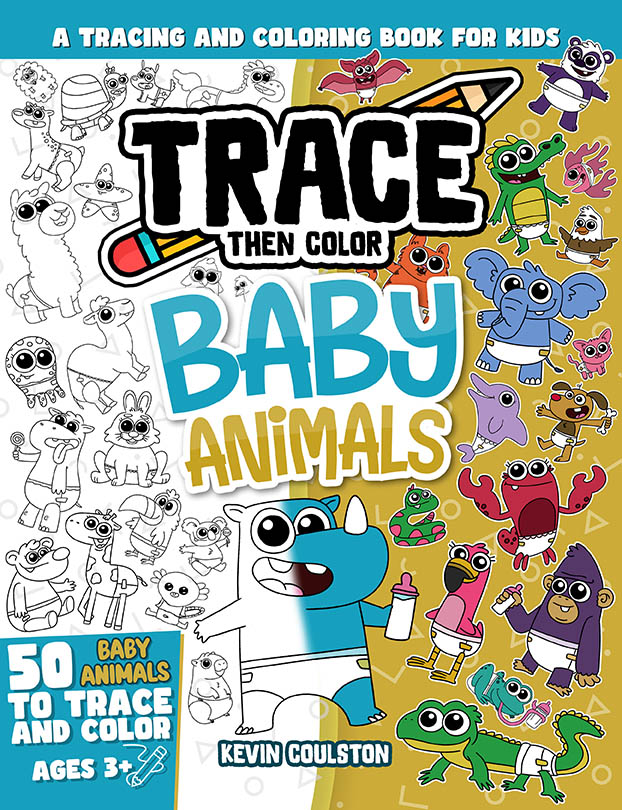
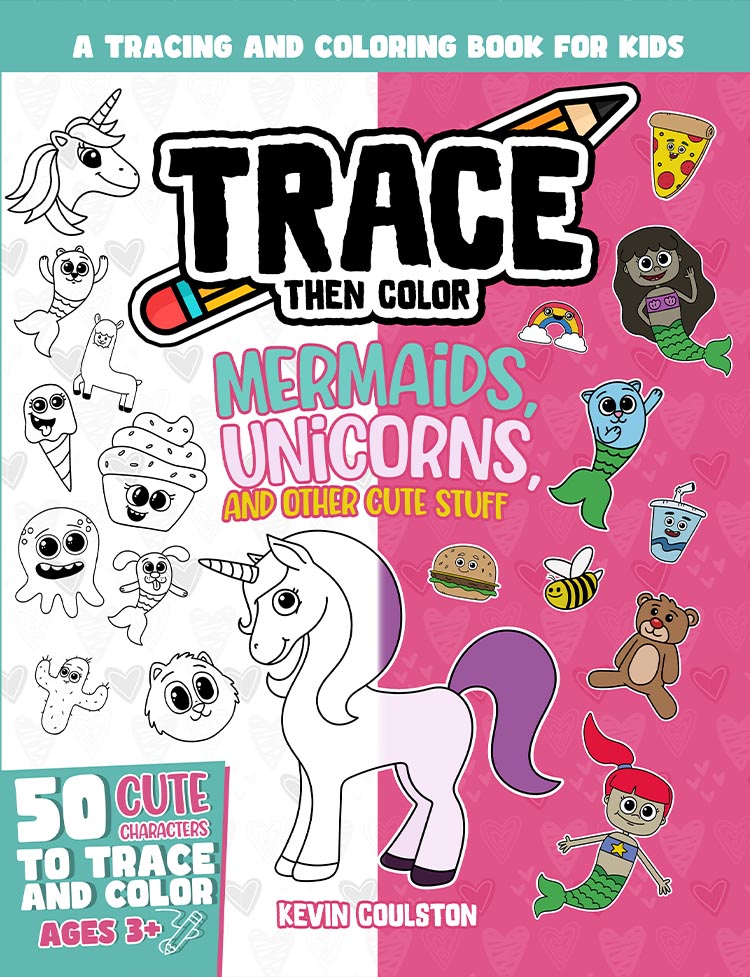
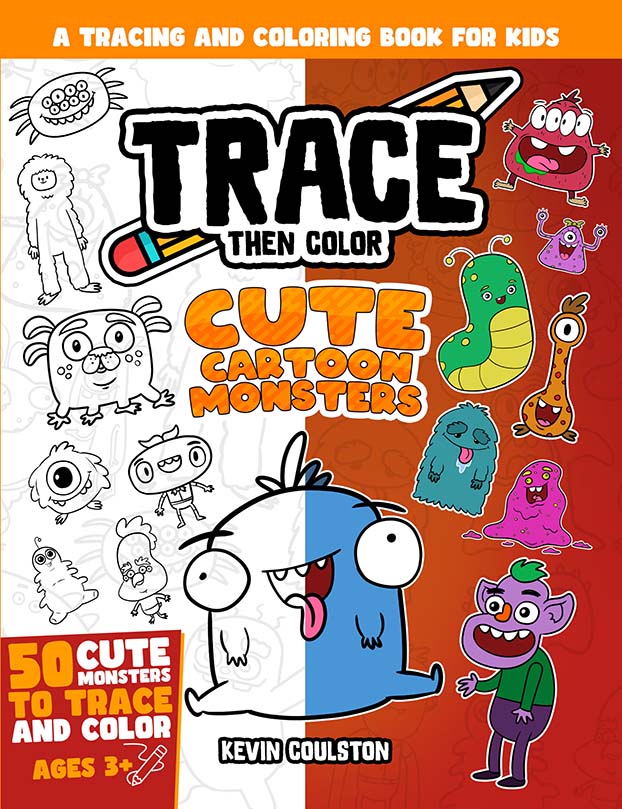
For anxious kids, the subject matters. Soft, friendly characters feel safe. Trace Then Color: Baby Animals and Trace Then Color: Mermaids, Unicorns and Other Cute Stuff are gentle choices.
Not too detailed
Very detailed pages can feel overwhelming. One character per page is a manageable goal.
Structured patterns
The research suggests structure helps. Kids can add their own patterns, like stripes or checks, to a character’s clothes or background for a calming, repetitive task.
Making coloring a calming routine
Practice when calm
Coloring works best as a calming tool if kids already know it well. Make it part of normal days, not only stressful ones.
Create a calm spot
A corner with a cushion, a few pages and a small set of crayons. See how to stock a calm-down corner.
Add breathing
Pair coloring with slow breathing: one slow breath before each new color. See color and breathe.
Use it before hard moments
Before school, before an appointment, before bed. Ten minutes of coloring can be a gentle buffer. See coloring before bed.
When worries are big
Coloring can help a child feel calmer, but it is not a replacement for support. If your child’s anxiety is frequent, intense or getting in the way of school, sleep or friendships, talk to your pediatrician or a children’s mental health professional. Many child therapists use art and coloring in their work, so coloring can still be part of the plan.
Questions parents ask
Should I suggest coloring in the middle of a panic?
In the middle of very big feelings, kids may need you to help them breathe and feel safe first. Coloring can help once the wave starts to pass.
Is mandala coloring better for anxiety?
Structured designs did especially well in research with adults. For kids, a friendly character with added patterns can offer similar structure.
How long should a calming coloring session be?
Ten to fifteen minutes is often enough to notice a difference.

About Kevin Coulston
Kevin Coulston is a cartoonist and member of the National Cartoonists Society who has written and illustrated more than 100 drawing, tracing and coloring books for kids, including the Trace Then Color series. Meet Kevin or browse all his books on FirstArtBooks.com.