Self-regulation is the ability to notice how your body and feelings are doing, and to do something to manage them. It is how a child calms down after being angry, settles after running around or focuses after recess. It is one of the most important skills of early childhood, and it takes years to develop.
Coloring is one tool kids can learn to use to regulate themselves.
What self-regulation looks like
- Noticing "I feel wiggly" or "I feel mad"
- Choosing a strategy, like breathing, moving or coloring
- Using the strategy
- Noticing "I feel calmer now"
Young children need adults to help with every step. Over time, they do more on their own.
Why coloring helps
When kids color, many can feel their bodies slow down. Their breathing steadies, their hands move in a rhythm and their minds focus on one thing. That makes coloring a good tool for teaching kids what calm feels like from the inside.
Teach it with check-ins
Before coloring
"How does your body feel right now? Fast like a race car, or slow like a turtle?"
After coloring
"How does your body feel now?" Help them notice the change.
Over time, kids learn that coloring can help them feel calmer, and they can choose it themselves.
Energy level games
Many schools use color systems to describe energy and feelings, like zones or traffic lights. You can do something similar at home:
- Color your energy. Kids choose a color that shows how they feel right now and color a small circle.
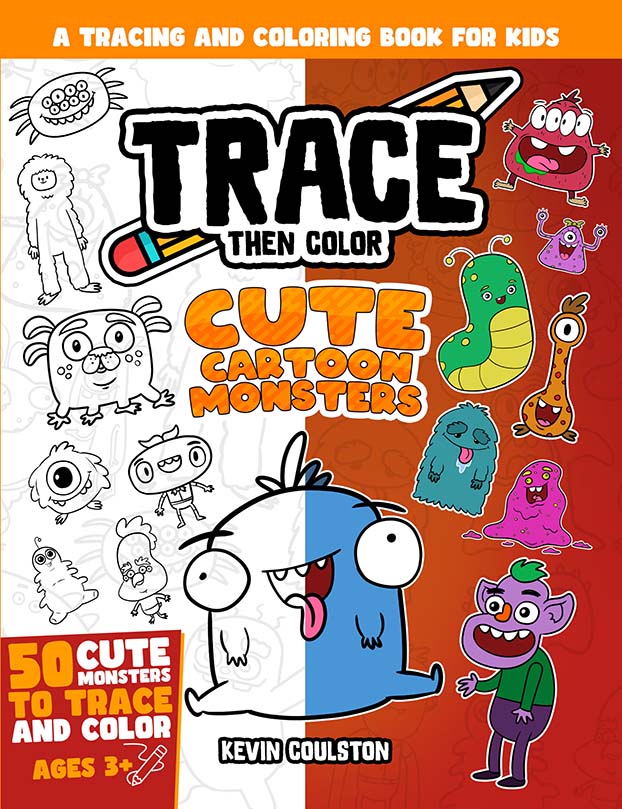
- Monster meter. Color a monster for each feeling: a fast, fizzy one and a calm, sleepy one. Trace Then Color: Cute Cartoon Monsters works well.
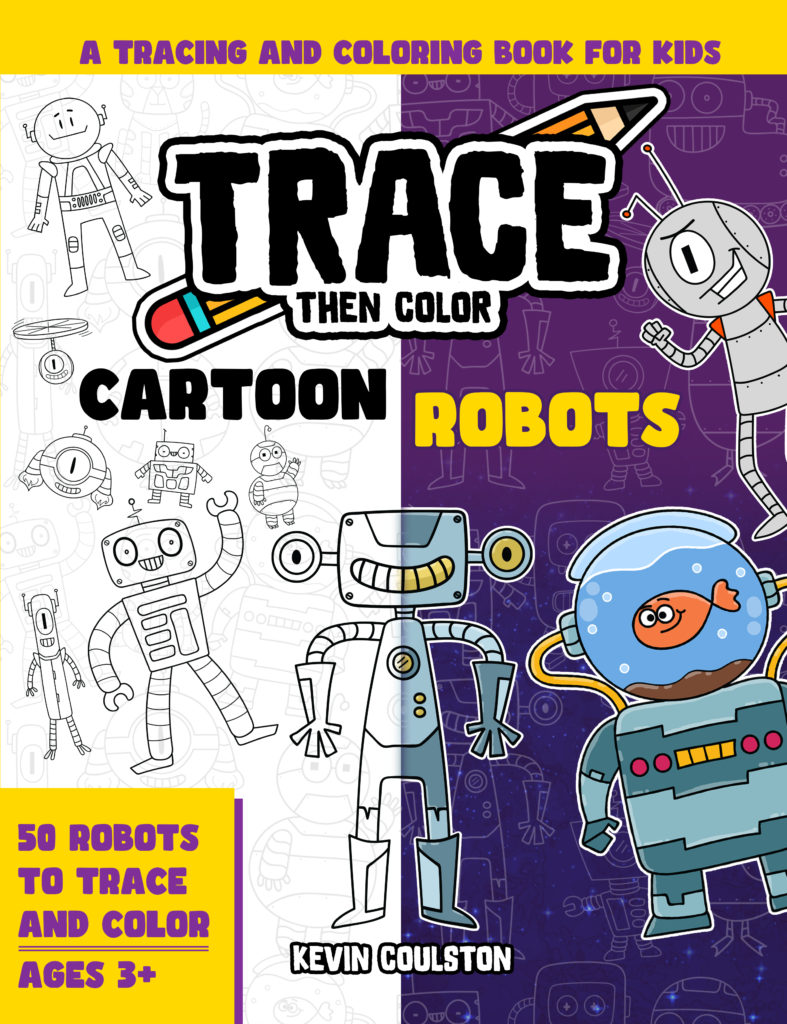
- Robot battery. Color a robot’s battery full, half or low to show energy. Trace Then Color: Cartoon Robots has plenty of robots to use.
Pair coloring with other strategies
Coloring is one tool among many. Combine it with:
- Breathing. See color and breathe.
- Movement. Some kids need to move first, then color.
- A calm space. See how to stock a calm-down corner.
- Words. Naming the feeling helps.
Help kids choose it themselves
The goal is for children to recognize when they need to calm down and choose a strategy on their own. Make coloring available and easy: a basket of pages and crayons in a familiar spot. Praise them when they use it: "You noticed you were frustrated and went to color. That was a great choice."
Questions parents ask
At what age can kids self-regulate?
It develops gradually from toddlerhood through adolescence. Preschoolers need lots of adult help; school-age kids do more on their own.
What if coloring does not calm my child?
Every child is different. Some need movement, pressure or quiet. Try a range of strategies and see what works.
Is self-regulation the same as self-control?
They are related. Self-control is about stopping an impulse; self-regulation is the wider skill of managing energy, feelings and attention.

About Kevin Coulston
Kevin Coulston is a cartoonist and member of the National Cartoonists Society who has written and illustrated more than 100 drawing, tracing and coloring books for kids, including the Trace Then Color series. Meet Kevin or browse all his books on FirstArtBooks.com.