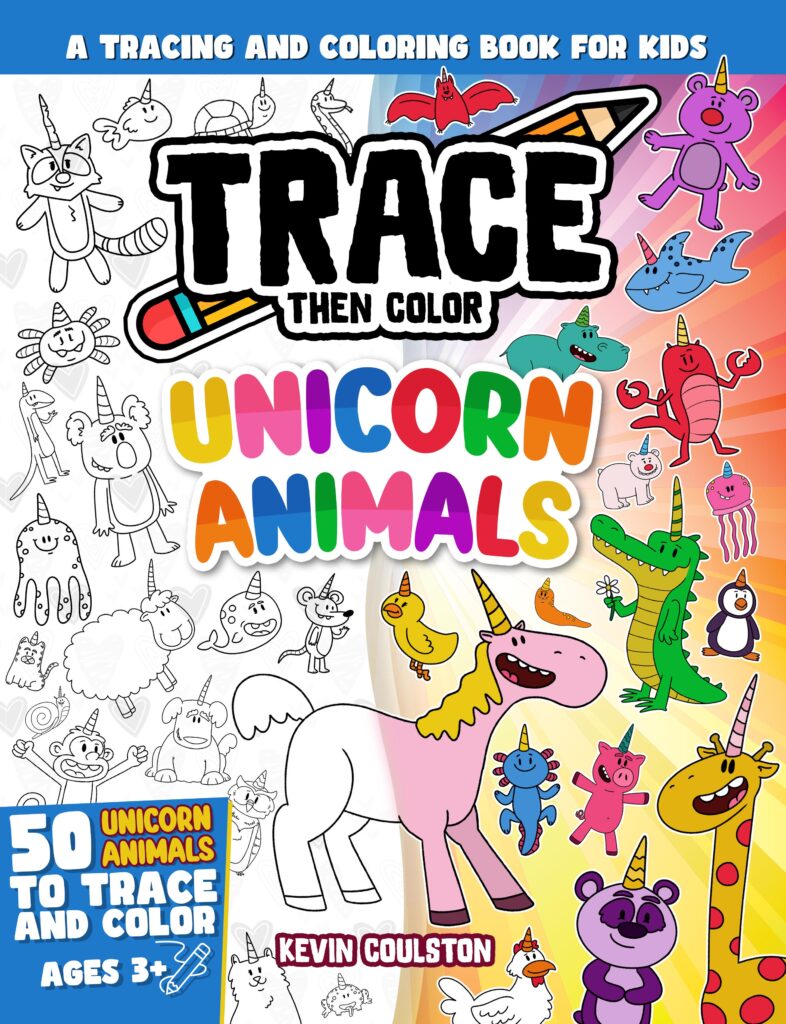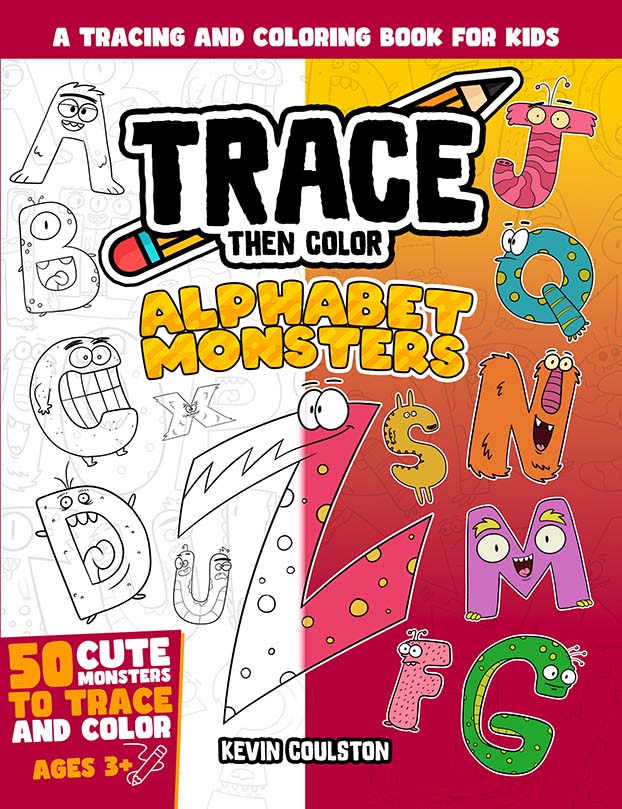
Kids with ADHD often get a reputation for not sitting still. But many of them love coloring, especially when the subject grabs their interest. With a few adjustments, coloring can be a calm, satisfying part of their day.
A quick note: coloring is not a treatment for ADHD. If you have questions about your child’s attention, talk to your pediatrician. These tips are about making coloring work well for kids who find focus hard.
Pick high-interest pages
Interest is one of the most powerful focus tools for kids with ADHD. A page they care about will hold their attention far longer than one they do not.
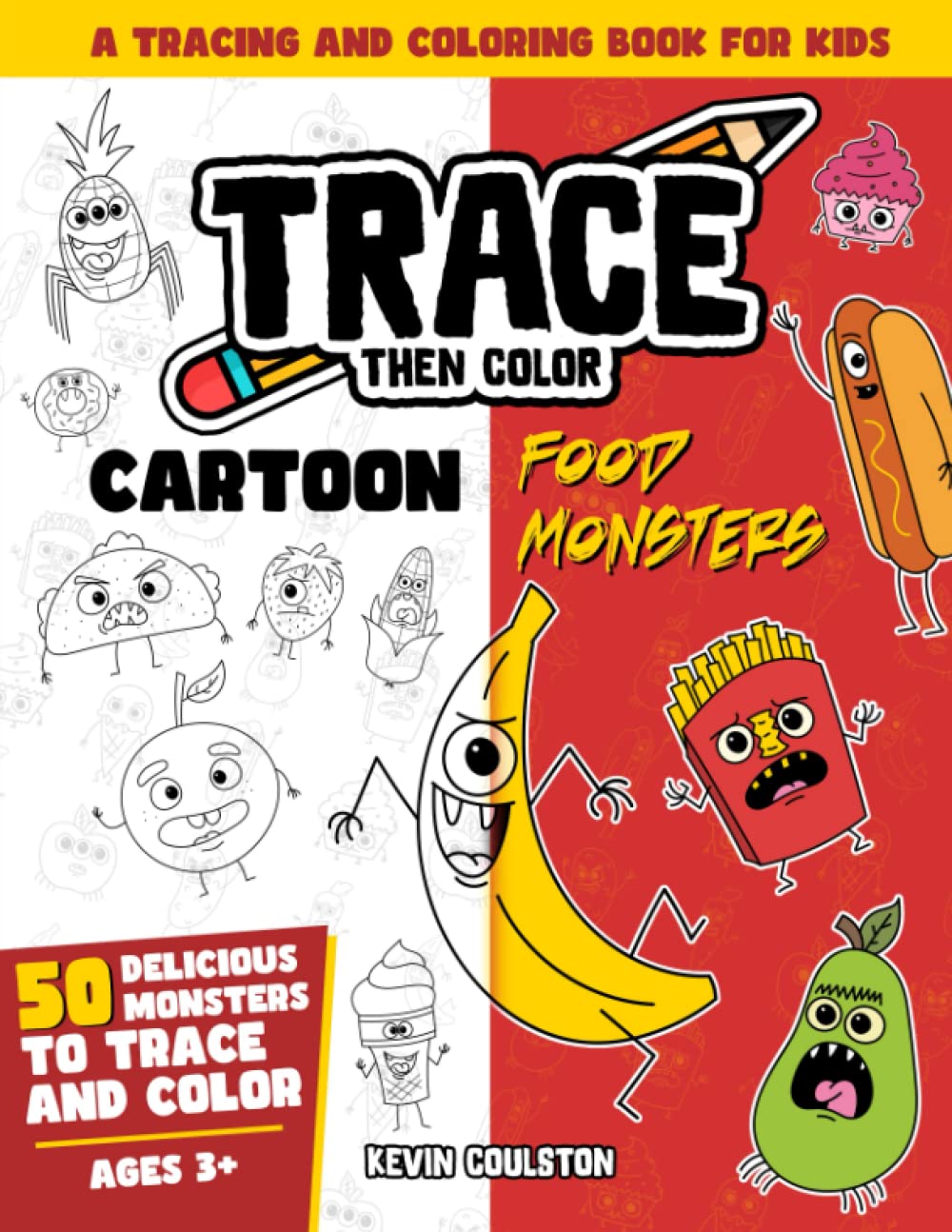
- Silly, surprising characters: Trace Then Color: Cartoon Food Monsters has pizzas and donuts with faces and attitudes.
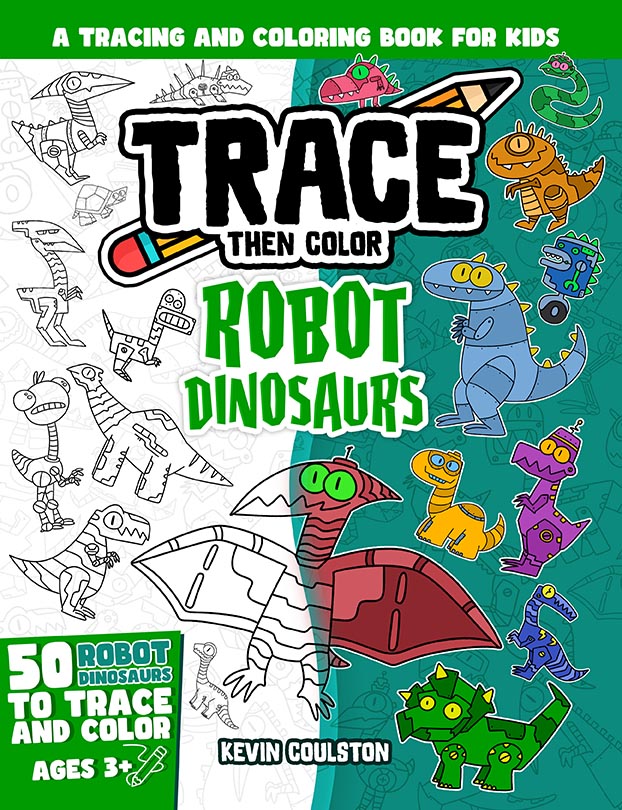
- Mash-ups of things they love: Trace Then Color: Robot Dinosaurs combines two big obsessions.
- Their current special interest, whatever it is this month.
Keep it short
- One character per page. A finish line in sight.
- Use a timer. Five minutes, then a check-in. Extend gradually.
- Allow multiple sessions. A page can be finished over a day or two.
Limit the supplies
A box of 64 crayons is a lot of decisions and a lot of distraction. Put out five or six colors. Swap them out partway if needed.
Build in movement
- Stand at an easel or tape the page to a wall.
- Take a movement break between sections: ten jumping jacks, a lap of the house.
- Sit on a wobble cushion or exercise ball.
- Use a clipboard so they can color in different spots.
Make it a game
- Beat the timer. Can you color the robot’s head before the sand runs out?
- Color roll. Roll a die to pick the color for each part.
- Pattern challenge. Every space must have a different pattern.
Novelty and challenge keep the brain engaged.
Reduce distractions
- Clear the table of everything but the page and crayons.
- Turn off the TV.
- Face away from windows or busy areas.
- Try soft background music or noise-canceling headphones if sounds distract.
Support the transition
Kids with ADHD can find starting and stopping hard. Give a two-minute warning before coloring time ends, and keep a "to be continued" folder for unfinished pages. See using coloring to ease transitions.
Celebrate finishing
Finished pages are proof of focus. Display them, keep them in a binder, or let your child mail them to a relative. Building a track record of finishing is motivating.
In the classroom
Teachers can offer coloring as a calm activity, a reward after work, or a fidget-friendly listening tool during read-alouds (some kids listen better with busy hands). See early finisher coloring.
Questions parents ask
Can coloring help my child focus on homework?
A short coloring break between homework tasks can help some kids reset. Others do best with movement breaks. Try both.
My child colors fast and messily. Is that OK?
Yes. Speed is fine. If they want to slow down, try a "slow motion" game, but do not force neatness.
Should my child color while listening in class?
Many teachers allow doodling or coloring during listening because busy hands help some kids pay attention. Check with the teacher.

About Kevin Coulston
Kevin Coulston is a cartoonist and member of the National Cartoonists Society who has written and illustrated more than 100 drawing, tracing and coloring books for kids, including the Trace Then Color series. Meet Kevin or browse all his books on FirstArtBooks.com.