Mindfulness means paying attention to what is happening right now, gently and without judging it. For children that can sound abstract. Coloring makes it concrete. Instead of "be present," you can say "notice the color."
This five-minute practice works for kids from about age 4 and up. Adults can do it alongside them.
The 5-minute mindful coloring practice
Minute 1: Settle
Sit comfortably. Put one hand on your tummy. Take three slow breaths in through the nose and out through the mouth, like blowing out birthday candles.
Minute 2: Choose
Look at the page. Look at the crayons. Pick one color slowly. Hold it. How does it feel? Smooth? Bumpy? Warm? Cold?
Minutes 3 and 4: Color slowly
Color one part of the page, slowly. Notice the sound the crayon makes. Notice how the color fills the space. If thoughts wander, that is fine; gently bring attention back to the color.
Minute 5: Notice
Stop. Look at what you colored. How does your body feel now? Take one more slow breath.
That is it. The page does not need to be finished. The point is the noticing.
Noticing questions
Use one or two of these during the practice, quietly:
- "What sound does the crayon make?"
- "Can you color as slowly as a snail?"
- "Is this color light or dark?"
- "How do your shoulders feel?"
- "What do you notice about the shape you’re coloring?"
Choosing a page for mindful coloring
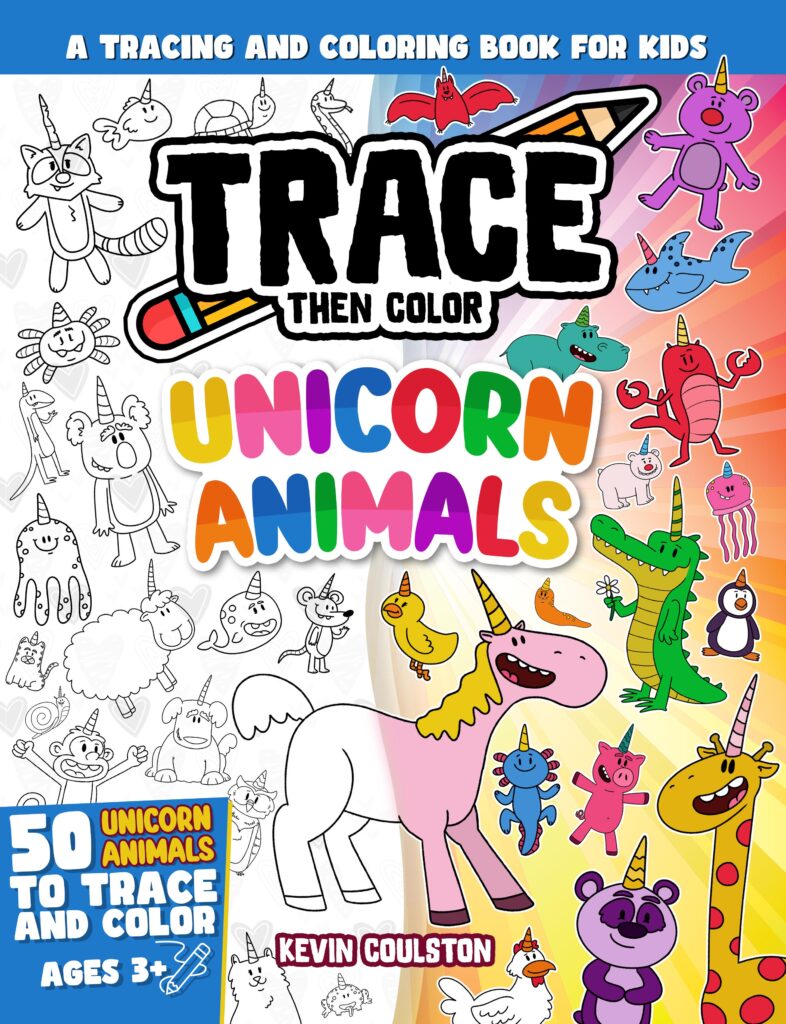
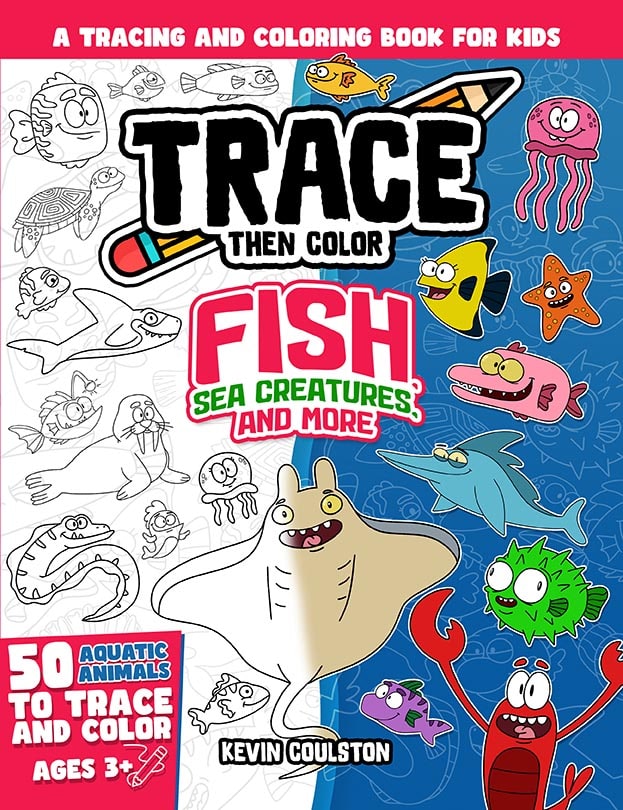
Calm, flowing subjects work well. Sea creatures with curving fins and wavy seaweed invite slow strokes; Trace Then Color: Fish, Sea Creatures and More is lovely for this. Gentle, magical characters from Trace Then Color: Unicorn Animals are also a good fit. Avoid pages with lots of tiny details for this practice; they can make kids feel rushed to finish.
Tips for making it work
- Keep it short. Five minutes is plenty for young kids.
- Do it with them. Kids copy what adults do. Color mindfully yourself.
- Use a calm voice. Speak slowly and softly.
- No right or wrong. Do not comment on neatness. Mindfulness is about attention, not results.
- Make it regular. A daily practice, perhaps after school or before bed, works better than an occasional one.
What research says
Studies of mindfulness-based coloring in schools have found reductions in test anxiety for children and adolescents (Carsley and Heath have published several of these). Research on mindfulness programs for kids more broadly suggests benefits for attention and emotional regulation, although results vary. See coloring before a test for the classroom research.
When kids resist
Some children find sitting still hard. That is OK. Try:
- Standing at an easel instead of sitting
- Coloring for one minute instead of five
- Adding a movement first, like five big stretches
- Letting them choose the page
Questions parents ask
Is mindful coloring the same as regular coloring?
The activity is the same; the attention is different. Mindful coloring is slower and focused on noticing, not finishing.
What age is mindful coloring for?
Kids as young as 3 or 4 can do a simplified version. Older kids and teens can do longer sessions.
Should we play music?
Soft music can help, but silence lets kids notice the sounds of coloring, which is part of the practice. Try both.

About Kevin Coulston
Kevin Coulston is a cartoonist and member of the National Cartoonists Society who has written and illustrated more than 100 drawing, tracing and coloring books for kids, including the Trace Then Color series. Meet Kevin or browse all his books on FirstArtBooks.com.