The hour before bed can be the hardest of the day. Kids are tired but wired, screens are tempting and everyone wants to be done. A short coloring session can be a gentle bridge between the busy day and sleep.
Why coloring works at bedtime
- It is quiet. No noise, no flashing lights, no excitement.
- It is slow. The repetitive motion can help the body slow down.
- It is screen-free. The American Academy of Pediatrics recommends avoiding screens for at least an hour before bed, because screens can interfere with sleep. Coloring is a natural replacement.
- It gives connection. Coloring side by side is a calm way to end the day together.
A simple bedtime coloring routine
Routines help kids feel safe and know what comes next. Try this order:
- Bath and pajamas.
- Brush teeth.
- Dim the lights. Use a lamp rather than overhead lights.
- Coloring for ten minutes. Set a gentle timer.
- Put the page in the "tomorrow" folder.
- Story and cuddle.
- Lights out.
The same order every night tells the brain sleep is coming.
Choosing bedtime pages
Bedtime is not the time for thrilling monsters or complicated scenes. Choose:
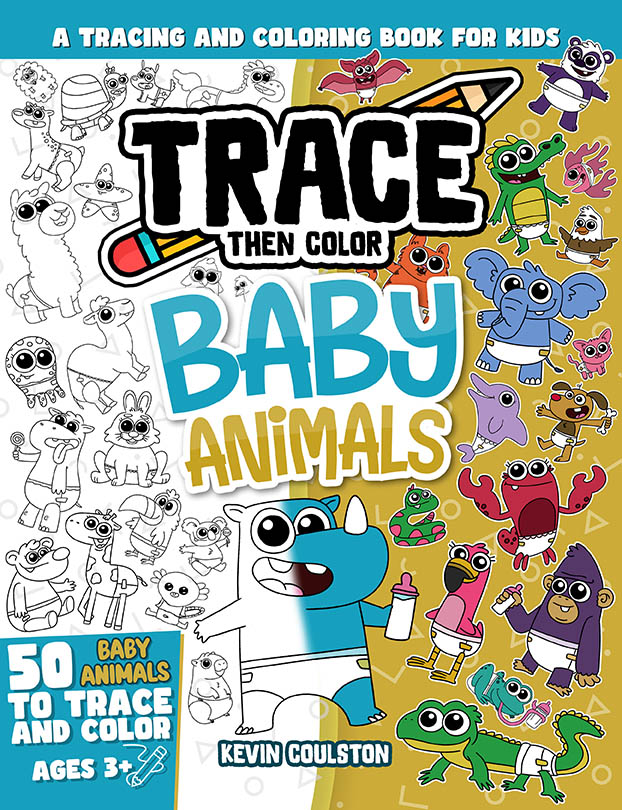
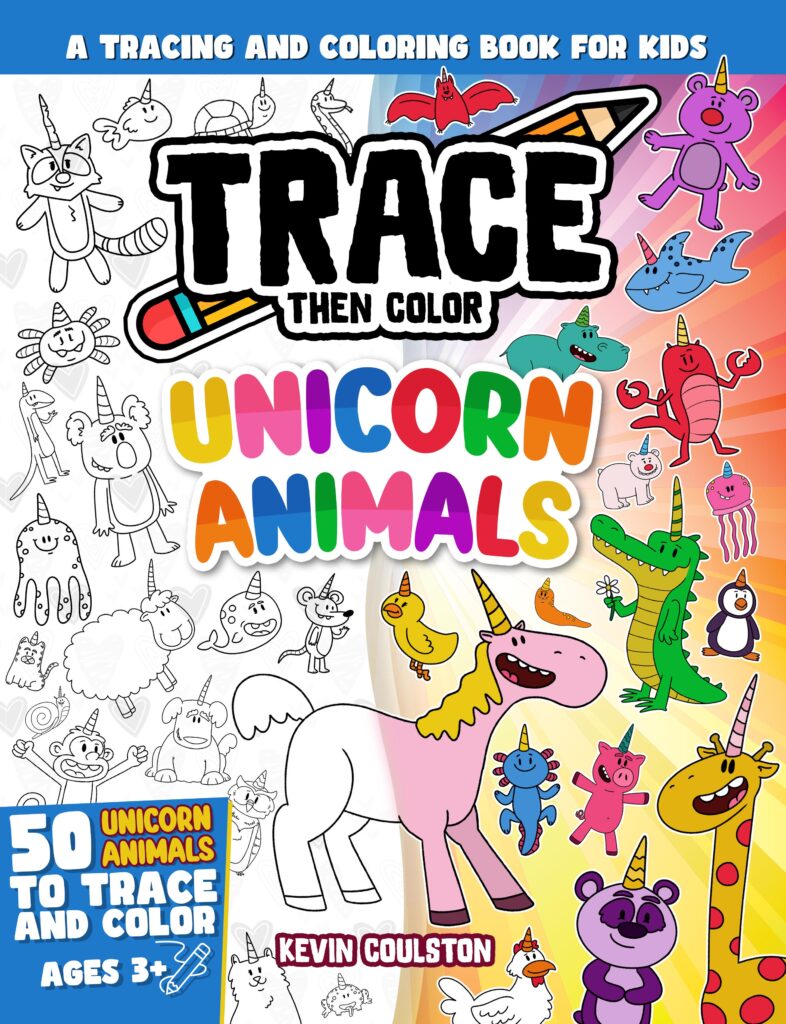
- Soft, cozy subjects. Baby animals, sleepy creatures, gentle unicorns. Trace Then Color: Baby Animals and Trace Then Color: Unicorn Animals are good bedtime books.
- Simple pages. One character that can be partly colored and finished tomorrow.
- Familiar pages. Continuing yesterday’s page can be more relaxing than starting something new.
Bedtime coloring tips
Keep the kit small
Five or six crayons in soft colors and one page. A big box invites a big project.
Use crayons or colored pencils
Markers can mean caps, smells and stains on sheets. Crayons and pencils are calmer and cleaner.
No "finishing" pressure
Bedtime coloring is about winding down, not completing. A half-colored bunny is perfect.
Color together
Color your own page. Talk softly about your day, or not at all.
Add a calm breath
Before the timer starts, take three slow breaths together. See color and breathe.
If coloring wakes them up
Some kids get excited by coloring and want to keep going. If that happens, move coloring earlier, right after dinner, and use a story at bedtime instead. Every child is different.
Questions parents ask
How long should bedtime coloring last?
Ten to fifteen minutes is enough. Longer can turn into a stalling tactic.
Is coloring in bed OK?
A lap tray or clipboard in bed works, but crayons in sheets are a hazard for mess. Many families color at a small table in the bedroom instead.
Can coloring help kids fall asleep faster?
There is little research on coloring and sleep in children specifically, but replacing screens with calm activities is widely recommended for better sleep habits.

About Kevin Coulston
Kevin Coulston is a cartoonist and member of the National Cartoonists Society who has written and illustrated more than 100 drawing, tracing and coloring books for kids, including the Trace Then Color series. Meet Kevin or browse all his books on FirstArtBooks.com.