At age 2, coloring looks like this: a fist around a crayon, big swooping marks, some on the paper, some on the table, maybe one on the dog. It might not look like much, but it is an important stage.
Why scribbles matter
Scribbling is how toddlers discover that their movements make marks. That is a big idea: "I did that!" Each scribble builds:
- Arm and hand control, starting from the shoulder and slowly moving toward the fingers
- Grip, from fist toward fingers over the coming years
- Cause and effect, as they see marks appear
- Color awareness, as they notice different crayons make different colors
Scribbles change over time, from random marks to back-and-forth lines, circles and eventually recognizable shapes.
Supplies for 2-year-olds
- Chunky crayons or crayon rocks: easy to hold, hard to break
- Washable crayons and markers only
- Big paper: large sheets taped to the table, or a roll of paper on the floor
- Simple coloring pages with one big shape, if they are interested
Always supervise. Toddlers explore with their mouths, so choose supplies labeled nontoxic and age-appropriate, and watch for small pieces.
Coloring pages at 2?
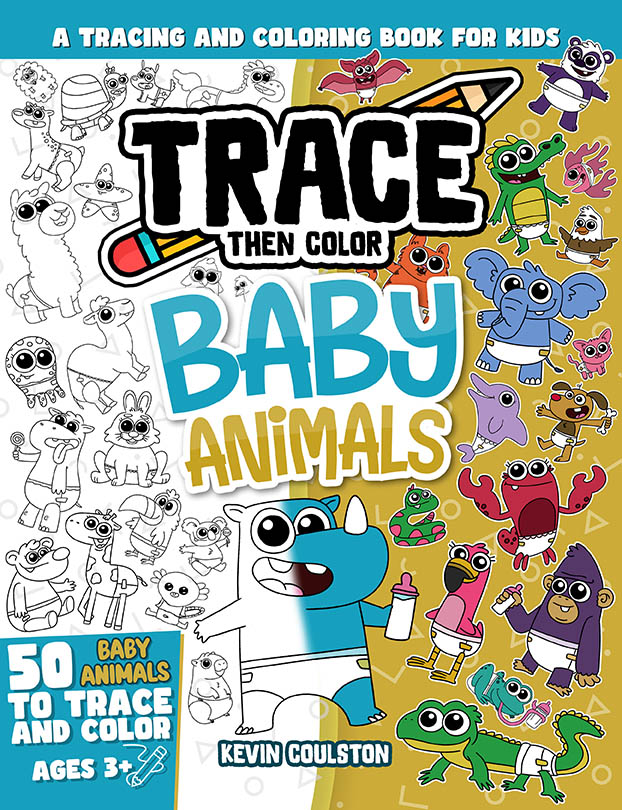
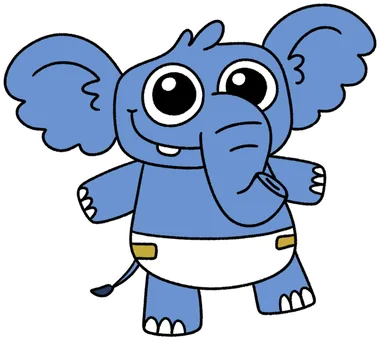
Most 2-year-olds do not color inside lines, and that is fine. But some love having a picture to scribble on, especially a favorite animal. A big, simple character gives them something to talk about: "Look, a baby elephant! What color is he?" Gentle, round animals like those in Trace Then Color: Baby Animals work for this, with an adult pointing and naming. Trace Then Color books are designed for ages 3 and up, so at 2 they are a shared activity, not a solo one.
Make it fun
- Name colors as they use them. "Red! You’re making red lines."
- Talk about the marks. "Big circles! Zoom zoom!"
- Color together. Make your own marks next to theirs.
- Try different surfaces. Paper, cardboard boxes, the sidewalk with chalk.
- Keep it short. A few minutes is a successful session.
Managing the mess
- Tape paper down so it doesn’t slide.
- Use a washable table cover or a large tray.
- Put on an old shirt.
- Choose washable everything.
- Give a big paper target and redirect gently: "Crayons go on the paper."
What’s coming next
Around age 3, many children start making more controlled marks, coloring roughly in a shape and naming what they’ve made. See coloring for 3-year-olds.
Questions parents ask
Should my 2-year-old be coloring inside the lines?
No. Staying inside lines usually develops between 4 and 6. At 2, scribbling is the goal.
My toddler eats crayons. What should I do?
Supervise closely, choose nontoxic crayons, and redirect: "Crayons are for paper." Try chunky crayons that are harder to bite.
Which hand should my toddler use?
Whichever they reach with. Hand preference usually develops between 2 and 4 and settles later.

About Kevin Coulston
Kevin Coulston is a cartoonist and member of the National Cartoonists Society who has written and illustrated more than 100 drawing, tracing and coloring books for kids, including the Trace Then Color series. Meet Kevin or browse all his books on FirstArtBooks.com.