A crayon slips. A tiny streak of blue crosses the line. And suddenly your child is in tears, crumpling the page or refusing to color at all.
Perfectionism shows up early in some children. It often comes from caring a lot and having high standards, which are good qualities. But when every small mistake feels like a disaster, coloring stops being fun.
Why some kids struggle with mistakes
- They have a clear picture in their head and their hands cannot quite match it yet.
- They compare their work to an older sibling’s or an adult’s.
- They have heard "stay inside the lines" as a rule rather than a goal.
- They are naturally cautious and anxious about getting things wrong.
Choose forgiving characters
Some pages show every slip. Others hide them. Bold outlines, cartoon characters and silly subjects are far more forgiving than delicate, realistic images.
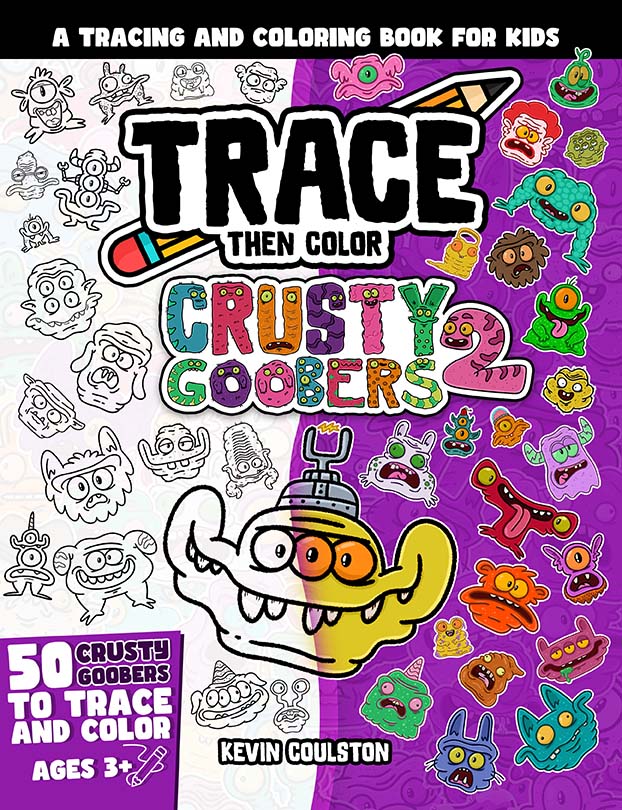
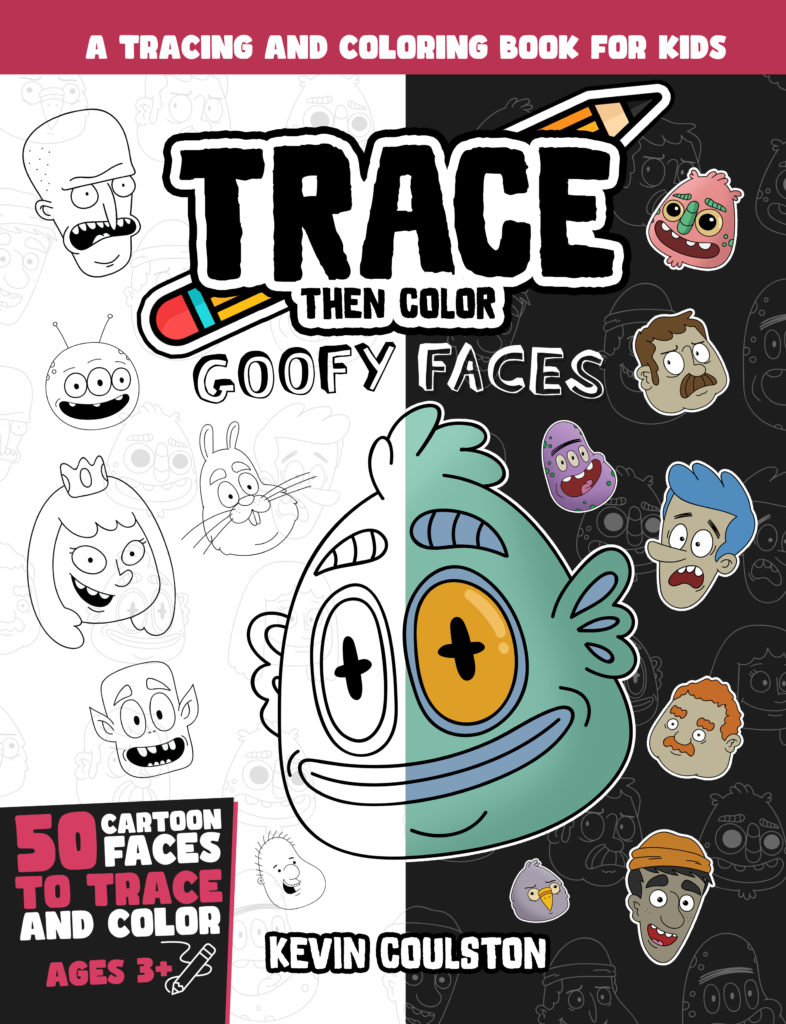
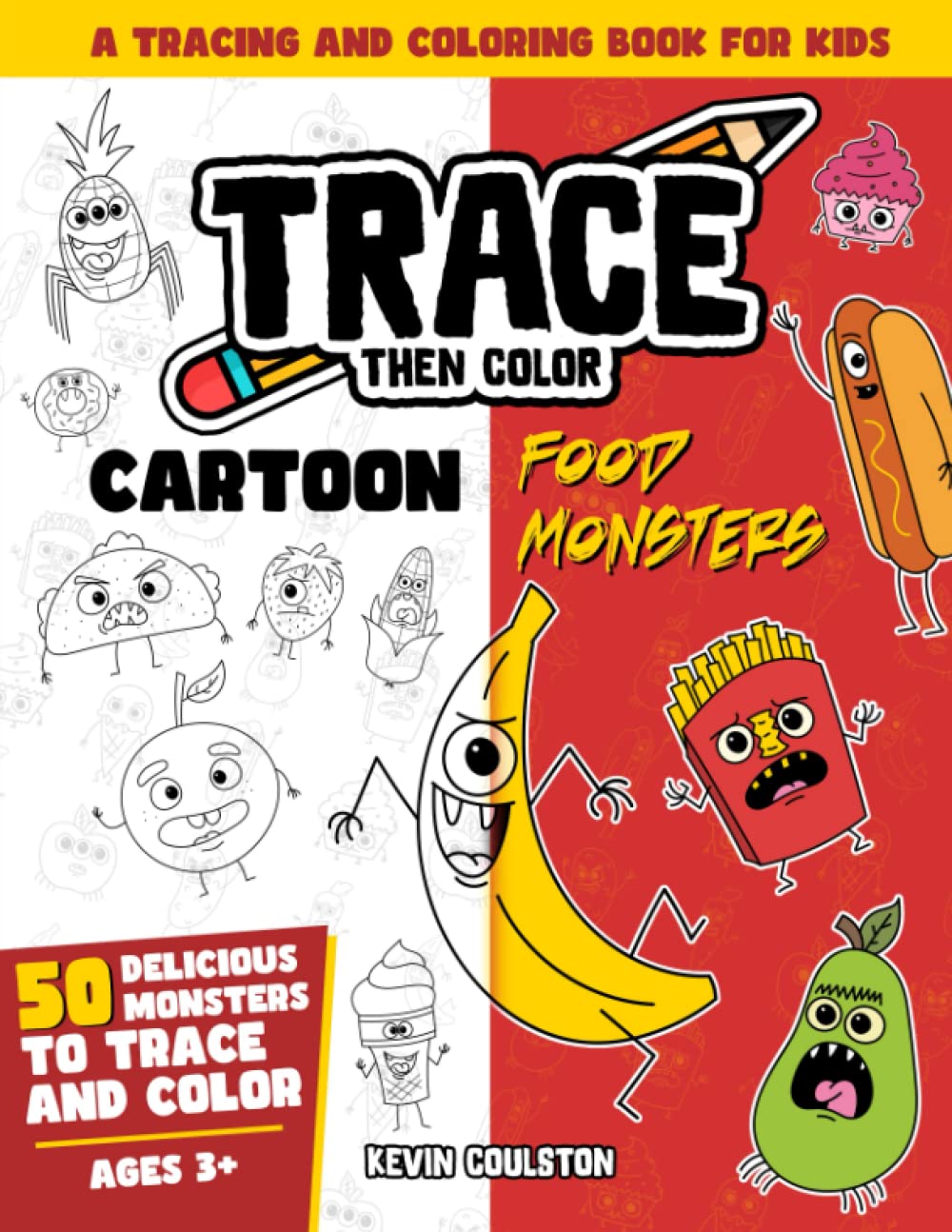
Even better are characters where mess is the point. Trace Then Color: Crusty Goobers 2 is full of gloriously gross creatures that look better with drips and splotches. Trace Then Color: Goofy Faces has wacky expressions that are funny however they are colored. See why kids love gross and goofy characters.
Reframe the "mistake"
Teach your child that lines outside the edge can become part of the picture:
- A shadow under a character
- Motion lines for speed
- A sparkle or glow
- Fur or hair
- Grass, water or a background
When a slip becomes a design decision, the child stays in charge.
Play "messy on purpose" games
- Eyes closed coloring. Color one part with your eyes closed. Laugh at the result.
- Wrong hand challenge. Color one space with your other hand.
- Scribble monster. Scribble a shape, then turn it into a monster.
- Speed round. Color a page in sixty seconds. Neatness is impossible, which is the point.
These games show kids that imperfect results can be fun.
Model imperfection
Color next to your child and let your own crayon slip. Say, "Oops! That’s OK. I’ll turn it into a cloud." Kids learn more from how adults handle mistakes than from anything we tell them.
Praise effort, not neatness
Avoid "You stayed in the lines so well!" Try instead:
- "You chose such interesting colors."
- "You kept going even when it was tricky."
- "Tell me about this part."
More phrases in how to praise your child’s coloring.
Tracing can help
For some perfectionists, tracing the outline first gives a sense of control. The shape is guided, so the child can relax into the coloring. See what is Trace Then Color.
When to seek support
If perfectionism is causing significant distress, avoidance of many activities or very frequent meltdowns, talk to your pediatrician or a child psychologist.
Questions parents ask
Should I teach my child to stay inside the lines?
Gentle tips like outlining first are fine, but present them as tricks, not rules. Control comes naturally with age.
My child tears up pages after one mistake. What can I do?
Have plenty of spare copies, choose forgiving characters and calmly model fixing mistakes.
Is perfectionism a sign of anxiety?
Sometimes. High standards are fine; distress over small mistakes may be worth discussing with a professional.

About Kevin Coulston
Kevin Coulston is a cartoonist and member of the National Cartoonists Society who has written and illustrated more than 100 drawing, tracing and coloring books for kids, including the Trace Then Color series. Meet Kevin or browse all his books on FirstArtBooks.com.