"Fine motor skills" is a phrase you hear a lot from preschool teachers and pediatricians. It means using the small muscles of the hands and fingers in a controlled way. Kids need these skills for almost everything: zipping a coat, opening a snack, using a fork, cutting with scissors and, eventually, writing.
Coloring is one of the easiest and most enjoyable ways to practice them. Here is what is actually going on when your child colors, and how to make the practice count.
What coloring works on
The hand’s small muscles
Holding a crayon steadily takes strength in the thumb and fingers. Little hands tire quickly at first, which is normal. Over weeks of regular coloring, kids hold the crayon longer and with less effort.
Finger isolation
Mature grips use the thumb, index and middle fingers to steer while the ring and little fingers rest. Coloring encourages kids to use those "working" fingers separately from the "resting" ones.
Wrist stability
Early colorists move the whole arm. Over time they learn to rest the side of the hand on the table and make smaller movements from the wrist and fingers. That shift is a big step toward neat handwriting.
Stopping on purpose
Coloring near an edge asks a child to slow down and stop. Stopping is harder than moving, and it is one of the most useful motor skills a child can learn.
Signs of progress to look for
You do not need a checklist, but it is satisfying to notice:
- Scribbles that start to stay mostly inside a big shape
- Back-and-forth strokes changing to smaller, more controlled strokes
- A grip that moves from the fist toward the fingertips
- Longer coloring sessions before the hand gets tired
- Coloring that slows down near the lines
Every child moves at their own pace. A 3-year-old who colors happily across the lines is right on track.
How to get more fine motor practice from coloring
Choose big, clear shapes first
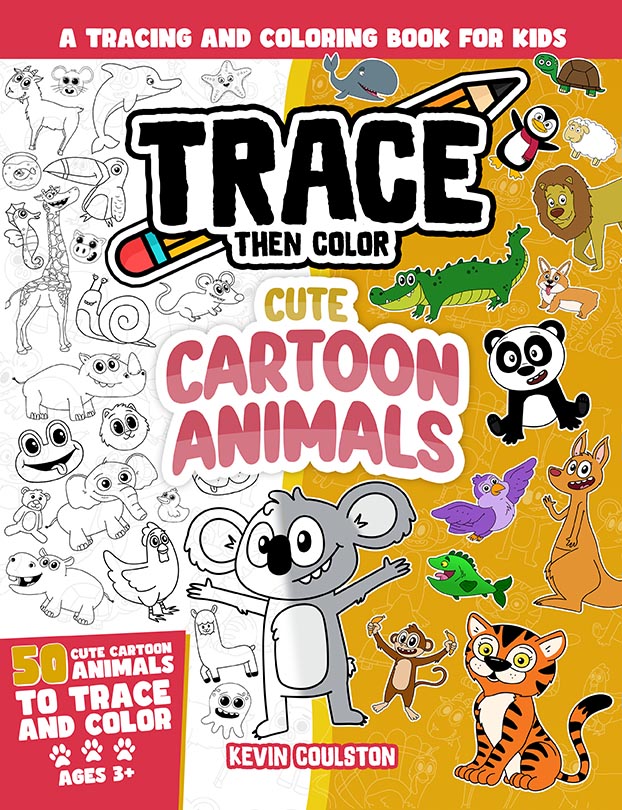
Thick outlines and big spaces are easier to control. Rounded characters like the ones in Trace Then Color: Cute Cartoon Animals give young children a clear target without tiny fiddly bits.
Offer short crayons
Broken crayons are a gift. A short crayon is hard to hold in a fist, so kids naturally pinch it with their fingertips. Many occupational therapists recommend them for exactly this reason.
Color on a slant
Taping a page to a slanted surface, like a big binder turned on its side, or to an easel, puts the wrist in a good position for writing. It is a simple tweak with a real effect.
Trace before coloring
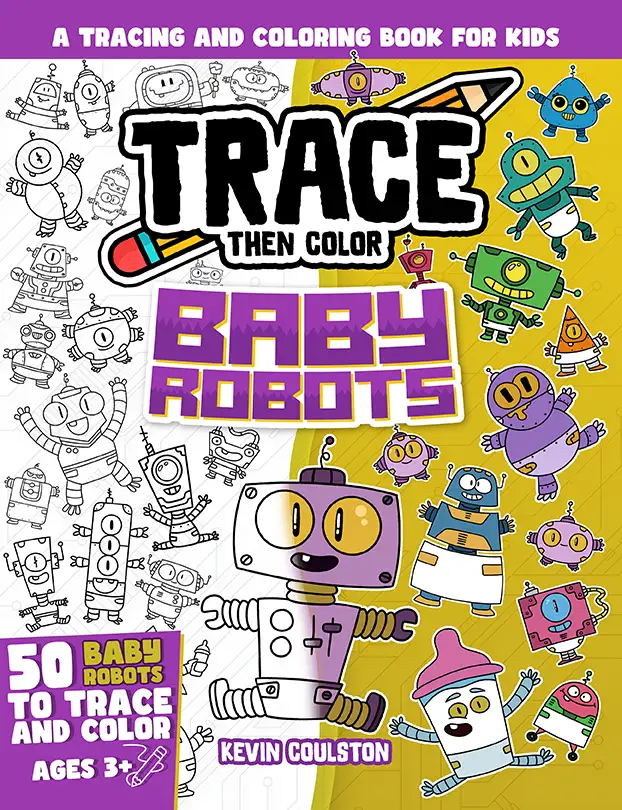
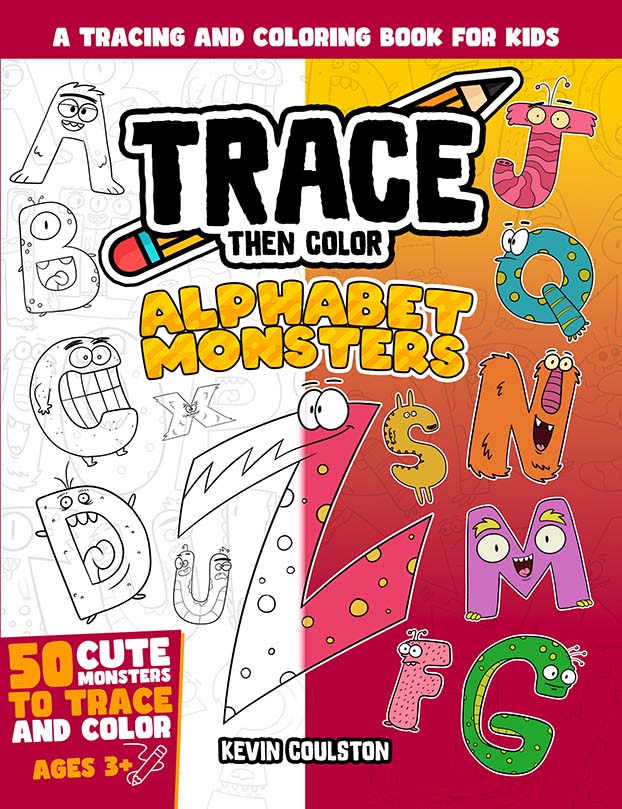
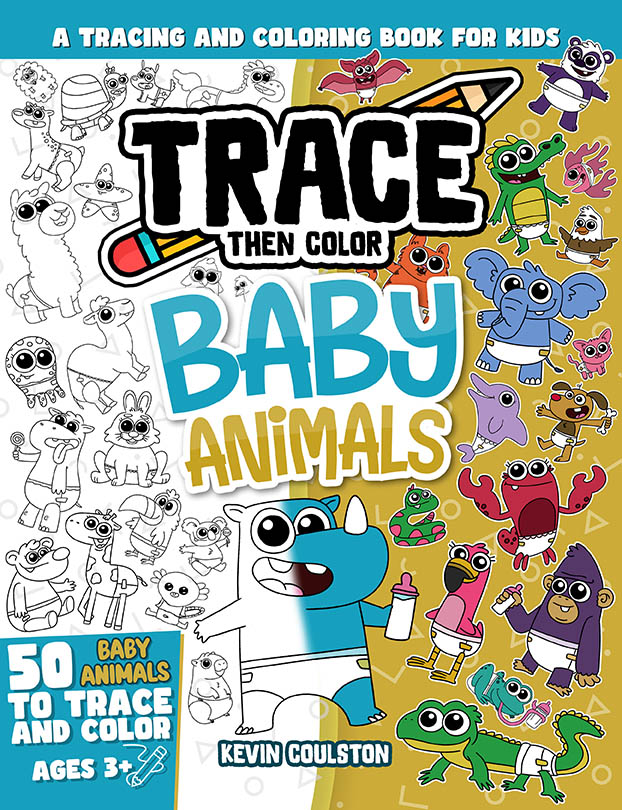
Tracing a dotted outline adds another layer of control. Kids follow a path, then fill the space inside it. That is the idea behind the Trace Then Color series: Trace Then Color: Baby Robots uses boxy shapes and simple curves that are especially easy to trace. See why tracing first helps.
Mix the tools
Crayons, colored pencils and markers each ask something different of the hand. Crayons need pressure, pencils need control, and markers glide. Rotating them builds a wider range of skill (we compare them in crayons vs colored pencils vs markers).
Fine motor warm-ups that pair well with coloring
Before a coloring session, try one of these quick warm-ups:
- Squeeze and roll play dough into "snakes"
- Pick up small pom-poms with clothespins
- Peel stickers and press them onto the page as decorations
- Tear paper into small pieces for a collage background
More ideas in hand warm-ups before coloring.
When to ask for help
Some children find fine motor tasks much harder than their peers do. If your child avoids all crayon and pencil activities, gets very frustrated, or seems to have trouble using both hands together, mention it to your pediatrician. An occupational therapist can assess and help, and coloring is often part of the fun homework they give.
Questions parents ask
Do crayons or markers build fine motor skills better?
Crayons, because they need some pressure and the short ones encourage a fingertip grip. Markers are still great for motivation because the colors are so bright.
My child presses so hard the crayon breaks. Is that a problem?
Not usually. Pressing hard is common while kids are learning control. Broken crayons are actually useful for grip practice. Try games where they color "as softly as a mouse" and "as loudly as a lion."
How long should a preschooler color to build skills?
Five to fifteen minutes is plenty for most 3 and 4-year-olds. Stop while it is still fun.

About Kevin Coulston
Kevin Coulston is a cartoonist and member of the National Cartoonists Society who has written and illustrated more than 100 drawing, tracing and coloring books for kids, including the Trace Then Color series. Meet Kevin or browse all his books on FirstArtBooks.com.