Watch closely while your child colors. Is the page sliding around the table? Is the other hand in their lap, or holding the paper still? That second hand matters more than you might think.
Therapists call this bilateral coordination: using both sides of the body together, often with each hand doing a different job. When coloring, the dominant hand is the "doer" and the other is the "helper."
Why the helper hand matters
Many everyday tasks need a doer and a helper:
- Writing: one hand writes, the other steadies the paper.
- Cutting: one hand snips, the other turns the paper.
- Spreading butter: one hand holds the knife, the other holds the bread.
- Tying shoes: both hands work together in a sequence.
Children who forget to use their helper hand often find these tasks frustrating. Coloring is a simple, everyday place to build the habit.
How to encourage the helper hand
Remind with play, not nagging
Give the helper hand a name. "Where’s your Holder Hand?" or "Put your paper-paw on the page!" makes the reminder fun instead of a correction.
Make the page move a little
A single sheet on a smooth table slides easily, so kids notice they need to hold it. If it is very frustrating, put a non-slip mat underneath, then remove it later.
Turn the page, not the body
When coloring a tricky area, show your child how to turn the paper with their helper hand rather than twisting their arm. That is exactly the skill they will use when cutting curves.
Activities that build bilateral coordination around coloring
- Stickers. One hand holds the sheet, the other peels. Add stickers to a colored page as decorations.
- Coloring on a clipboard held in the lap. The helper hand has to steady it.
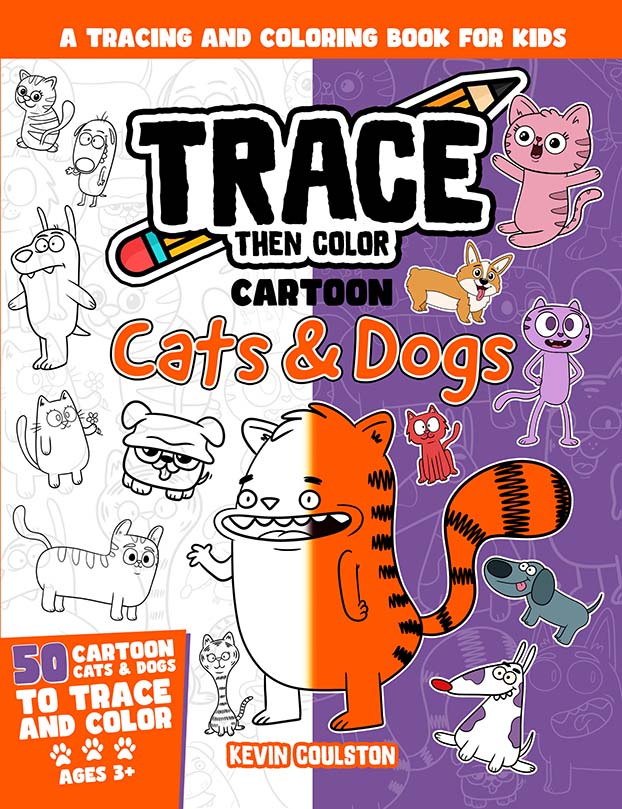
- Cutting out colored characters. Once a character is colored, cutting it out with child-safe scissors is fantastic two-handed practice. A cut-out cat or dog from Trace Then Color: Cartoon Cats and Dogs can become a puppet or a fridge magnet.
- Folding. Fold a colored page in half to make a card. See coloring pages as kindness cards.
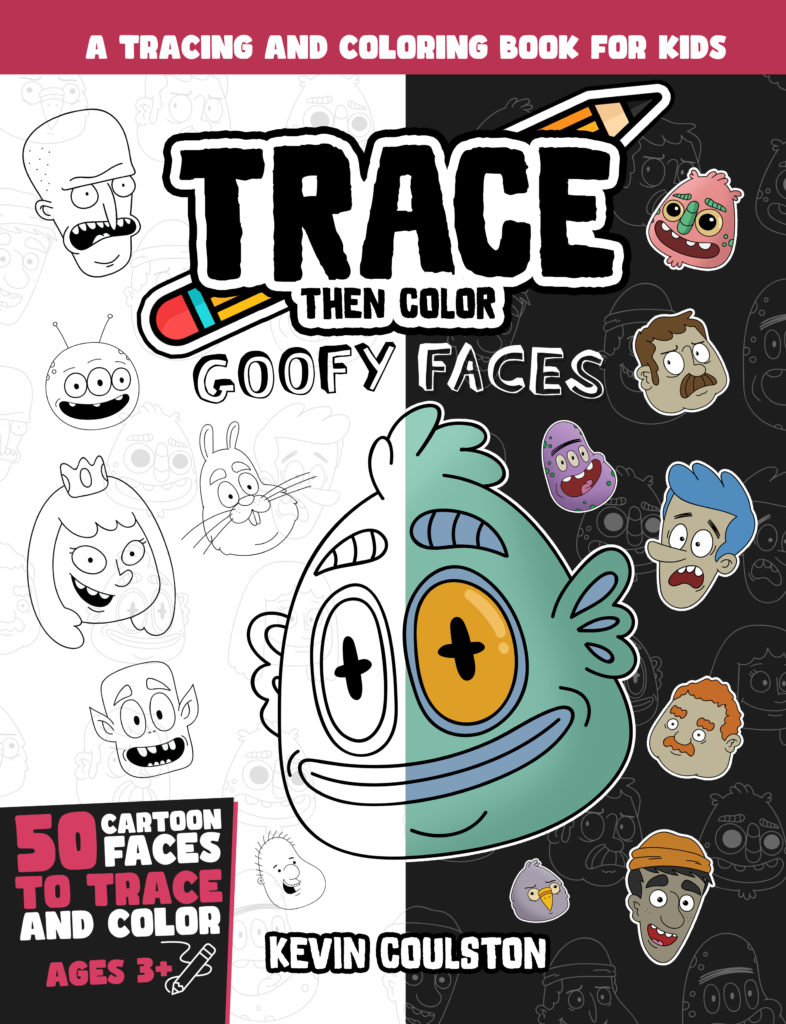
- Paper plate masks. Color a funny face, like one from Trace Then Color: Goofy Faces, cut it out, glue it to a plate and add a craft stick.
Crossing the midline
A related skill is crossing the midline, which means reaching across the center of the body with one hand. Some young kids switch hands rather than reach across. On a wide page, encourage your child to keep the crayon in their main hand and reach across, or simply turn the page so the area they need is in front of them. Both are fine; what matters is that they do not avoid the other side of the page entirely.
What is typical?
Toddlers use both hands in a fairly mirrored way. By preschool, most children start to show a clear preference for one hand and use the other as a helper. If your child is 5 or older and still rarely uses a helper hand, or struggles with most two-handed tasks, mention it to their teacher or pediatrician.
Questions parents ask
Is it bad if my child switches hands while coloring?
Switching is common in toddlers and young preschoolers while hand preference develops. If it continues well into kindergarten, it is worth mentioning to a teacher or occupational therapist.
Should I tape the paper down?
Taping is fine for very young kids or kids who find it frustrating. Over time, take the tape away so the helper hand gets its job back.
What other activities practice both hands?
Threading beads, building with blocks, playing clapping games, rolling dough with a rolling pin and opening containers all help.

About Kevin Coulston
Kevin Coulston is a cartoonist and member of the National Cartoonists Society who has written and illustrated more than 100 drawing, tracing and coloring books for kids, including the Trace Then Color series. Meet Kevin or browse all his books on FirstArtBooks.com.