Executive function is a big phrase for a set of everyday skills: making a plan, keeping something in mind, switching strategies when something does not work and holding back the urge to rush. Kids use these skills all day, from getting dressed to finishing homework, and they keep developing well into the teenage years.
Coloring is not a cure-all, but it is a surprisingly good playground for executive function, because every page is a small project with a beginning, a middle and an end.
Planning
Before starting, ask: "What colors will you use?" Some kids like to line up the crayons they plan to use. That is planning. Older kids might decide on a color scheme, like "all ocean colors" or "only warm colors" (see warm and cool colors).
Planning also shows up in the order of work. Do they color the big spaces first or the small details? There is no right answer, but thinking about it is the skill.
Working memory
Working memory is holding information in your head while you use it. Coloring games stretch it gently:
- "Color the eyes blue, the hat red and the shoes green." Can they remember all three instructions?
- "Use the same color for both arms." They need to remember the first choice when they reach the second arm.
- Follow a color key, as in color-by-number, without checking it every time.
Our color-by-instruction listening games are full of these.
Flexible thinking
What if the crayon breaks? What if the green they wanted is missing? What if they colored the wrong part? Coloring is full of small problems with easy solutions: use a different green, turn the mistake into a pattern, add a shadow. Helping kids find those solutions builds flexibility.
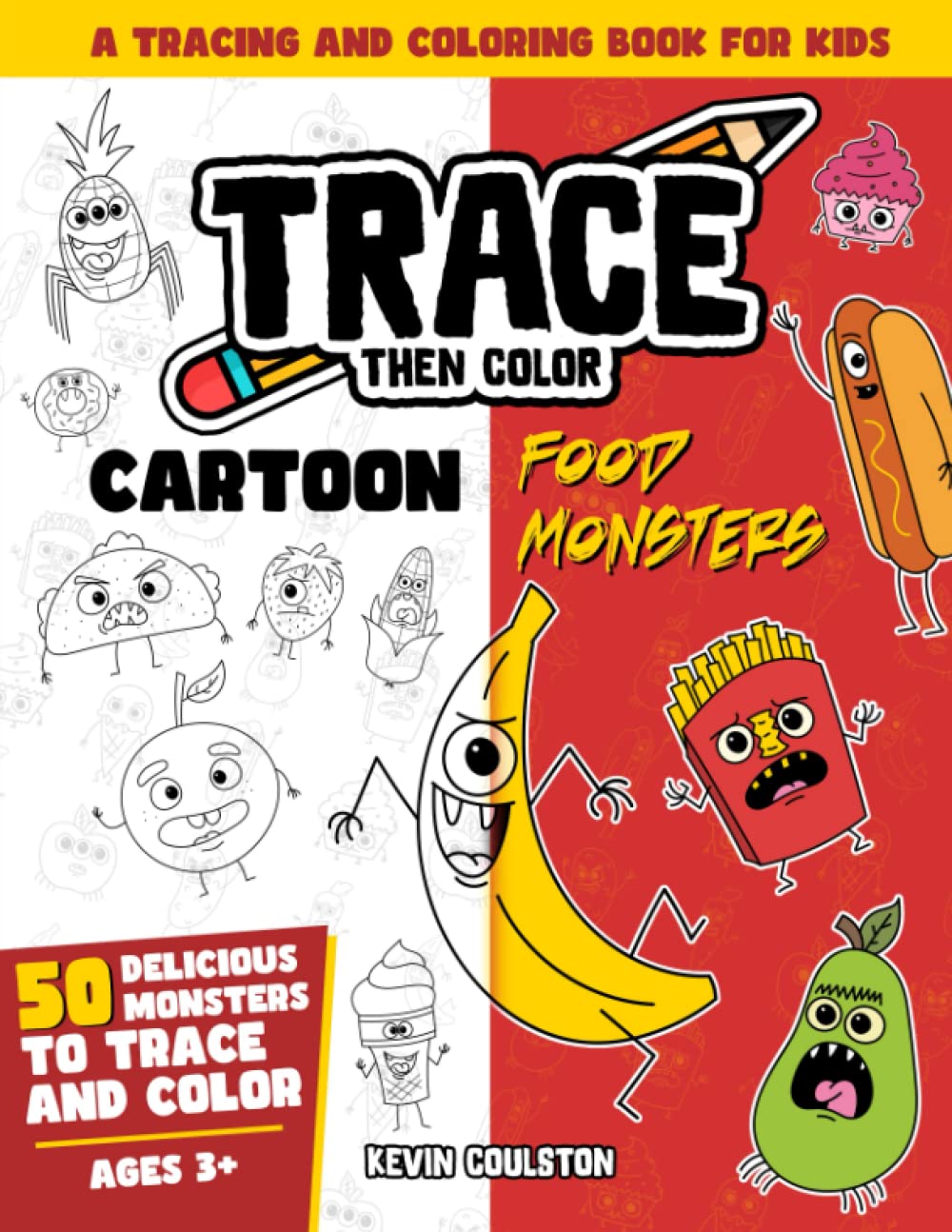
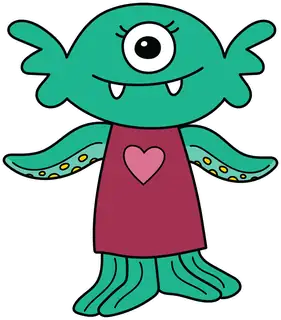
Weird characters help here too. A food monster can be any color at all, so kids practice imagining options rather than copying reality. Trace Then Color: Cartoon Food Monsters is great for this.
Self-control
Coloring near an edge asks a child to slow down even when they want to go fast. Finishing a page when they would rather start a new one is self-control too. These are gentle, low-pressure ways to practice the same skill kids need to wait their turn or keep working when a task gets boring.
Finishing
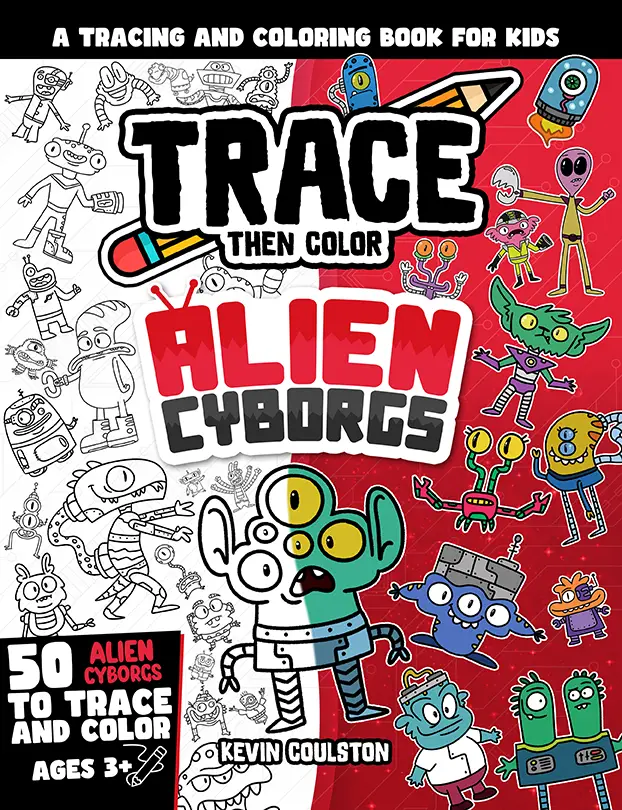
Executive function includes following through. Coloring offers a clear finish line. One character per page makes that line easy to reach, which is why we design our books that way. For older kids who want a bigger challenge, more detailed characters like Trace Then Color: Alien Cyborgs take more steps to finish, so the follow-through is a bigger win.
How to boost executive function at the coloring table
- Ask for a plan. "Tell me your plan before you start."
- Use a timer. "Let’s color for ten minutes, then check how far we got."
- Add a rule. "Only three colors on this page." Rules make kids think.
- Reflect at the end. "What was hard? What would you do differently next time?"
- Celebrate finishing. Put finished pages somewhere visible.
A note for parents of kids with ADHD
Children with ADHD often have executive function challenges, and many of them love coloring. Shorter pages, timers and movement breaks help. See coloring tips for kids with ADHD.
Questions parents ask
At what age does executive function develop?
It starts in infancy and develops through adolescence and into early adulthood. Preschool and early school years are a time of especially fast growth.
Is color-by-number good for executive function?
Yes, it practices following a key and remembering rules. Balance it with free coloring so kids also practice making their own choices.
My child never finishes a page. What can I do?
Choose simpler pages, use a short timer, and allow them to finish a page over two sessions. Finishing can be a goal you build toward.

About Kevin Coulston
Kevin Coulston is a cartoonist and member of the National Cartoonists Society who has written and illustrated more than 100 drawing, tracing and coloring books for kids, including the Trace Then Color series. Meet Kevin or browse all his books on FirstArtBooks.com.