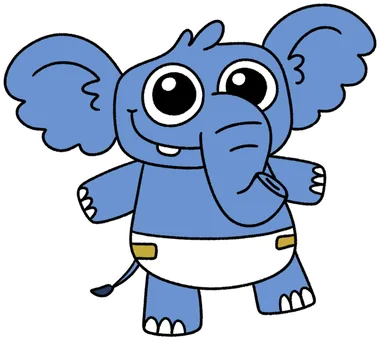
Puppies, kittens, ducklings and cubs. Baby animals are irresistible, and their simple, round shapes make them ideal coloring pages for little hands.
Why baby animals are easy to color
- Big, round shapes. Large heads and bodies are easy to stay inside.
- Few small details. Less frustration for beginners.
- Big eyes. Kids love adding sparkle highlights. See adding highlights.
Learning while coloring
Animal names and sounds
Name each animal and make its sound. Toddlers love this.
Baby animal words
| Animal | Baby |
|---|---|
| Cat | Kitten |
| Dog | Puppy |
| Cow | Calf |
| Bear | Cub |
| Duck | Duckling |
| Sheep | Lamb |
| Kangaroo | Joey |
Habitats
Where does the baby live? A farm, a forest, the ocean? Add a background. See coloring backgrounds.
Pages to try
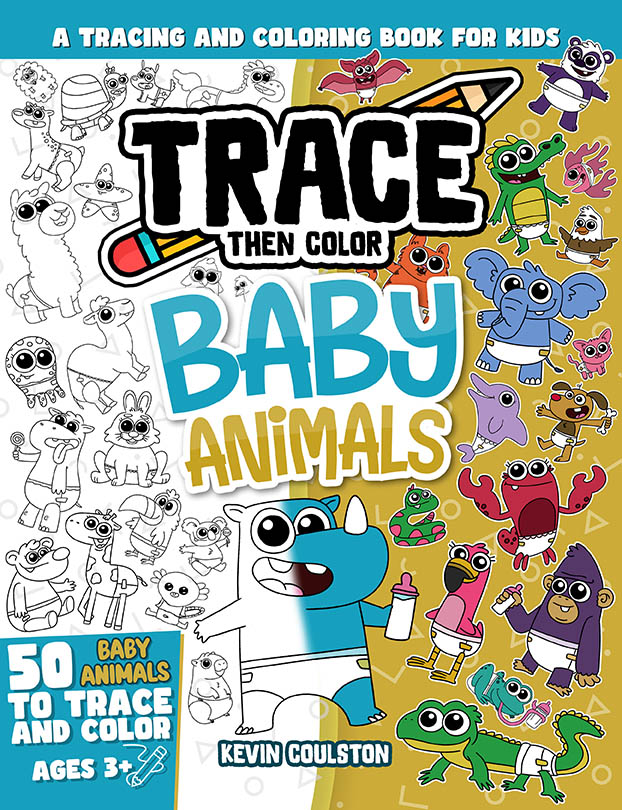
- Trace Then Color: Baby Animals has simple, friendly baby animals with tracing lines
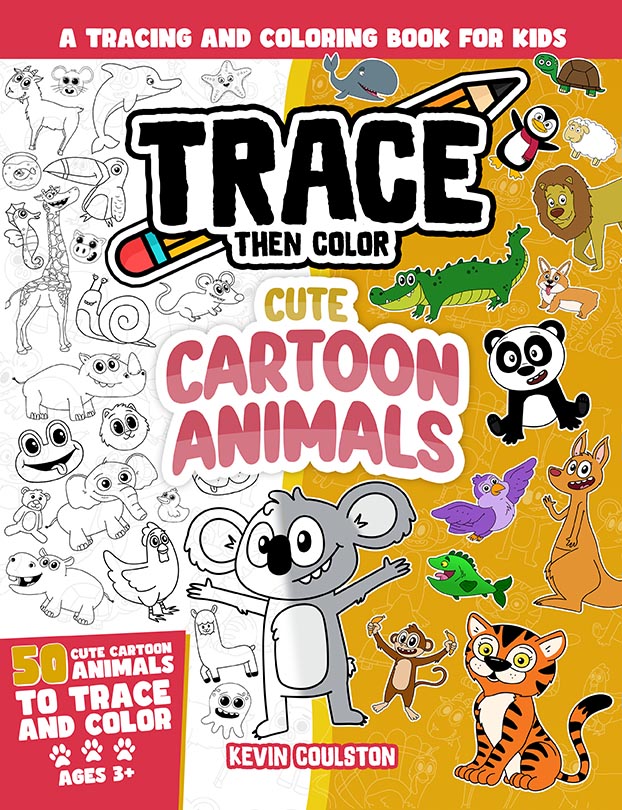
- Trace Then Color: Cute Cartoon Animals adds a wider range of cute animals
Realistic or fun colors?
Both. Real colors build observation (a brown bear cub), and fun colors build imagination (a purple puppy). Let kids choose.
Baby animal pages make lovely gifts for grandparents. Add the child’s name and age.
Questions parents ask
What age suits baby animal pages?
From about 18 months with chunky crayons, through early elementary.
How can I make coloring educational for a toddler?
Name colors and animals as they color. Keep it short and fun.
Should toddlers trace?
Many enjoy tracing big dotted lines from age 3. See coloring with 2-year-olds.

About Kevin Coulston
Kevin Coulston is a cartoonist and member of the National Cartoonists Society who has written and illustrated more than 100 drawing, tracing and coloring books for kids, including the Trace Then Color series. Meet Kevin or browse all his books on FirstArtBooks.com.