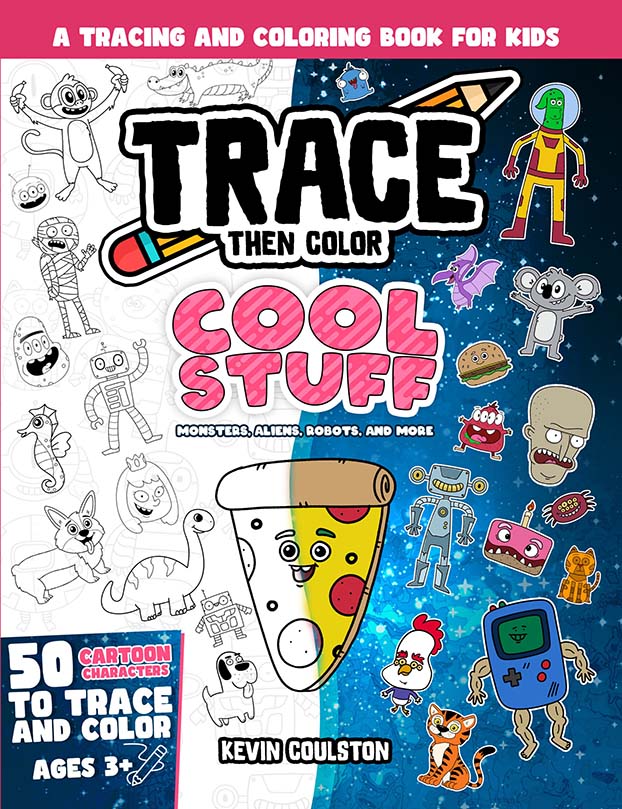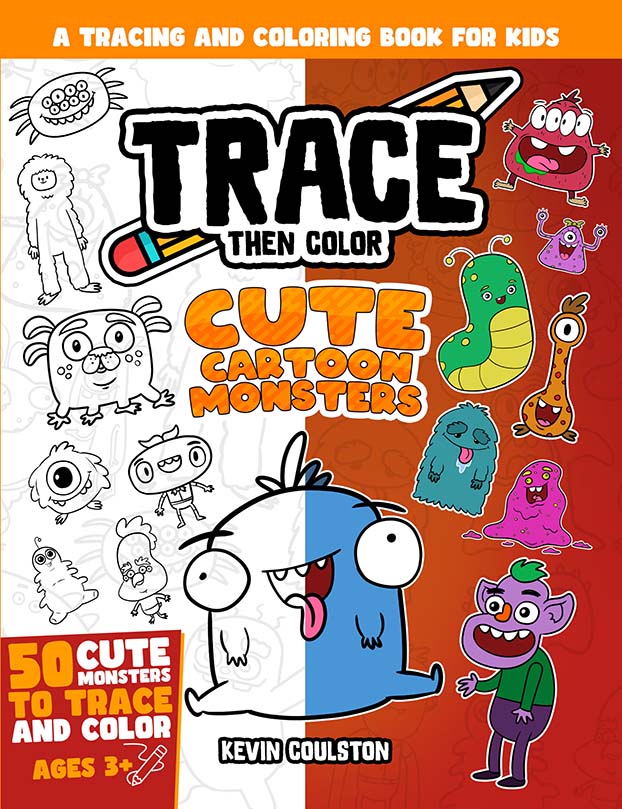
We usually think of coloring as a visual activity. But for a young child it is also about touch, pressure, sound and even smell. That makes it a natural form of sensory play, and a calm one.
The senses at the coloring table
- Touch. Smooth crayons, scratchy pencils, slippery markers, rough paper.
- Pressure. The feeling of pressing hard for dark color or gently for light. Therapists call this proprioceptive feedback.
- Sound. The scratch of pencil, the squeak of a marker, the soft drag of a crayon.
- Sight. Bright colors, contrast, patterns.
- Smell. Crayons have a familiar waxy scent; some markers are scented.
Sensory coloring ideas
Texture rubbings
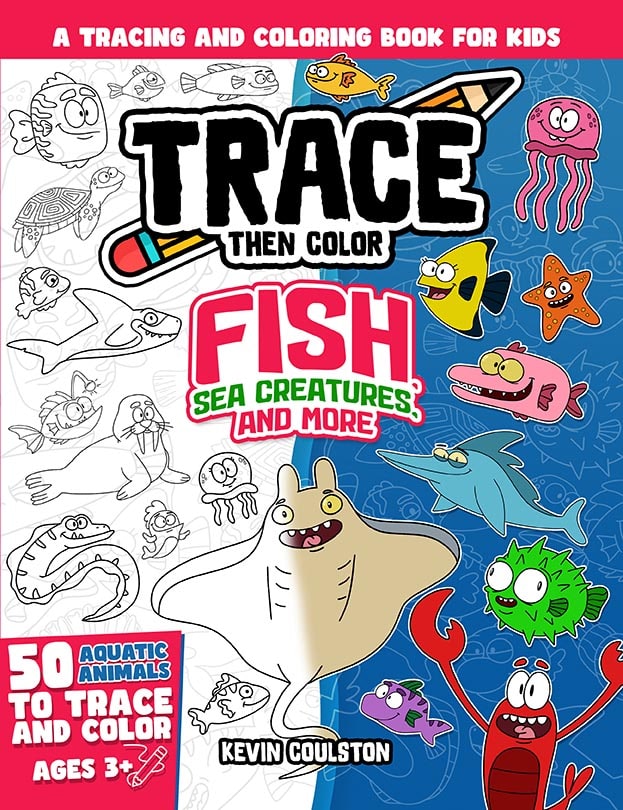
Put a textured object, like a leaf, a coin, a piece of mesh or a bumpy placemat, under the page. Color over it with the side of a peeled crayon and watch the texture appear. Rubbings make wonderful backgrounds: put sandpaper under a fish page for a sandy seabed. Trace Then Color: Fish, Sea Creatures and More is perfect for ocean-floor textures.
Bumpy board
Color on top of a sheet of corrugated cardboard or a textured placemat for a bumpy effect.
Sandpaper coloring
Crayons on fine sandpaper give strong, vivid color and a very different feel. Great for little hands that like strong feedback.
Warm crayons
On a sunny windowsill or a slightly warm surface, crayons glide and melt a little. Always supervise.
Scented markers
Some kids love them, some find them overwhelming. Offer, but do not insist.
Different paper
Try construction paper, cardstock, brown paper bags or paper plates. Each feels different.
Finger feel
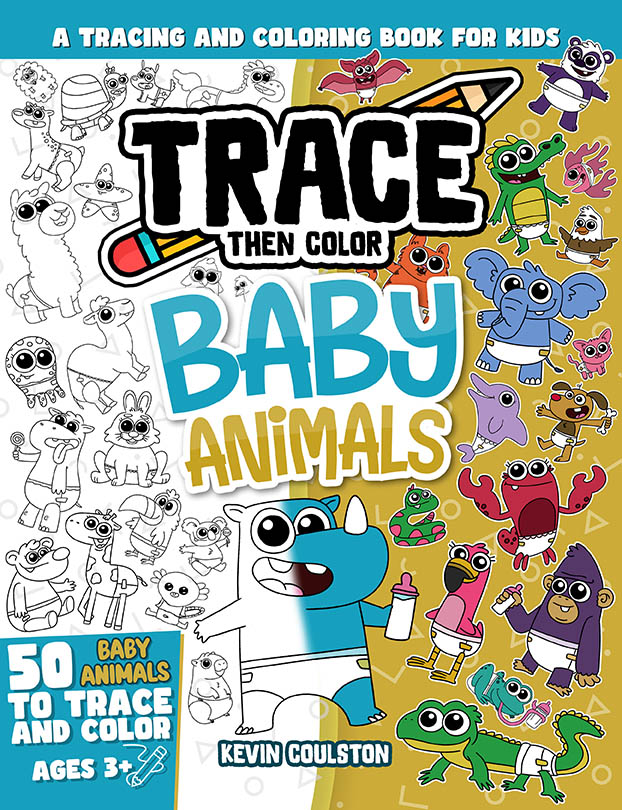
After coloring a soft animal, glue on a cotton ball tail or felt ears. Baby animals from Trace Then Color: Baby Animals look great with a fluffy texture added.
For sensory seekers
Some children crave strong sensory input. They press very hard, break crayons and love noisy, scratchy tools. Try:
- Chunky crayons and crayon rocks that can take pressure
- Coloring on a vertical surface such as a wall or easel
- Rubbings that require firm pressure
- Squeezing play dough before coloring
For sensory avoiders
Other children dislike certain textures or sounds. They might hate the squeak of markers or the feel of waxy crayons. Try:
- Offering choices: crayons, colored pencils, markers
- Softer, smoother crayons
- Pencil grips or wrapping a crayon in tape
- Quieter tools and smoother paper
Let them choose what feels right. Forcing a tool they dislike makes coloring unpleasant.
Coloring as calming sensory input
For many kids, the steady pressure and repetitive motion of coloring is calming. It is a reason coloring belongs in a calm-down corner (see how to stock a calm-down corner).
Questions parents ask
My child presses so hard the paper tears. What should I do?
Offer thicker paper or cardstock, and try sandpaper or rubbings that welcome heavy pressure. Gentle pressure games can help over time.
Are scented markers safe?
Most are labeled nontoxic, but teach kids to smell from a distance and never put markers near their nose or mouth.
Is sensory coloring useful for kids with sensory processing differences?
Many occupational therapists use coloring and rubbings in sensory programs. Follow your child’s therapist’s advice about which tools to use.
About Kevin Coulston
Kevin Coulston is a cartoonist and member of the National Cartoonists Society who has written and illustrated more than 100 drawing, tracing and coloring books for kids, including the Trace Then Color series. Meet Kevin or browse all his books on FirstArtBooks.com.