Before a child can color a character’s arm, they have to see the arm. That sounds obvious, but picking a shape out of a picture, noticing where it ends and recognizing that it is a separate space from the hand next to it is real visual work.
These skills, called visual perception, help kids read, solve puzzles, copy from the board and make sense of diagrams. Coloring builds them without anyone noticing.
The visual skills coloring practices
Figure-ground
This is the ability to pick out one shape from a busy background. On a coloring page, it means finding the separate spaces: the hat, the face, the shirt. Kids who find figure-ground hard might color several spaces as one blob, which is fine at first and improves with practice.
Visual closure
Recognizing a whole shape when part of it is hidden or incomplete. Tracing dotted outlines exercises this beautifully, because the child sees the character in the dots before the line is complete.
Form constancy
Knowing a shape is the same even when it is bigger, smaller or turned around. A circle is a circle whether it is a robot’s eye or a pizza.
Spatial relationships
Seeing that the hat is above the head and the shoes are below the legs. Coloring conversations ("color the thing next to the tail") build this language.
Visual discrimination
Noticing differences. "These two spots are the same, but this one is different." Matching colors to parts is an early form of this.
Choosing pages that build visual perception
Start simple
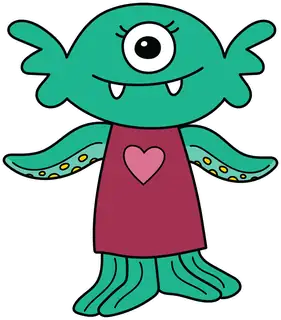
For younger children, characters with a few big, clearly separated shapes make figure-ground easy. As skills grow, move to busier characters.
Add complexity gradually
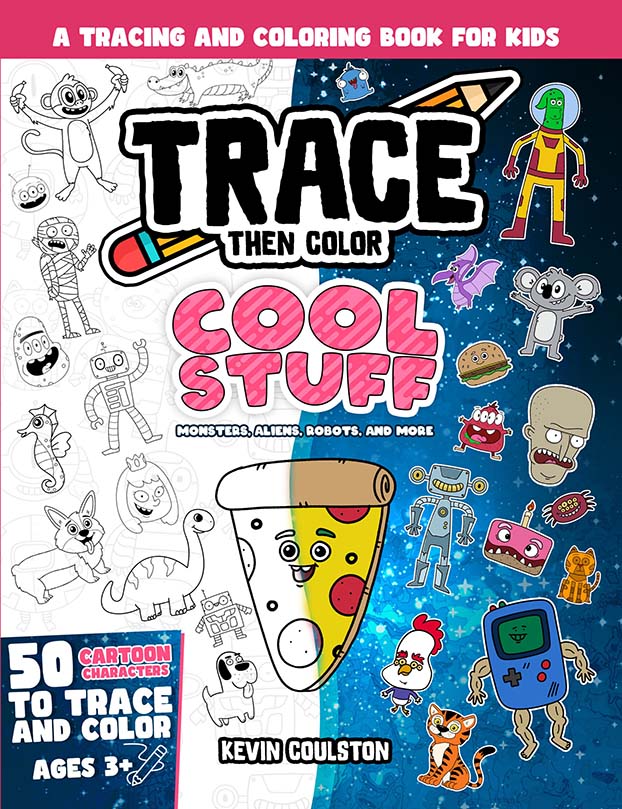
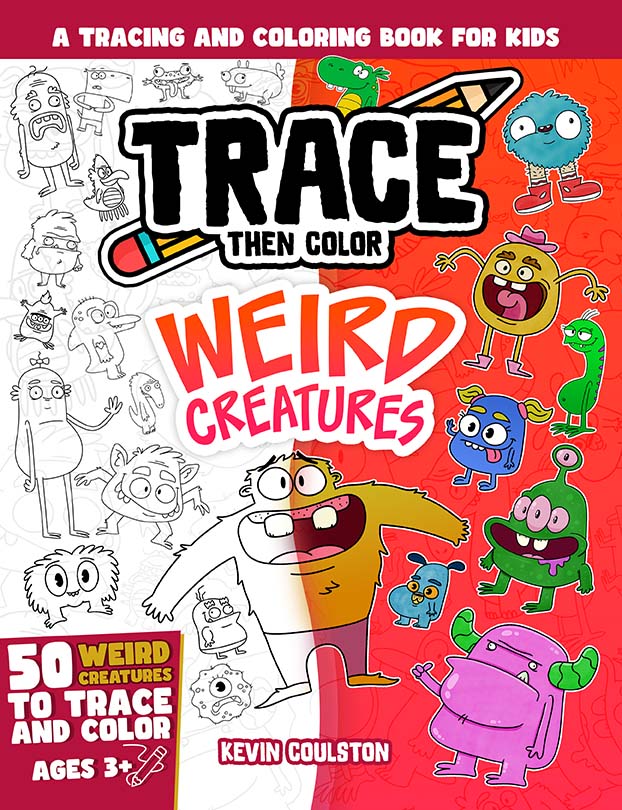
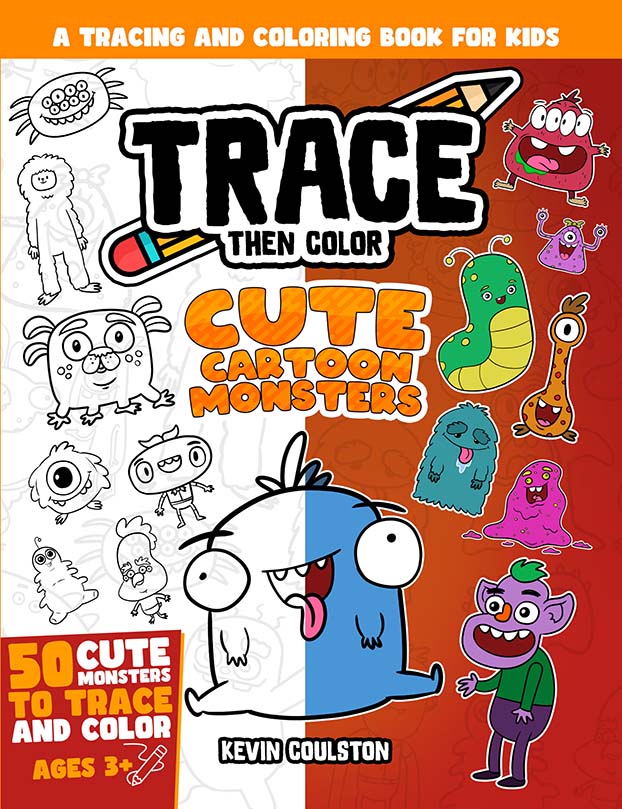
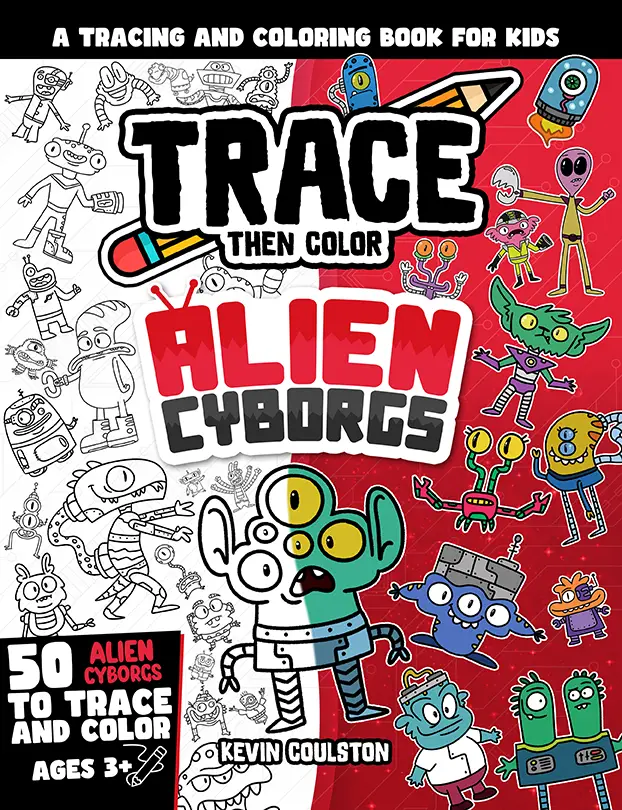
Characters with lots of parts, like gadgets, tentacles and accessories, give older kids more spaces to identify. Trace Then Color: Cool Stuff mixes monsters, aliens and robots with plenty of separate parts. Trace Then Color: Weird Creatures has odd shapes that make kids really look.
Use dotted outlines
Tracing a dotted outline before coloring helps a child see the shape as a whole first. Then, when they color, they already understand the parts.
Games for visual perception
- I spy on the page. "I spy a small circle." "I spy something with stripes."
- Count the spaces. Before coloring, count how many separate spaces a character has. Then check them off as you color.
- Same-color hunt. Choose one color and use it on every space of a certain kind, like every circle or every triangle. See finding shapes in cartoon characters.
- Hidden shape. Point to a shape and ask what else it looks like. A robot’s square body might be a box, a window or a book.
- Spot the difference. Color two copies of the same character differently, then talk about what changed.
How this connects to reading and math
Reading involves telling apart letters that look alike, like b and d, and tracking along a line of text. Math involves recognizing shapes, patterns and positions. Coloring does not teach reading or math directly, but it exercises the visual skills both depend on.
When to ask for advice
Some children find visual perception much harder than other skills, and it can show up as trouble with puzzles, copying or reading. If you notice this, talk to your child’s teacher or pediatrician. Occupational therapists and developmental optometrists can assess these skills.
Questions parents ask
My child colors everything as one blob. Is that normal?
For toddlers and young preschoolers, yes. Point out the separate spaces and let them choose a different color for each. Most kids start to separate spaces around age 4 or 5.
Are detailed coloring pages better for visual skills?
Only if they match your child’s level. Too much detail is overwhelming. Step up gradually.
Do mazes help too?
Yes. Mazes, dot-to-dots and hidden-picture puzzles all exercise visual perception. The Mermaids, Unicorns and Other Cute Stuff Coloring and Activity Book mixes coloring with mazes and puzzles.

About Kevin Coulston
Kevin Coulston is a cartoonist and member of the National Cartoonists Society who has written and illustrated more than 100 drawing, tracing and coloring books for kids, including the Trace Then Color series. Meet Kevin or browse all his books on FirstArtBooks.com.