Watch a 2-year-old color and you will probably see a fist wrapped around the crayon like a dagger. Watch a 6-year-old and you will often see the crayon resting between the thumb and the first two fingers. That change does not happen overnight, and it does not need drills. It happens through lots of play, and coloring is one of the best kinds.
How grip usually develops
Every child is different, but grip tends to move through a few stages:
- Fist grip. The whole hand wraps the crayon and the movement comes from the shoulder. Common in toddlers.
- Fingers-down grip. The palm faces down and the fingers point toward the paper. Movement comes from the elbow.
- Four-finger grip. The crayon is held with the fingertips, but more fingers are involved than needed.
- Tripod grip. The thumb, index and middle fingers hold the crayon and the wrist rests on the table. Movement comes from the fingers and wrist.
Many children reach a tripod or similar mature grip between 4 and 6. Some use a slightly different grip that works perfectly well. Comfort and control matter more than a textbook position.
The broken-crayon trick
This is the favorite tip of many occupational therapists and preschool teachers. A long crayon is easy to hold in a fist. A short piece, an inch or so long, is almost impossible to hold that way, so the fingers naturally pinch it at the tip.
So do not throw out broken crayons. Snap a few on purpose and put them in a small dish. Kids usually think tiny crayons are funny, which helps.
More grip-friendly ideas
Color on a slant
Use an easel, tape paper to a wall, or color on a wide binder laid on its side. A slanted surface tips the wrist back into the position that supports a good grip.
Try triangular crayons
Three-sided crayons and pencils give fingers a natural place to rest. They are not magic, but some kids find them easier.
Hide a pom-pom
Ask your child to hold a small pom-pom or a folded tissue against their palm with the ring and little fingers while they color. This tucks those fingers away and frees the thumb and first two fingers to steer.
Play with clothespins and tongs
Pinching games strengthen exactly the muscles a tripod grip uses. Moving cereal pieces with tongs or clipping clothespins around a paper plate are fun warm-ups.
Start with big, round shapes
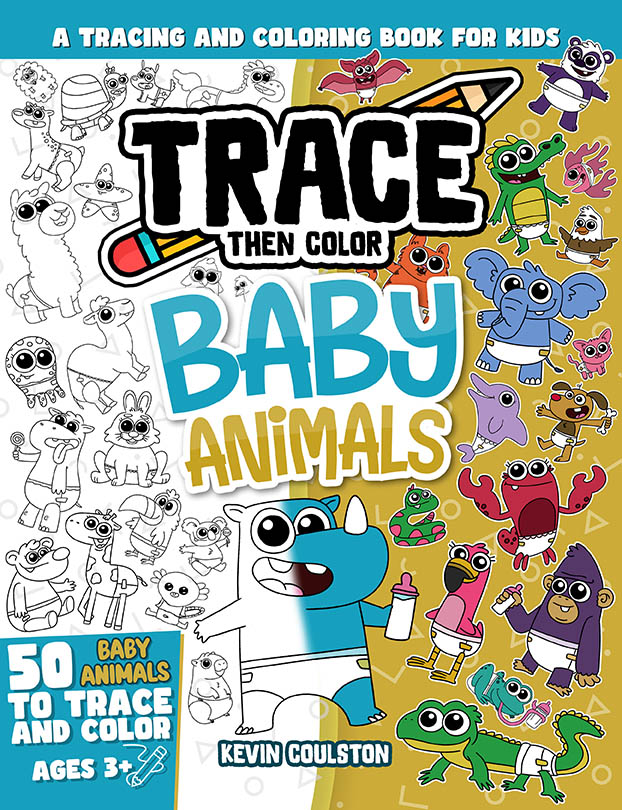
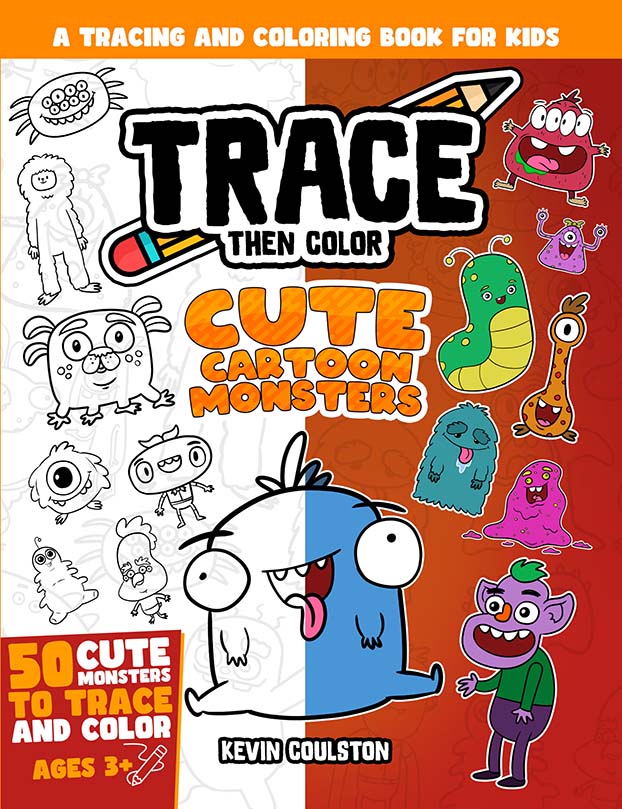
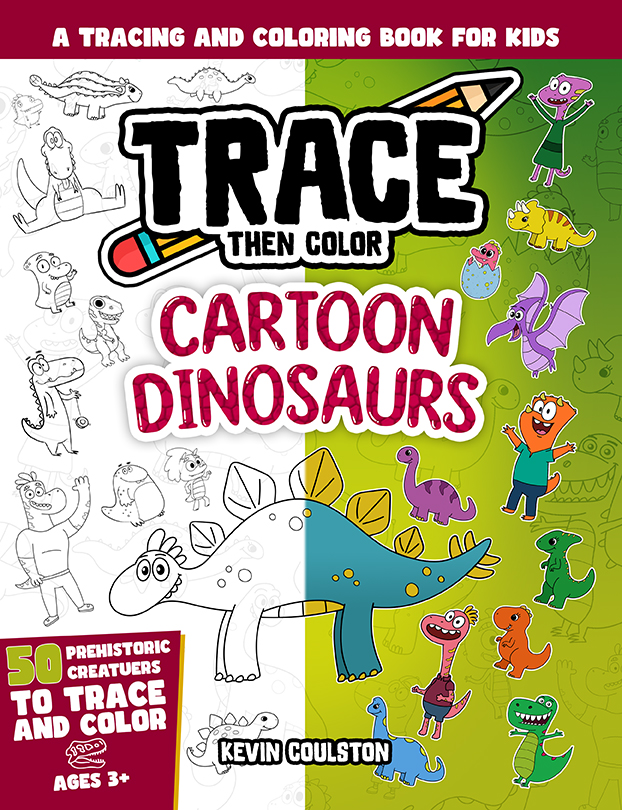
A clear, friendly outline makes kids want to slow down and steer. Simple characters, like those in Trace Then Color: Baby Animals or Trace Then Color: Cute Cartoon Monsters, have big shapes that reward careful coloring without frustrating little hands.
What not to do
- Do not correct every stroke. Constant correction makes coloring feel like a test, and kids will avoid it. Offer the short crayon, model your own grip, and let them play.
- Do not force a dominant hand. Some children switch hands for a while. Let them. Hand preference usually settles by about age 4 to 6. Left-handed kids have a few extra tips.
- Do not worry about a neat result. Grip comes first; staying in the lines comes later.
When to check with a professional
If your child is in kindergarten and still uses a fist grip, complains that their hand hurts when coloring, or avoids crayons altogether, mention it to their teacher or pediatrician. An occupational therapist can help, and early support works well.
Questions parents ask
Should I buy pencil grips?
Rubber pencil grips can help some school-age kids, but for preschoolers, short crayons and playful practice usually work better. Ask an occupational therapist if you are unsure.
Are chunky toddler crayons good or bad for grip?
Chunky crayons are great for toddlers who are still using a fist grip because they are easy to hold and hard to break. Once a child is ready for a finger grip, offer regular or broken crayons as well.
Does grip affect how well a child colors?
Yes, a little. A finger grip gives better control near edges. But practice matters more than perfect form, so keep coloring fun.

About Kevin Coulston
Kevin Coulston is a cartoonist and member of the National Cartoonists Society who has written and illustrated more than 100 drawing, tracing and coloring books for kids, including the Trace Then Color series. Meet Kevin or browse all his books on FirstArtBooks.com.