Coloring looks like the simplest activity in the world. Hand a child crayons and a page, and they get busy. But behind that quiet scene a lot is happening: muscles are getting stronger, eyes and hands are learning to work together, and a small person is making dozens of choices about what the world should look like.
Here are twelve benefits of coloring for kids, sorted from the physical to the emotional, with an honest note on what research does and does not show.
The physical benefits
1. Stronger fine motor skills
Holding a crayon and moving it in small, controlled strokes works the tiny muscles of the fingers and hand. Those are the same muscles a child uses to button a coat, open a lunch box and, later, write their name. Read more in how coloring builds fine motor skills.
2. A better pencil grip
Kids usually start with a fist grip and move toward a tripod grip, where the crayon rests between the thumb, index finger and middle finger. Coloring gives them hours of low-pressure practice. Short, broken crayons are a well-known trick to encourage a more mature grip (see our crayon grip tips).
3. Hand-eye coordination
Every time a child steers a crayon toward an edge and stops, the eyes are guiding the hand. That loop is the foundation for cutting with scissors, catching a ball and writing on a line.
4. Hand strength and pressure control
Pressing hard for a dark color and softly for a light one teaches kids to control force. It sounds small, but kids who can vary pressure find writing far less tiring.
The thinking benefits
5. Focus and attention
A coloring page has a beginning, a middle and an end. Staying with it until the last space is filled is attention practice that does not feel like work. The trick is to match the page to the child: simple shapes for little ones, more detail as attention grows.
6. Planning and decision-making
Which color for the dinosaur? Stripes or spots? Start with the big parts or the small ones? A single page can involve dozens of decisions, which is exactly the kind of planning practice teachers call executive function.
7. Color, shape and pattern knowledge
Coloring is how many children learn color names, notice shapes inside pictures and invent their first patterns. Those are early math and science skills hiding inside a fun activity.
8. Language
Talk while you color. "What color is his tail?" "Why is the robot sad?" Conversation at the coloring table builds vocabulary naturally, especially describing words.
The emotional benefits
9. Calm
There is real research here. In a classroom study, Carsley, Heath and Fajnerova (2015) found that coloring before a test reduced test anxiety in children, and studies with adults have found similar calming effects. For kids, the repetitive movement and simple focus of coloring can help a busy body settle.
10. Confidence
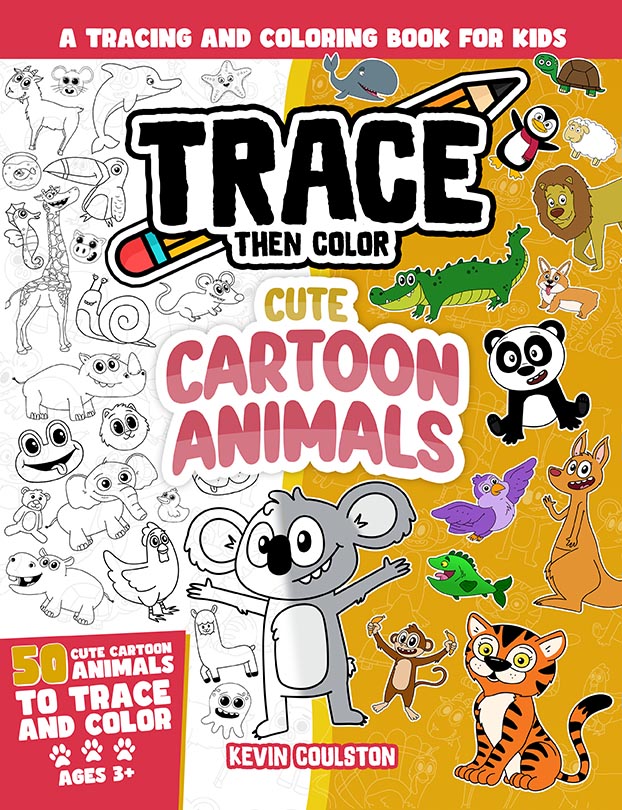
Finishing a page is a small win a child can see and hold. Kids who struggle with drawing often feel proud of a colored character, which is why outline-based books such as Trace Then Color: Cute Cartoon Animals can be a great confidence builder for reluctant artists.
11. Self-expression
No one has to color a cat orange. A purple cat with green stripes is a decision, and decisions are self-expression. Kids who are not talkers often say a lot with color.
12. Connection
Coloring is one of the few activities a 3-year-old, a 9-year-old and a grandparent can all do together at the same table. That shared, screen-free time matters.
What the research does not say
You will see claims online that coloring "rewires the brain" or "cures anxiety." Be skeptical. The evidence supports coloring as a helpful calming activity and as good practice for fine motor skills, but it is not a treatment. If you are worried about your child’s development or anxiety, talk to your pediatrician or an occupational therapist.
How to get the most out of coloring
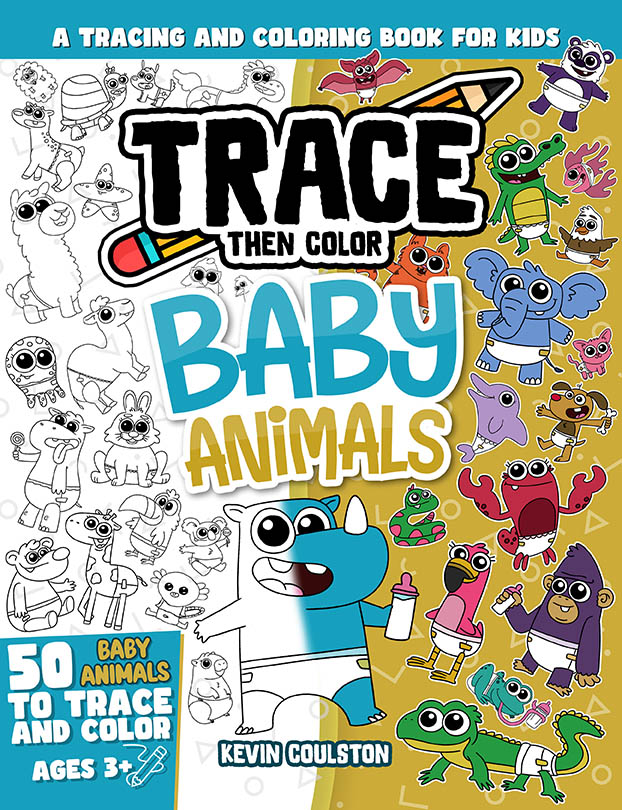
- Let them choose the subject. Kids color longer when the page shows something they love, whether that is baby animals, dinosaurs or monsters.
- Keep supplies within reach. A cup of crayons on the table gets used; a box in a cupboard does not.
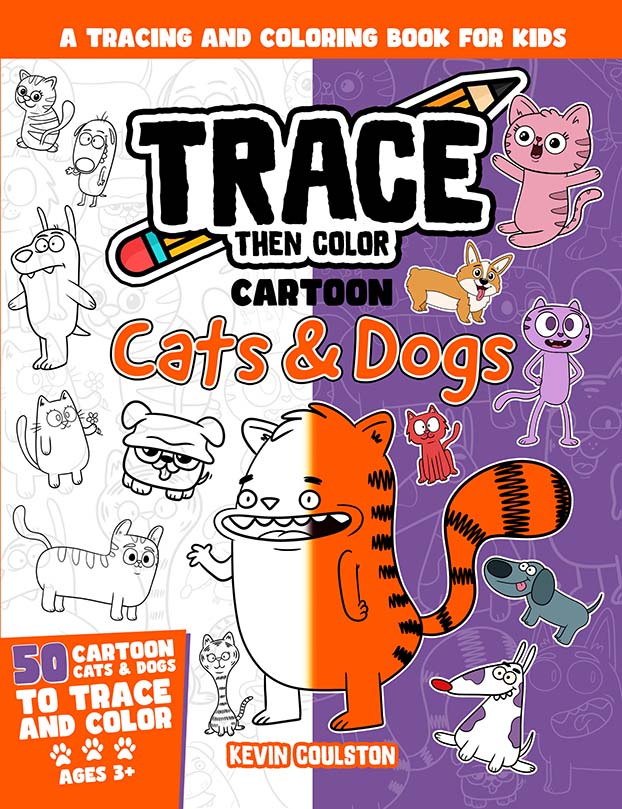
- Mix tracing and coloring. Tracing the outline first, as in Trace Then Color: Baby Animals, adds pencil-control practice to the coloring.
- Make it a habit. Ten minutes most days beats an hour once a month.
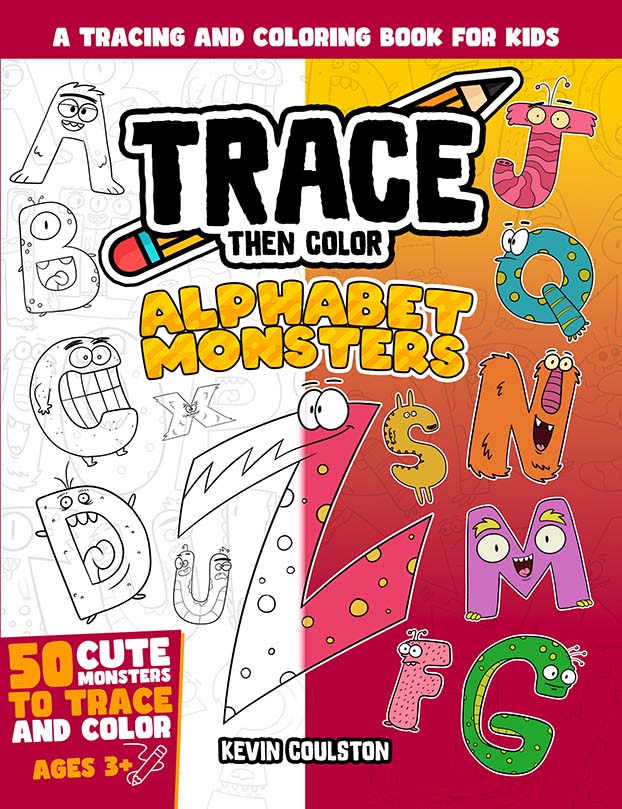
- Learn letters too. Books like Trace Then Color: Alphabet Monsters pair each letter with a character, so coloring doubles as letter practice.
Questions parents ask
At what age should kids start coloring?
Most children can start scribbling with chunky crayons between 12 and 18 months. Coloring in a recognizable shape usually comes around age 3, which is why our Trace Then Color books are made for ages 3 and up.
Is coloring as good as drawing?
They do different jobs. Coloring builds control and focus with a ready-made shape; drawing asks a child to invent the shape. Kids benefit from both, and tracing is a nice bridge between them.
How much coloring is enough?
There is no magic number. Short, regular sessions that a child enjoys are better than long sessions they are pushed into.

About Kevin Coulston
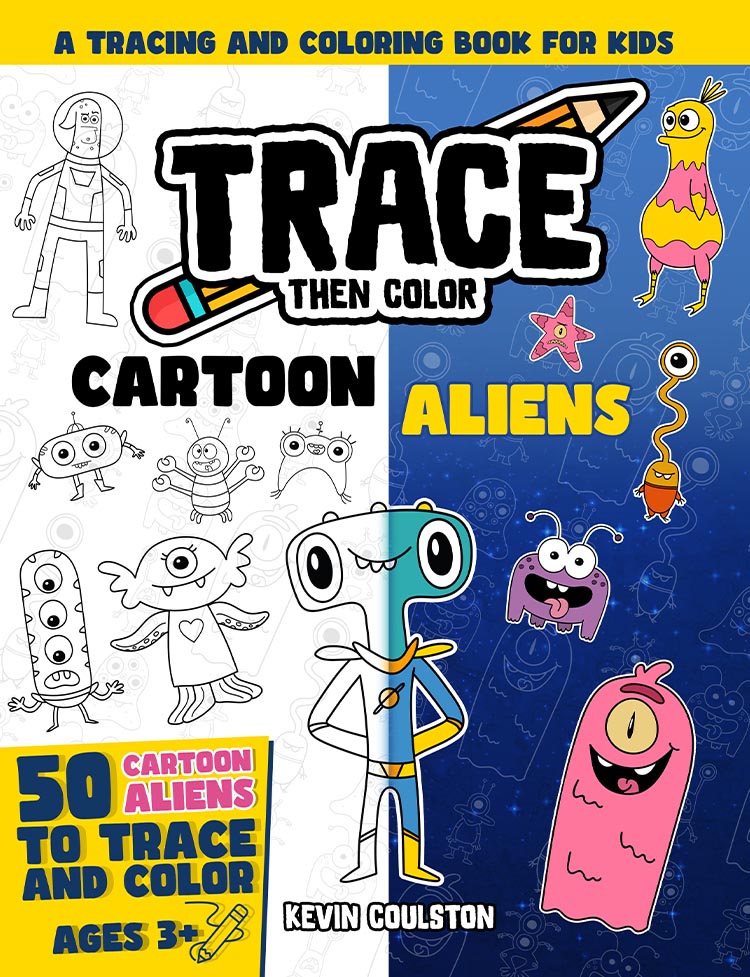
Kevin Coulston is a cartoonist and member of the National Cartoonists Society who has written and illustrated more than 100 drawing, tracing and coloring books for kids, including the Trace Then Color series. Meet Kevin or browse all his books on FirstArtBooks.com.