Many kids get frustrated when their color goes outside the lines, and many parents wonder whether they should be teaching it. The good news: control comes naturally with age and practice, and there are easy ways to help.
When is it expected?
| Age | Typical coloring |
|---|---|
| 2 to 3 | Scribbles, often across the whole page |
| 3 to 4 | Starting to color within big shapes, lots of going over |
| 4 to 5 | Mostly inside big shapes |
| 5 to 7 | Increasing control in smaller spaces |
So a three-year-old going over the lines is completely normal.
Tips that help
Start with bold outlines
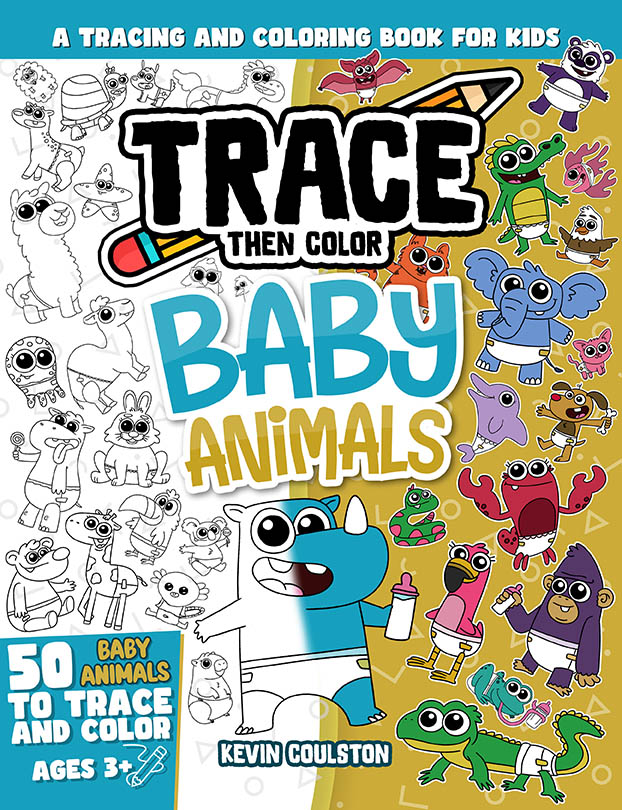
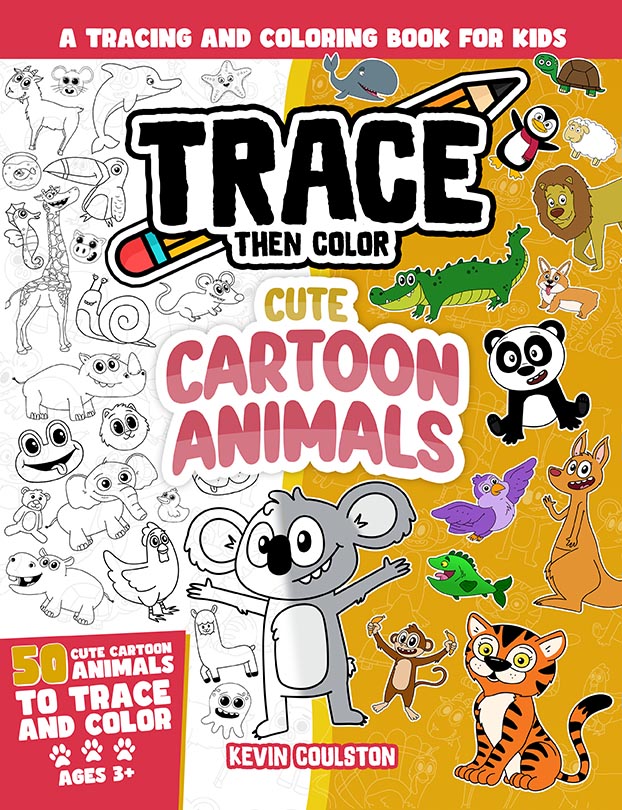
Thick lines and big shapes are easier targets. Trace Then Color: Baby Animals has big, simple characters that are easy to stay inside.
Outline first
Color a border just inside the line, then fill the middle. See outline then fill.
Slow down near edges
Fast in the middle, slow at the edges.
Use the right tool
Colored pencils are easier to control than chunky crayons in small spaces.
Trace first
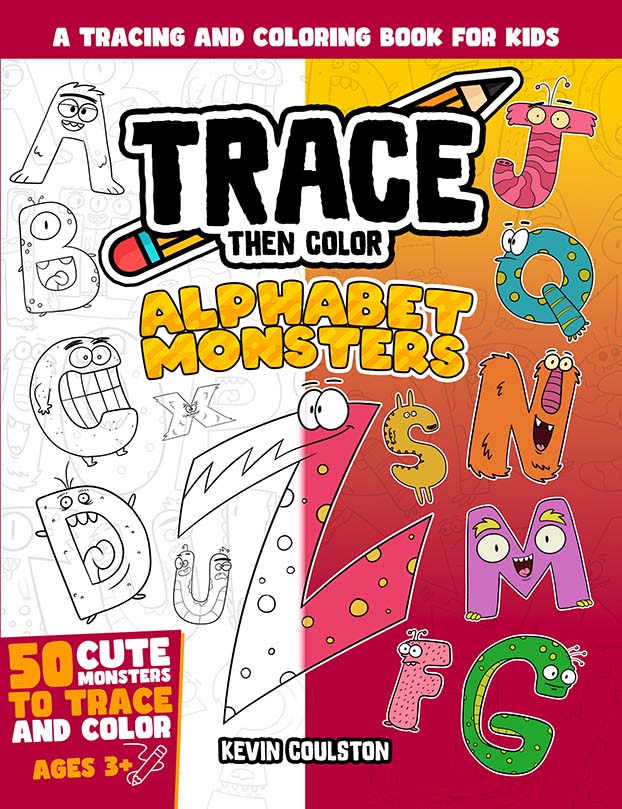
Tracing builds control along lines. Trace Then Color: Alphabet Monsters has dotted letters to trace before coloring. See slow, careful tracing.
Turn the paper
Turning the page helps kids color edges at a comfortable angle.
When it doesn’t matter
Coloring outside the lines is not a problem. Some kids color backgrounds into characters on purpose, and that’s creativity. Keep it optional, and never mark a page as "wrong."
Praise focus and effort: "You took your time on that ear" works better than "You stayed in the lines."
Questions parents ask
Should I worry if my 6-year-old can’t stay in the lines?
Most children improve with practice. If there’s a big gap compared to peers, along with other fine motor difficulties, ask your pediatrician or teacher.
Does coloring outside the lines mean my child is creative?
It can. It can also just mean they’re young. Both are fine.
Should I buy pages with smaller details?
Only once big shapes are easy. Too much detail too early causes frustration.

About Kevin Coulston
Kevin Coulston is a cartoonist and member of the National Cartoonists Society who has written and illustrated more than 100 drawing, tracing and coloring books for kids, including the Trace Then Color series. Meet Kevin or browse all his books on FirstArtBooks.com.