Kids love the ocean. It is full of strange creatures, bright colors and mysteries. Coloring sea creatures gives you the perfect chance to share some ocean science, one fun fact at a time.
Fun facts to share while coloring
Fish
- Fish breathe underwater using gills, which take oxygen from the water.
- Most fish use fins to steer and a tail to push themselves forward.
- Many fish swim in groups called schools.
Octopuses
- An octopus has eight arms covered in suckers.
- Octopuses can change color and texture to blend in.
- They have three hearts.
Crabs
- Crabs have a hard outer shell called an exoskeleton.
- Many crabs walk sideways.
Sea turtles
- Sea turtles breathe air, so they come to the surface to breathe.
- Many sea turtles return to lay eggs on beaches.
Jellyfish
- Jellyfish have no brain, heart or bones.
- They are mostly water.
Whales
- Whales are mammals, not fish. They breathe air and feed their babies milk.
Coloring activities
One fact per creature
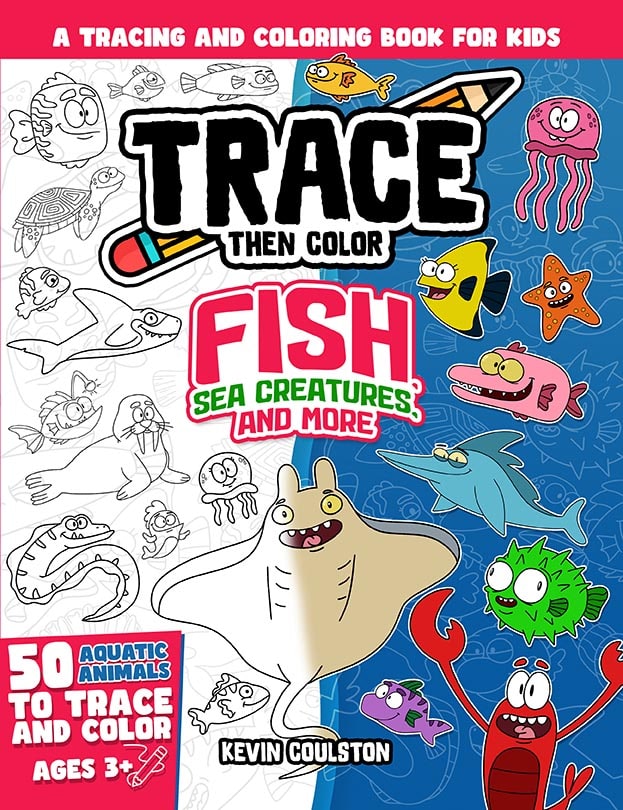
Color a sea creature and share one fact. Write the fact underneath for older kids. Trace Then Color: Fish, Sea Creatures and More gives you a whole ocean to color.
Ocean zones
Make a tall page divided into layers:
- Sunlit zone at the top: light blues, colorful fish.
- Twilight zone in the middle: darker blues.
- Midnight zone at the bottom: deep blue and black, with glowing creatures.
Cut out colored creatures and glue them in the zone where they live. Some deep-sea animals make their own light, called bioluminescence, which is fun to color with bright yellows on dark backgrounds.
Camouflage colors
Some sea creatures hide by matching their surroundings. Color a fish to blend with coral, then one to stand out. See camouflage and animal colors.
Real or imaginary?
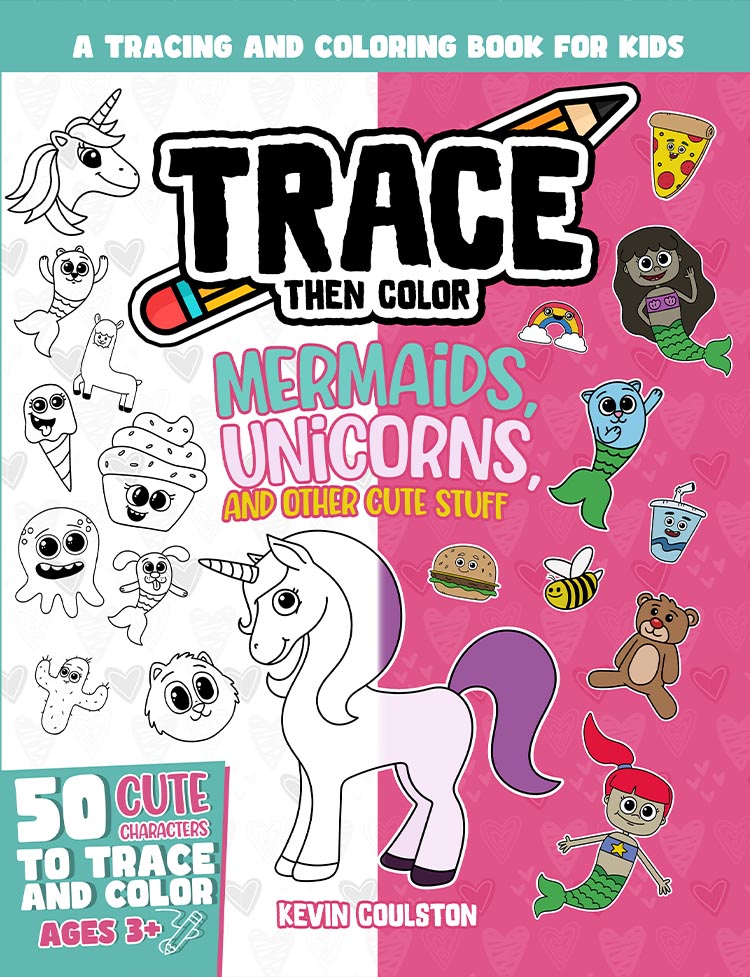
Mix real sea creatures with imaginary ones, like mermaids. Talk about what is real and what is pretend. Trace Then Color: Mermaids, Unicorns and Other Cute Stuff adds some magic to the ocean theme.
Ocean vocabulary
Gills, fins, scales, tentacles, shell, coral, reef, current, tide, deep. Use the words as you color.
Extend the learning
- Visit an aquarium.
- Read picture books about the ocean.
- Watch a short documentary clip about coral reefs.
- Talk about keeping oceans clean. See Earth Day coloring.
Questions parents ask
Are octopus facts accurate for kids?
Yes. Octopuses really do have eight arms, three hearts and can change color.
What age is ocean science coloring for?
Preschoolers enjoy simple facts; older kids can learn about ocean zones and food chains.
Should I correct my child if they color a fish purple?
No. Many real fish are amazingly colorful, and imaginary colors are part of the fun.

About Kevin Coulston
Kevin Coulston is a cartoonist and member of the National Cartoonists Society who has written and illustrated more than 100 drawing, tracing and coloring books for kids, including the Trace Then Color series. Meet Kevin or browse all his books on FirstArtBooks.com.