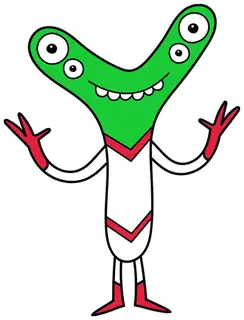
Aliens are pure imagination, but they open the door to real science. While your child colors a three-eyed alien, you can talk about planets, stars and the big question scientists are still trying to answer: is there life anywhere else?
Space facts for kids
The Sun and stars
- The Sun is a star, the closest one to Earth.
- Stars look tiny because they are very far away.
- Light from the Sun takes about eight minutes to reach Earth.
The planets
- Our solar system has eight planets: Mercury, Venus, Earth, Mars, Jupiter, Saturn, Uranus and Neptune.
- Jupiter is the biggest planet.
- Saturn has beautiful rings made of ice and rock.
- Mars is called the red planet because of rusty dust on its surface.
The Moon
- The Moon goes around Earth about once a month.
- Astronauts first walked on the Moon in 1969.
- The Moon has no air, so astronauts wear spacesuits.
Looking for life
- Scientists have not found life anywhere except Earth so far.
- They look for water, because all life we know needs it.
- Rovers have explored Mars looking for signs that life might once have existed there.
Alien coloring activities
Design an alien for a planet
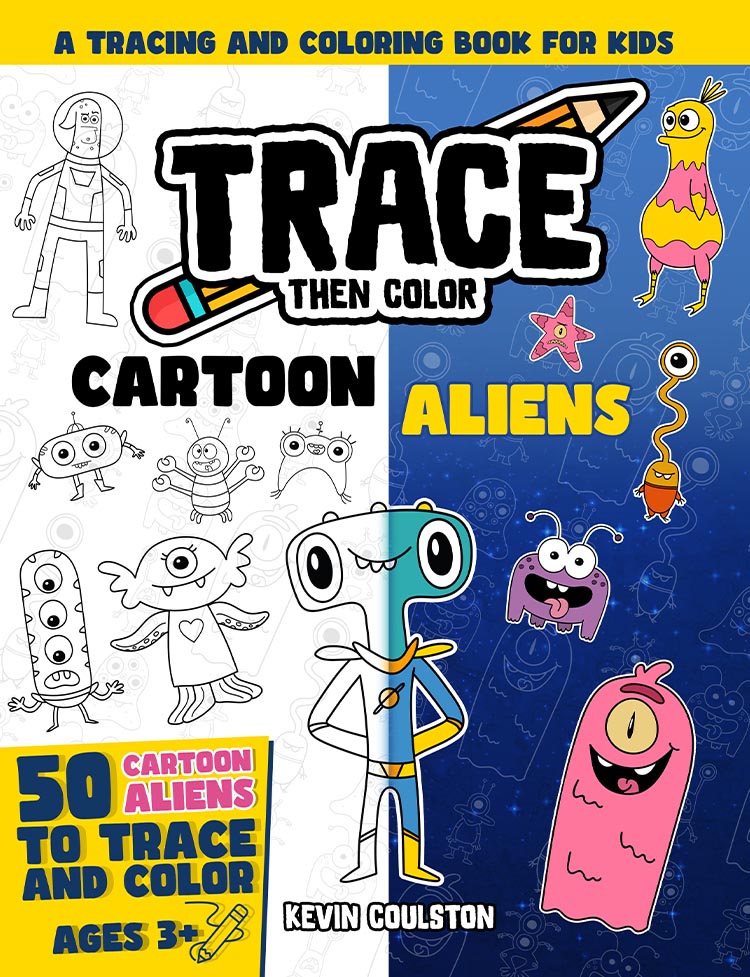
Pick a planet and imagine an alien that could live there. An alien from icy Neptune might be blue and furry. An alien from hot Venus might be orange and shiny. Color an alien from Trace Then Color: Cartoon Aliens to match.
Space background
Color a dark background with dots of stars, a ringed planet and a moon. Leave little white spots for stars or add them with a white crayon or gel pen.
Alien passport
Color an alien, cut it out and glue it on a card. Write its name, home planet, favorite food and number of eyes.
Count the eyes
Aliens are great for counting: eyes, arms, antennae. See count and color.
Cyborg engineers
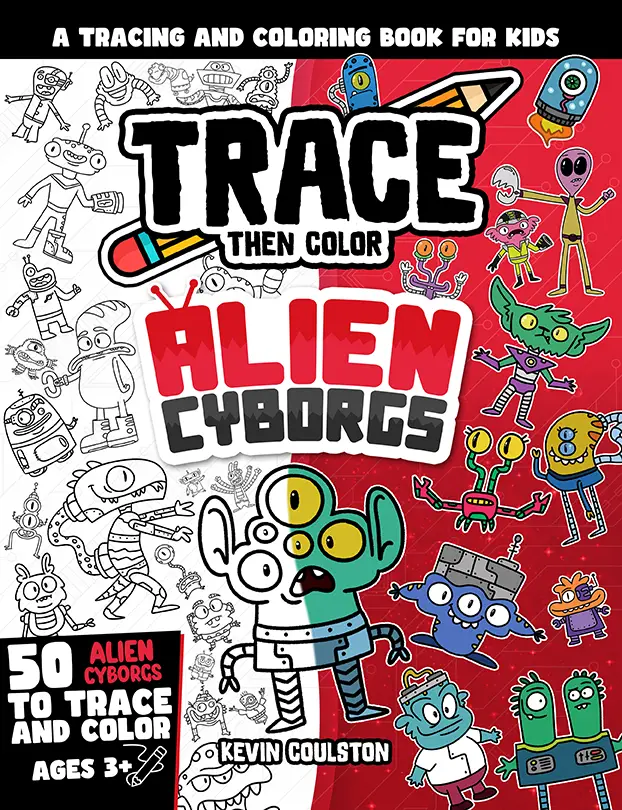
For older kids, alien cyborgs open up talk about technology: robot arms, jetpacks, helmets. What gadgets would an alien need to explore Earth? Trace Then Color: Alien Cyborgs has plenty of gadgets to color.
Space vocabulary
Planet, star, orbit, gravity, astronaut, rover, galaxy, telescope. Kids love space words.
Real or imaginary?
A good discussion with older kids: what makes something science and what makes it imagination? Aliens in cartoons are imaginary, but scientists really do search for life. Being able to tell the difference is an important thinking skill.
Questions parents ask
Are aliens real?
Scientists have not found life beyond Earth yet, but they are looking. Cartoon aliens are imaginary.
What age is space science for?
Preschoolers enjoy simple facts about the Sun, Moon and stars. School-age kids can learn about planets and exploration.
How can we see space at home?
Look at the Moon, spot bright planets in the evening sky with a free stargazing app, or visit a planetarium.

About Kevin Coulston
Kevin Coulston is a cartoonist and member of the National Cartoonists Society who has written and illustrated more than 100 drawing, tracing and coloring books for kids, including the Trace Then Color series. Meet Kevin or browse all his books on FirstArtBooks.com.