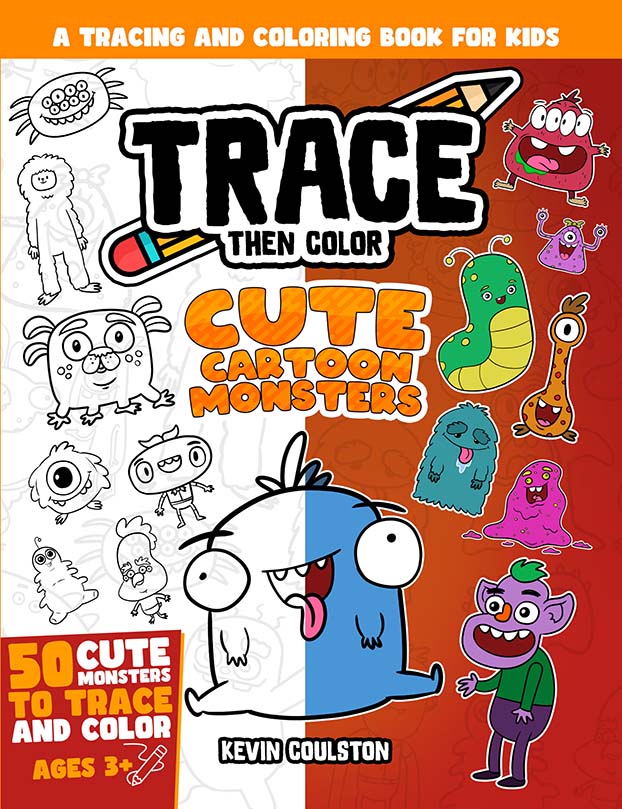
Walk into any school supply aisle and you will see letter tracing workbooks. Tracing pictures is less common, but it is just as valuable, and for young children it may be the better place to start.
What picture tracing teaches
- Line control. Straight lines, curves, corners and circles.
- Shape awareness. How characters are built from shapes.
- Focus. Staying on a path.
- Confidence. A finished picture is a big reward.
- Enjoyment. Pictures are fun, so kids practice longer.
Picture tracing is low pressure. There is no "wrong" way for a dog’s ear to look.
What letter tracing teaches
- Letter shapes. The specific form of each letter.
- Stroke order and direction. Where to start and which way to go.
- Letter recognition. Linking shape to name and sound.
- Spacing and size. Writing on lines.
Letter tracing is more precise, and mistakes are more noticeable. Some young children find it stressful.
Why pictures first can help
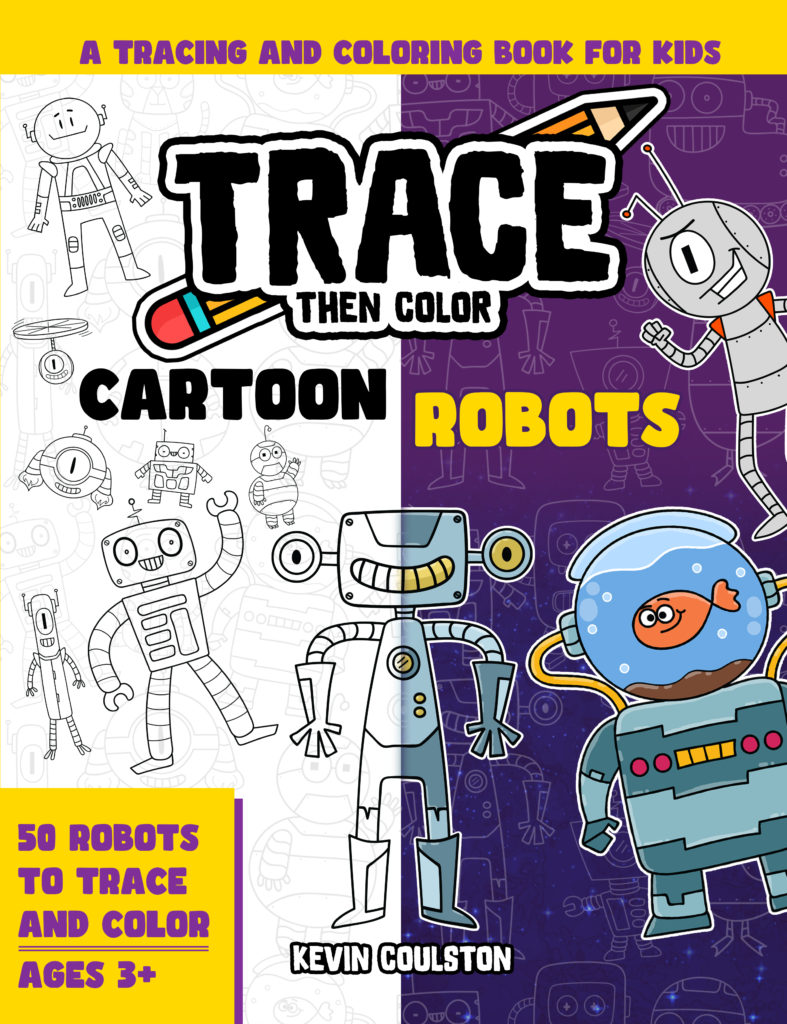
Many young children are not ready for the precision of letters, but they are ready to practice the movements that letters use. A robot’s square body uses the same straight lines and corners as letters like L, E and H. A round monster uses the same curves as O and C. Trace Then Color: Cartoon Robots is full of straight lines and corners; it’s a fun way to rehearse letter movements before letters.
When to start letter tracing
Many children show readiness for letters around 4 to 5 years old. Signs include:
- Holding a pencil with the fingertips
- Copying a circle, cross and square
- Showing interest in letters or their name
Follow your child’s interest and your preschool or kindergarten’s approach.
Combining both
You do not have to choose. A balanced approach:
- Picture tracing for fun and control, most days.
- Letter tracing in short sessions when the child is ready.
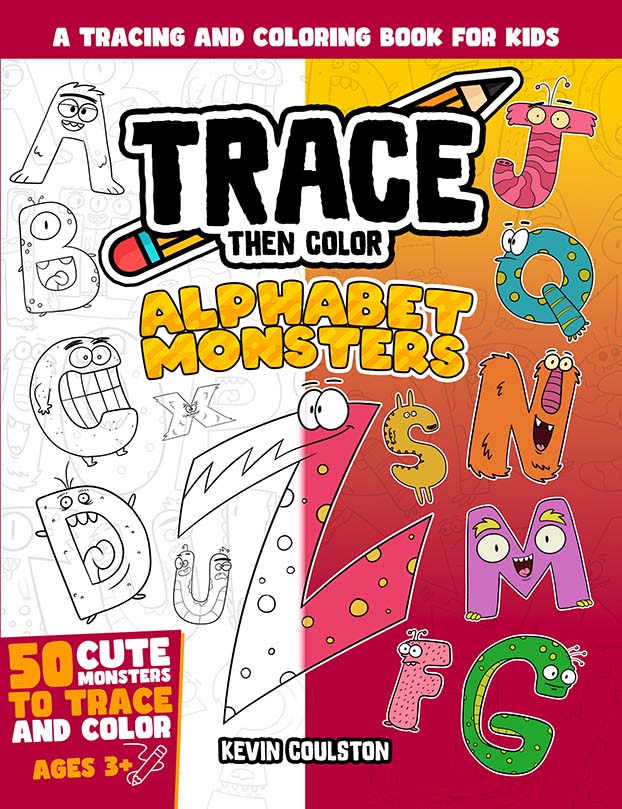
- Both together, with alphabet books that pair each letter with a picture. Trace Then Color: Alphabet Monsters gives each letter its own monster, so kids trace a letter and a character on the same theme.
Tips for letter tracing
- Start with uppercase straight-line letters: L, T, E, F, H, I.
- Then curves: C, O, S.
- Teach the starting point. Most letters start at the top.
- Keep sessions short and positive.
See from crayon to handwriting for more.
Questions parents ask
Should my 3-year-old trace letters?
Some enjoy it; many are not ready. Picture tracing, coloring and play dough build the same foundations with less pressure.
Are tracing worksheets bad?
No, but they are only one tool. Variety, fun and play matter most for young kids.
Can tracing teach my child to write their name?
Tracing their name is a common first step. Then they copy it, then write it from memory.

About Kevin Coulston
Kevin Coulston is a cartoonist and member of the National Cartoonists Society who has written and illustrated more than 100 drawing, tracing and coloring books for kids, including the Trace Then Color series. Meet Kevin or browse all his books on FirstArtBooks.com.