Children’s coloring changes enormously in a few short years. Knowing the typical stages helps parents relax, celebrate progress and know what to offer next. Remember that these ages are rough guides; children vary widely.
Ages 1 to 2: Scribbling
- Fist grip, movement from the shoulder
- Random marks, then back-and-forth lines
- Discovery that crayons make marks
- Short bursts of interest
Offer: chunky crayons, big paper, lots of supervision. See coloring with 2-year-olds.
Ages 2 to 3: Controlled scribbling
- Circular scribbles and more deliberate lines
- Starting to name scribbles
- Grip still mostly fist or fingers-down
Offer: big, simple coloring pages and naming games.
Ages 3 to 4: Coloring in a shape
- Coloring roughly inside big shapes
- Choosing colors on purpose
- Simple tracing with help
- Grip moving toward the fingers
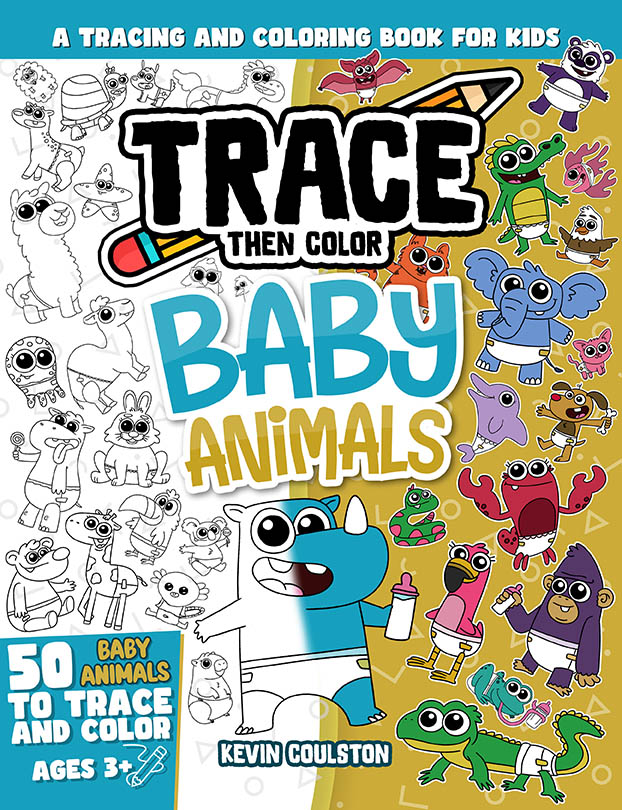
Offer: simple characters and first tracing. Trace Then Color: Baby Animals is a good start. See coloring for 3-year-olds.
Ages 4 to 5: Growing control
- Mostly inside large shapes
- Several colors per page
- Better tracing
- Stories about pictures
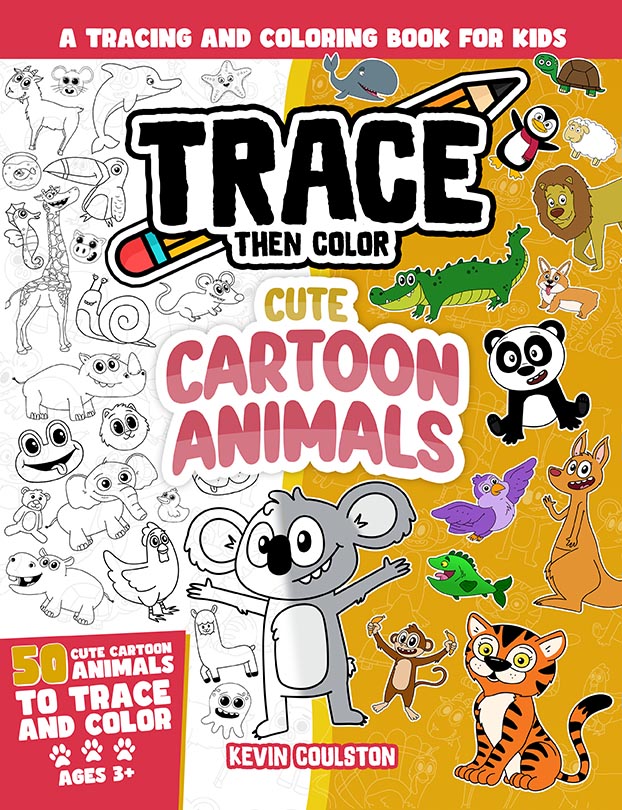
Offer: a bit more detail, patterns, and characters with personality like Trace Then Color: Cute Cartoon Animals.
Ages 5 to 6: Inside the lines
- Mostly inside lines, with slips at edges
- Tripod or near-tripod grip
- Planning colors and adding details
- Longer focus
Offer: detail, letters and early techniques. See when do kids color inside the lines?.
Ages 7 and up: Technique and style
- Careful control
- Interest in shading, blending, texture
- A developing personal style
- Long, focused sessions
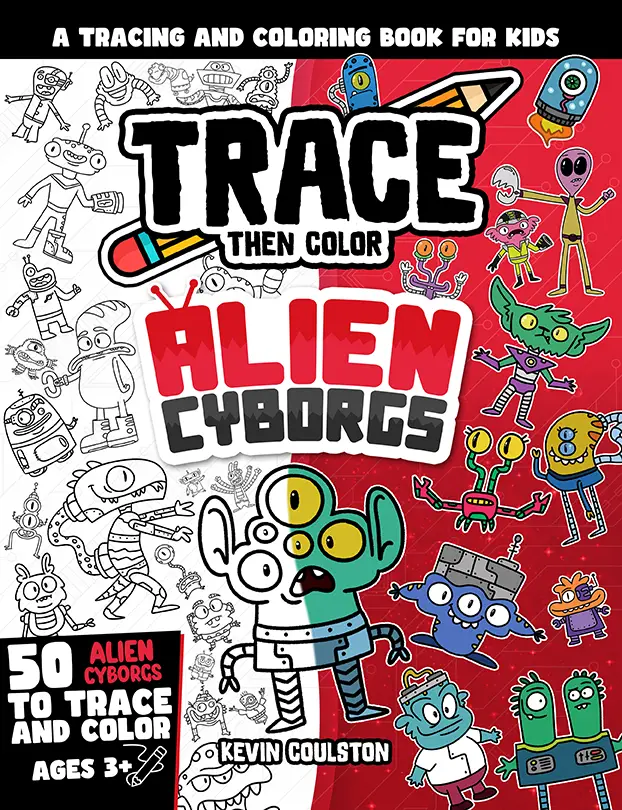
Offer: detailed characters like Trace Then Color: Alien Cyborgs and real art supplies.
Variation is normal
Some 4-year-olds color neatly; some 6-year-olds still prefer bold scribbles. Interest, practice and temperament all play a part. What matters is gradual progress and enjoyment.
When to ask for advice
Talk to your pediatrician or child’s teacher if your child:
- Avoids all crayon and pencil activities by age 4 or 5
- Still uses a fist grip in kindergarten
- Shows pain or extreme frustration with hand activities
- Seems to lose skills they had
An occupational therapist can assess fine motor development.
Questions parents ask
Is my child behind if they can’t color in the lines at 4?
No. Most children develop edge control between 4 and 7.
Do girls color neater than boys?
Individual differences are much bigger than any group differences. Every child has their own pace.
Should I keep my child’s coloring?
Keeping a few pages per year makes a lovely record of growth.

About Kevin Coulston
Kevin Coulston is a cartoonist and member of the National Cartoonists Society who has written and illustrated more than 100 drawing, tracing and coloring books for kids, including the Trace Then Color series. Meet Kevin or browse all his books on FirstArtBooks.com.